
5005 Rockside Road Ste. 600
Cleveland Ohio 44131
(216) 573-3712
FREE CONSULTATIONS






CONTACT US
CLIENTS’ CHOICE AWARD
Success Stories
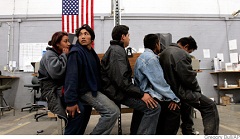
It is already considered a bad experience for people to be detained in immigration detention centers. But providing substandard medical care, a lack of due process and geographical remoteness of facilities has made it even worse.
With the series of reports and allegations the Immigration and Customs Enforcement or ICE have been receiving primarily from the non-profit Detention Watch Network, ICE did an overhaul of the immigration detention system over a period of three years since 2009. The overhaul was supposed to show some improvement on aspects such as medical care, custodial conditions, fiscal prudence, and ICE oversight. Part of the reforms should also include placing detainees in buildings suited for those people facing immigration charges instead of being detained in penal facilities.
ICE made some of these reforms albeit calling these groups of non-profit organizations like the Detention Watch Network unfair for throwing anonymous allegations that they can’t investigate on. In spite of the amount of progress ICE were able to achieve, the Detention Watch Network still feels that they are not doing enough to protect the rights of the detained immigrants. What is stopping these reforms from being successful, according to the non-profit group, is the culture and treatment of the agency towards those who are facing immigration charges compared to the ones who are imprisoned because of some criminal charges. Take note that some of those detained have absolutely no criminal arrests or convictions at all, but are detained due to a “pending” immigration case that they could still win. Some of the charges are simply for an overstay, but relief from deportation may be imminent.
Listed as part of the 10 worst immigration detention centers according to the article are as follows:
- BakerCountyJailinFlorida
- PolkCountyDetention Facility inTexas
- EtowahCountyJailinAlabama
- HoustonProcessing Center inTexas
- HudsonCountyJailinNew Jersey
- IrwinCountyDetention Facility inGeorgia
- PinalCountyJailinArizona
- Tri-CountyDetentionCenterinIllinois
- Theo LacyDetentionCenterinCalifornia
- StewartDetentionCenterinGeorgia
If you have any questions, please fill out the free consultation form below, and we will respond as soon as possible privately.
<a href=”https://plus.google.com/107743308565341841259/posts?rel=author”>Google</a>
{ 0 comments }
In Matter of Ramiro Sanchez-Herbert, the Board held that if the respondent received proper notice of the hearing, it should be considered inappropriate to terminate the pending proceedings, even if he or she has left the United States prior to the said hearing. The Immigration Judge can still retain jurisdiction over the pending proceedings even while Respondent is abroad. The Immigration Judge should still proceed with an in absentia hearing.
It is the purpose of in absentia hearings to determine whether the DHS can establish that respondent was able to receive proper notice and is removable as charged. The Immigration Judge will then be able to issue an order of removal once the DHS is able to meet its burden. However, proceedings should be terminated if the DHS fails to meet its burden.
By allowing a respondent who leaves the country while in proceedings to deprive the Immigration Judge of jurisdiction over a case, he or she can eventually avoid the consequences of a formal order of removal, even with proper notice of the hearing.
The DHS should be given the opportunity to proceed with in absentia proceedings to meet and establish removability based on the facts and evidence at hand. That and the establishment of proper notice and service should be enough to give the Immigration Judge a chance to issue an order of removal.
If you have any questions, please fill out the free consultation form below, and we will respond as soon as possible privately.
<a href=”https://plus.google.com/107743308565341841259/posts?rel=author”>Google</a>
{ 0 comments }
The DHS has approved the first set of applications from young illegal immigrants eligible for Deferred Action. The first approvals come just three weeks after the United States Citizenship and Immigration Services started accepting applications for the program announced June 15. The government had estimated previously that it could take months for each application to be reviewed and approved. So far, about 72,000 people have applied to avoid deportation. DHS said background checks, including fingerprinting, are being conducted on each individual before an application can be approved. They initially estimated an average wait time of about four to six months.
Source: CBS News
If you have any questions, please fill out the free consultation form below, and we will respond as soon as possible privately.
{ 0 comments }
Show Me Your Papers
U.S. District Judge Susan Bolton ruled that Arizona authorities can enforce the section of the state’s immigration law critics have called the “show me your papers” provision, as reported on CNN. This clears the way for police to carry out the requirement that officers, while enforcing other laws, question the immigration status of those they suspect are in the country illegally. This provision has been in the middle of a two-year legal battle that resulted in a U.S. Supreme Court decision in June upholding the requirement.
Those against the provision pled for Judge Bolton to block the provision, arguing that it would lead to systematic racial profiling and unreasonably long detentions if enforced. Those for the provision argued that racial profiling was simply a speculation. Governor Jan Brewer’s office also said that police have received training to avoid discriminatory practices and that officers must have reasonable suspicion that a person is in the country illegally to trigger the requirement.
Judge Bolton mentioned that her Court will not ignore statements from the Supreme Court that the provision cannot be challenged further on its face until the law takes effect. She confirmed the Supreme Court’s interpretation that the law may still be challenged as unconstitutional on other grounds.
Arizona’s law, SB1070, was passed in 2010. Five other states, Alabama, Georgia, Indiana, South Carolina, and Utah have adopted similar variations.
ICE Detained and Deported A Record Number of Illegals
Immigration and Customs Enforcement (ICE) detained and deported a record number of illegals in 2011 and are on track for similar numbers this year, even though the number of illegals crossing the border dropped to a 40-year low, according to the New York Times. ICE agents deported 391,953 in 2011, including 188,000 convicted of crimes, which was an all-time high for such deportations.
Citizens of Mexico, Guatemala, Honduras, and El Salvador made up 93% of all people deported last year. To date there are about 366,000 deported through August 31, but they include 191,000 convicted criminals, more than last year. ICE also detained about 429,000 immigrants last year which was another record.
Though the Department of Homeland Security (DHs) had said that they are focusing on illegal immigrants with criminal convictions, the record number of deportations the past two years had a big impact on the Latino community, causing doubt on the Obama administration.
Circuit Cases
- 1st Circuit: Rebenko v. Holder, September 4, 2012. Asylum. Petitioner testified at the IJ level that she experienced mistreatment in Ukraine on account of her Pentecostal faith on four occasions: (1) her arrest in May of 1999; (2) her receipt of threatening phone calls from nationalists following her arrest; (3) the “mockings” she experienced during her graduation in June of 2000; and (4) her beating at the hands of “skinheads”. The 1st Circuit noted that Petitioner did not report any significant mistreatment before May of 1999 or after June of 2000, though she had practiced Pentecostalism since childhood and continued to live in Ukraine until July of 2001. The Court held that the IJ could have reasonably concluded that the mistreatment Petitioner described was not “systematic” but was “reflective of a series of isolated incidents” over the course of a bad year. The Court mentioned that Petitioner describes no nexus between her harassment at her graduation and any government action or omission. Her speculation that the police caused nationalists to make threatening phone calls was not supported by evidence. The Court viewed Petitioner’s May 1999 arrest as a single incident in which Petitioner suffered no injuries requiring medical treatment, and that a reasonable adjudicator would not be compelled to find that this incident rose to the level of persecution.
- 9th Circuit: Sanchez-Avalos v. Holder, September 4, 2012. Criminal. Petitioner petitioned for review the BIA’s decision that he is not eligible for waiver of inadmissibility because he was convicted of an aggravated felony. Petitioner argued that his conviction for sexual battery under California Penal Code § 243.4(a) did not qualify as sexual abuse of minor. The Court applied the categorical and modified categorical approaches. The Court concluded that the crime of sexual battery under California law is categorically broader than the federal generic crime of “sexual abuse of a minor” because the California crime may be committed against a victim of any age, while the federal generic offense requires proof that the victim was a minor. Court held that the crime of sexual battery in California is not categorically an aggravated felony, and that none of the evidence established that the petitioner’s victim was a minor.
If you have any questions, please fill out the free consultation form below, and we will respond as soon as possible privately.
{ 0 comments }
Family
The Philadelphia Inquirer had a piece on the hardships families with deported parents and U.S. citizen children face. They talked about Chon and Ibed, a Mexican couple with three U.S. Citizen children, telling their story from how they met as two illegal immigrants to eventually having a family, to Chon’s recent deportation. It is a story that is typical in the field of immigration, one that is similar to most families with a deported parent and U.S. citizen children.
Around four million U.S.-born children have at least one parent with no immigration status, based on the findings of the Pew Hispanic Center, a research organization in Washington. They also found that the proportion of adults who entered the border illegally, get deported, and try to cross again is growing. The current immigration policy has led to an increase in female-headed households, with mothers being forced to support their families since their husbands got deported, affecting thousands of U.S. citizen children in the process.
According to the Applied Research Center, an think tank organization in New York that recently analyzed Immigration and Customs Enforcement data, from 2000 to 2010, 8 percent of all deportees had U.S. Citizen children.
Tuition
A federal judge ruled that children of undocumented immigrants cannot pay higher out-of-state tuition in Florida just because their parents are illegal, based on this report by the Miami Herald. Judge K. Michael Moore held that the policy violates the equal protection clause of the Constitution by forcing these U.S. Citizen students to pay three times more than Florida residents. The ruling came in a lawsuit filed by the Southern Poverty Law Center on behalf of Florida U.S. Citizen students denied in-state tuition because they could not prove their parents’ legal status. This would provide thousands of students greater access to an education. At the University of Florida for example, in-state tuition costs $205 per credit hour, while out-of-states costs $947 per hour. Based on a Florida International University law professor’s analysis of the U.S. Census, nearly 9,000 children of undocumented immigrant parents are enrolled in Florida public colleges and universities in a given year.
Other states had similar rulings recently. In New Jersey, a state appeals court ruled that U.S. born student whose parents could not prove valid immigration status was wrongly denied financial aid. In California and Colorado, similar rulings were made.
Politics
CBS News summarized the Democratic and Republican immigration agendas based on recent convention speeches by members of both parties. The Democrats are committed to helping some undocumented immigrants get a “path toward citizenship”, “learn English and pay taxes”, and have a visa system that meets the country’s “economic needs, keeps families together and enforces the law. The Deferred Action Program illustrates this theme, and would likely be continued with an Obama reelection.
The Republican platform on the other hand is against any form of amnesty for those who intentionally violated immigration laws. They called for the Justice Department to stop their lawsuits against states with tough immigration laws. They also intend to deny federal funding to schools that provide lower in-state tuition to illegal immigrants. An increase in “show-me” laws such as those in Arizona and a possible repeal of the Deferred Action Program are possible repercussions of a Romney presidency.
If you have any questions, please fill out the free consultation form below, and we will respond as soon as possible privately.
{ 0 comments }
Drivers License
The Deferred Action for Childhood Arrivals program (DACA) allows for work permits to certain undocumented immigrants who apply for such, and who meet seven criteria:
- Were under the age of 31 as of June 15, 2012;
- Came to the United States before reaching their 16th birthday;
- Have continuously resided in the United States since June 15, 2007, up to the present time;
- Were physically present in the United States on June 15, 2012, and at the time of making their request for consideration of deferred action with USCIS;
- Entered without inspection before June 15, 2012, or their lawful immigration status expired as of June 15, 2012;
- Are currently in school, have graduated or obtained a certificate of completion from high school, have obtained a general education development (GED) certificate, or are an honorably discharged veteran of the Coast Guard or Armed Forces of the United States; and
- Have not been convicted of a felony, significant misdemeanor, three or more other misdemeanors, and do not otherwise pose a threat to national security or public safety.
Beneficiaries of DACA who apply for employment authorization will them in the form of an employment authorization card.
Employment authorization cards issued during the pendency of other ongoing immigration application (green card, asylum) historically allowed beneficiaries to obtain social security numbers and driver’s licenses. You simply present this card to the social security office or BMV, and you can obtain a social security number and driver’s license respectively.
But states have been split in granting driver’s licenses to beneficiaries of DACA. The governors of Nebraska and Arizona stated the past week that their states will deny driver’s license benefits to DACA beneficiaries.
MSNBC reported that California though has approved a bill allowing DACA beneficiaries to obtain driver’s licenses. The bill passed the state assembly, 55-15, on August 30, before getting sent to Democratic Governor Jerry Brown. The bill also passed the state Senate in 25-7 vote on August 29.
DACA beneficiaries and potential applicants should first check whether their states would allow them to get a driver’s license.
Republicans
Jason Riley in the Wall Street Journal wrote that Republicans in the GOP convention support a policy that encourages high-skill immigration over low-skill immigration. This should imply that programs such as the H-1B, National Interest Waiver, Alien of Extraordinary Ability, and Labor Certification would be favored over laws and executive orders such as the current Deferred Action Program, if they would support any area of immigration at all. But this also weakens their hold on the Latino vote. Over 50% of those benefiting from DACA are Latinos.
Detention
This New York Times editorial encourages Governor Jerry Brown of California to sign the Trust Act. The Trust Act is a recently passed California bill that prevents local police from turning their detention facilities into immigration holding cells for noncriminals or minor offenders whose sentences are finished or should otherwise be out on bail. The Act would require the police to let such people out, even if the Immigration and Customs Enforcement (ICE) issued requests that they be held until they can be picked up for deportation. The Act provides that only those who have been convicted of or charged with serious or violent felonies would continue to be detained an ICE’s request. On August 31, the Los Angeles City Council voted 11 to 0 for a resolution endorsing the bill. The bill’s rationale is to be in line with the Department of Homeland Security’s focus on deporting national-security threats, dangerous criminals, and repeat offenders.
If you have any questions, please fill out the free consultation form below, and we will respond as soon as possible privately.
{ 0 comments }
Some people can apply for a green card despite overstaying their status, such as those who are legal entry overstays who apply for a green card based on marriage to a US Citizen, or those who are applying based on employment, overstayed their status, but benefit from Section 245i. When you have a green card application pending, you may apply for advance parole, a travel document that in theory permits you to travel and reenter the United States. So those who overstayed and applied for a green card usually still obtain advance parole.
Prior to Matter of Arrabally and Yerrabelly, 25 I&N Dec. 771 (BIA 2012), which we shall discuss in a bit, the Department of Homeland Security’s (DHS) position was that those who departed the U.S. on an advance parole, after incurring unlawful presence of six months or more, would be subject to either the three or ten year bars, and are thus inadmissible. Because of this position, a lot of people who have approved advanced paroles after incurring years of unlawful presence (marriage to a U.S. Citizen or those eligible for adjustment due to INA 245i) were not able to return to the United States due to either the three or ten year bar. Why does the I-131 advance parole get granted when the applicant will be inadmissible anyway? Who knows. Those applicants would’ve been better off had the I-131 been denied, because at least it would have prevented them from traveling abroad. It was a tricky and deceiving aspect of advance paroles and adjustment of status applications for those with unlawful presence issues, especially for those who did not seek legal advice.
But in Matter of Arrabally and Yerrabelly, the Board finally held that a departure under an approved advance parole is not a “departure” for purposes of INA § 212(a)(9)(B) which triggers the three and ten year bars. Thus, those who have over six months of unlawful presence, who are eligible to adjust status in the United States, would now be able to come back on the advance parole without being inadmissible anymore. This is a big decision for those employment-based 245i green card cases by applicants with six or more months unlawful presence. Since visa retrogression has delayed a lot of green card applications, those applicants with unlawful presence issues but are 245i eligible can now apply for advance parole and visit their home countries, without being subject to the three or ten year bars that the DHS used to impose on them upon return prior to this BIA decision.
If you have any questions, please fill out the free consultation form below, and we will respond as soon as possible privately.
{ 0 comments }
Deferred action for childhood arrivals is a policy by the Department of Homeland Security that allows individuals who came here at a young age, and who meet other requirements that would explained below, to have work permits and have possible removal deferred as an exercise of prosecutorial discretion. As we posted in our previous article, DHS Secretary Napolitano issued a memorandum announcing that the DHS will offer deferred action for two years to certain young people who came to the U.S. as children and meet other eligibility criteria. This memo came out on June 15, 2012. According to the memo, individuals who receive deferred action will not be placed in removal proceedings or removed from the U.S. for the duration of the grant. Individuals in removal proceedings, those with final orders, and those who have never been in removal proceedings will be able to affirmatively request deferred action from the USCIS.
According to USCIS FAQs released in August 2012, an individual who meets the following criteria may apply for deferred action:
1. Was under the age of 31 as of June 15, 2012;
2. Came to the U.S. before reaching his/her 16th birthday;
3. Has continuously resided in the U.S. since June 15, 2007, up to the present time;
4. Was physically present in the U.S. on June 15, 2012, and at the time of application to the USCIS;
5. Entered without inspection before June 15, 2012, or lawful immigration status expired as of June 15, 2012;
6. Is currently in school, has graduated or obtained a certificate of completion from high school, has obtained a GED, or is an honorably discharged veteran of the U.S. Coast Guard or the U.S. Armed Forces; and
7. Has not been convicted of a felony, a “significant misdemeanor,” three or more other misdemeanors, or does not otherwise pose a threat to national security or public safety;
To request deferred action from USCIS, individuals must submit:
1. I-821D, Consideration of Deferred Action for Childhood Arrivals
2. I-765, Application for Employment Authorization (cannot be e-filed)
3. I-765 WS, Worksheet
4. Government Fee of $465 payable to the “USCIS”
Should you wish to have your case assessed for deferred action purposes, feel free to contact our office at (216) 573-3712 or 1 (800) 496-8043, email us at info@sarmientoimmigration.com, or place your questions below on the comment section.
If you have any questions, please fill out the free consultation form below, and we will respond as soon as possible privately.
{ 0 comments }
On June 15, 2012, the Secretary of DHS, Janet Napolitano, issued a memorandum on new prosecutorial discretion standards pertaining to certain illegal aliens. She started by stating that immigrants who were illegally brought to the United States as children “lacked the intent to violate the law” and pose few national security risks. If the individual meets the following criteria, that person will not be deported or removed from the United States as a result of the prosecutorial discretion.
• Came to the United States under the age of sixteen;
• Has continuously resided in the United States for a least five years preceding the date of this memorandum and is present in the United States on the date of this memorandum;
• Is currently in school, has graduated from high school, has obtained a general education development certificate, or is an honorably discharged veteran of the Coast Guard or Armed Forces of the United States;
• Has not been convicted of a felony offense, a significant misdemeanor offense, multiple misdemeanor offenses, or otherwise poses a threat to national security or public safety; and
• Is not above the age of thirty.
For individuals who are granted deferred action by either ICE or USCIS, USCIS shall accept applications to determine whether these individuals qualify for work authorization during this period of deferred action.
If you have any questions, please fill out the free consultation form below, and we will respond as soon as possible privately.
{ 0 comments }
Our Associate Attorney, Sung Hee (Glen) Yu, Esq. was invited to talk about the practice of immigration law practice and his professional experience at the Third Annual Case Western Midwest APALSA (Asian Pacific American Law Students’ Association) Conference last February 18, 2012.
This year’s conference entitled “Building Your Niche: Creating a Professional Identity in Practice and Beyond,” was designed by law students in light of the challenging employment market. APALSA members sought to put on a conference that focused on the expansive opportunities that a Juris Doctor can open up for students, law related or otherwise. Over twenty-five attorneys, professors, and other professionals were invited to attend and share their experiences. More than 80 law students attended this all day conference.
Mr. Yu, a Case Western Law School alum, was invited to speak at the Immigration Law Breakout sessions with two other immigration attorneys. He discussed various issues common to the practice of immigration law and shared his experiences in handling employment-based, family-based, and deportation and removal cases. He also offered advice on how to find internships and employment in immigration law firms and other jobs related to the field.
If you have any questions, please fill out the free consultation form below, and we will respond as soon as possible privately.
{ 0 comments }
Connect With Us


FREE CONSULTATIONS
Approvals by State
- Ohio
- Alabama
- Mississippi
- North Dakota
- Virgin Islands
- Iowa
- Virgin Islands
- Maine
- Idaho
- South Dakota
- Hawaii
- DC
- Minnesota
- North Carolina
- Saipan
- Kansas
- Colorado
- South Carolina
- Montana
- Kentucky
- Wyoming
- Nevada
- Arkansas
- New York
- California
- Texas
- Washington
- Virginia
- Arizona
- Nebraska
- Maryland
- Illinois
- Pennsylvania
- New Jersey
- Georgia
- Connecticut
- Missouri
- Wisconsin
- Indiana
- Louisiana
- Florida
- Tennessee
- Oklahoma
- Michigan
- Massachusetts
- New Mexico
Country Approvals
- Philippines
- Ecuador
- Gabon
- Bulgaria
- Yemen
- Netherlands
- Zambia
- Morocco
- Iraq
- Burkina Faso
- Turkey
- United Kingdom
- Venezuela
- Japan
- Egypt
- Sierra Leone
- Australia
- Lebanon
- Thailand
- Kyrgyzstan
- Saint Lucia
- Angola
- Ireland
- Macedonia
- Hong Kong
- Algeria
- Belgium
- UAE
- Serbia
- China
- South Korea
- India
- Kenya
- Indonesia
- Ghana
- Pakistan
- Nepal
- Britain
- Jamaica
- Canada
- Senegal
- Benin
- Colombia
- Moldova
- Jordan
- Romania
- Malaysia
- Guatemala
- Saudi Arabia
- Cameroon
- Africa
- Mexico
- Ethiopia
- Germany
- Ukraine
- Sweden
- Vietnam
- Costa Rica
- Cambodia
- El Salvador
- Nigeria
- Hungary
- Singapore
- Argentina
- Brazil
- Albania
- Sri Lanka
- Russia
- Zimbabwe
- Bangladesh
- Peru
- Guyana
- Iran
- Italy
- Suriname
- Honduras
- Gambia
- Cote D’Ivoire
- Hubei
- Grenada
- Spain
- Slovakia
- France
- Taiwan
- Tunisia
- Cuba
- Croatia
- Bahamas