
5005 Rockside Road Ste. 600
Cleveland Ohio 44131
(216) 573-3712
FREE CONSULTATIONS






CONTACT US
CLIENTS’ CHOICE AWARD
Success Stories
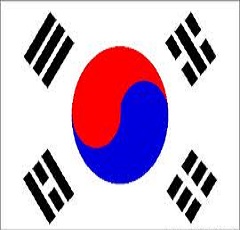
CASE: I-140 / National Interest Waiver
CLIENT: Korean
LOCATION: Virginia
Our client contacted us in October 2016 about the possibility of doing a National Interest Waiver self-petition. He is a researcher from South Korea and he is an exceptional researcher and scientist in the field of urban forestry and urban ecosystem research.
Our client’s significant contributions have placed him at the pinnacle of his field. He has identified innovative solutions for improving energy conservation in dense urban areas. Specifically, our client is making significant contribution in the area of urban forestry for energy conservation and other ecosystem services. His research is revealing and identifying how trees influence local climate and can decrease building energy consumption which has important implications for city, state, federal policies across the United States.
Upon review of his credentials and qualifications, our office determined that he was definitely qualified for the National Interest Waiver (NIW) category. Being qualified for NIW is beneficial since you would not need an employer nor family member to petition for you for green card purposes. You’d be eligible for a self-petition and unless you are from China or India, in which case you’d still have to wait for priority dates to be current, you would be eligible to apply for adjustment of status (green card) immediately without any lag in priority dates.
As a primer, NIW applicants must have a master’s or higher degree. While we prepared his case, the AAO set the new standards for NIW cases in Matter of Dhanasar, 26 I&N Dec. 884 (AAO 2016). Under the new standard, the petitioner must demonstrate that the foreign national’s proposed endeavor has both substantial merit and national importance. Next, it must be shown that he or she is well positioned to advance the proposed endeavor. Finally, the petitioner seeking the waiver needs to demonstrate that, on balance, it would be beneficial to the United States to waive the job offer and labor certification requirements. Id.
Our office prepared a 24-page brief for our client’s NIW filing. Our client also obtained 11 letters of recommendation from his colleagues and internationally-recognized researchers. Our office also included his publication records, presentation records, and conference materials in the NIW application. We demonstrated that our client is one of the few elite researchers who have made significant and substantial contributions to his field of endeavor, that he is well positioned to advance the proposed endeavor, and it would be beneficial to the United States to waive the requirements of a job offer and thus of a labor certification for our client. His NIW application contained 43 exhibits (Exhibit A to QQ).
Our office filed his I-140(NIW) petition to the USCIS Texas Service Center on January 26, 2017. Eventually, on September 27, 2017, the USCIS approved his I-140 petition without any Requests for Evidence. When we filed his I-140, he concurrently filed his I-485 adjustment of status application. His adjustment of status application will be approved soon as well.
{ 0 comments }

CASE: I-485 / I-140 / National Interest Waiver
CLIENT: Jordanian
LOCATION: Virginia
Our client contacted us in November 2014 about the possibility of doing a National Interest Waiver self-petition. He is a researcher from Jordan and he is an exceptional scientist in the field of Pharmaceutical science. His research focuses on discovery, design, and development of small molecules therapy or technology to treat various cardiovascular diseases and conditions. He has obtained his J-1 hardship waiver through our office’s legal assistance in 2014 and contacted our office again for his NIW.
His significant contributions have placed him at the pinnacle of the field of pharmaceutical science. He has significantly and extensively contributed to the drug discovery, design, and development aspects of glycosaminoglycans and their structural mimetics to treat various diseases including, but not limited to, thrombosis, inflammation, cancer, and several infectious diseases. His researches were highly evaluated by the reviewers of various journals and by colleagues and experts in the field.
Upon review of his credentials and qualifications, our office determined that he was qualified for the National Interest Waiver (NIW) category. Being qualified for NIW is beneficial since you would not need an employer nor family member to petition for you for green card purposes. You’d be eligible for a self-petition and unless you are from China or India, in which case you’d still have to wait for priority dates to be current, you would be eligible to apply for adjustment of status (green card) immediately without any lag in priority dates.
As a primer, NIW applicants must have a master’s or higher degree. The landmark immigration case that discusses the standards for NIWs is Matter of New York State Department of Transportation, 22 I&N Dec. 215 (Comm.1998). This case held that the qualifying applicant must show the following elements in his or her I-140 NIW petition: First, it must be shown that the alien seeks employment in an area of substantial intrinsic merit. Next, it must be shown that the proposed benefit will be national in scope. Finally, the petitioner seeking the waiver must establish that the alien will serve the national interest to a substantially greater degree than would an available U. S. worker having the same minimum qualifications.
Our office prepared a 34-page brief for our client’s NIW filing. Our client also obtained 10 letters of recommendation from his colleagues and internationally-recognized scientists. Our office also included his publication records, presentation records, and conference materials in the NIW application. We demonstrated the intrinsic merit of our client’s research in the United States, the national scope of his research, and asserted that our client would serve the national interest to a substantially greater degree than would an available U.S. worker having the same minimum qualifications. His NIW application contained 116 exhibits (Exhibit A to LLLLL).
Our office filed his I-140(NIW) petition to the USCIS Texas Service Center on December 26, 2014. However, on May 29, 2016, the USCIS issued Requests for Evidence and requested our client to submit updated ETA-9089 form. On May 31, 2016, our office filed the Response to RFE. On July 12, 2016, his I-140 was approved by the USCIS. Our office filed his I-485 application along with his I-140 petition concurrently. On June 15, 2017, the USCIS approved his I-485 application as well. Now, he is a green card holder.
{ 0 comments }
CASE: I-140 / National Interest Waiver
CLIENT: Korean
LOCATION: Akron, OH
Our client contacted us in October 2015 about the possibility of doing a National Interest Waiver self-petition. He is a researcher from South Korea and he is an exceptional researcher and scientist in the field of polymer engineering
His significant contributions have placed him at the pinnacle of his field of endeavor. Throughout his research career, our client has discovered new ways to synthesize polystyrene/silica composite particles which was highly evaluated by reviewers of various journals and by colleagues and experts in the field. Our client developed and applied two new methods which allow polymer-particle/silica-particle composited can be fabricated without any surface modification.
Upon review of his credentials and qualifications, our office determined that he was qualified for the National Interest Waiver (NIW) category. Being qualified for NIW is beneficial since you would not need an employer nor family member to petition for you for green card purposes. You’d be eligible for a self-petition and unless you are from China or India, in which case you’d still have to wait for priority dates to be current, you would be eligible to apply for adjustment of status (green card) immediately without any lag in priority dates.
As a primer, NIW applicants must have a master’s or higher degree. The landmark immigration case that discusses the standards for NIWs is Matter of New York State Department of Transportation, 22 I&N Dec. 215 (Comm.1998). This case held that the qualifying applicant must show the following elements in his or her I-140 NIW petition: First, it must be shown that the alien seeks employment in an area of substantial intrinsic merit. Next, it must be shown that the proposed benefit will be national in scope. Finally, the petitioner seeking the waiver must establish that the alien will serve the national interest to a substantially greater degree than would an available U. S. worker having the same minimum qualifications. (When we filed this case, Matter of Dhanasar, 26 I&N Dec. 884 (AAO 2016) was not issued yet. Thus, we still filed our client’s NIW under NYSDOT standard.)
Our office prepared a 20-page brief for our client’s NIW filing. Our client also obtained 6 letters of recommendation from his colleagues and internationally-recognized scientists. Our office also included his publication records, presentation records, and conference materials in the NIW application. We demonstrated the intrinsic merit of our client’s research in the United States, the national scope of his research, and asserted that our client would serve the national interest to a substantially greater degree than would an available U.S. worker having the same minimum qualifications. His NIW application contained 36 exhibits (Exhibit A to JJ).
Our office filed his I-140(NIW) petition to the USCIS Nebraska Service Center on February 2, 2016. Eventually, on April 28, 2017, the USCIS approved his I-140 petition without any Requests for Evidence. When we filed his I-140, he concurrently filed his I-485 adjustment of status application. His adjustment of status application will be approved soon as well.
{ 0 comments }
CASE: I-485 / National Interest Waiver
CLIENT: Korean
LOCATION: Colorado
Our client contacted us in May 2015 about the possibility of doing a National Interest Waiver. He is a researcher from South Korea and he is an exceptional researcher and scientist in the field of photophysical sciences; specifically, solar energy conversion sciences.
His significant contributions have placed him at the pinnacle of the field of photophysical research. His research regarding solid-state morphology in electron transfer processes of organic solar energy conversion devices has shown that the combination of two versatile spectroscopic techniques can bring new insights for complex material systems. Moreover, our client has discovered the electronically excited triplet state of single-walled carbon nanotubes (SWNTs) which were highly evaluated by the reviewers of various journals and by colleagues and experts in the field.
Upon review of his credentials and qualifications, our office determined that he was qualified for the National Interest Waiver (NIW) category. Being qualified for NIW is beneficial since you would not need an employer nor family member to petition for you for green card purposes. You’d be eligible for a self-petition and unless you are from China or India, in which case you’d still have to wait for priority dates to be current, you would be eligible to apply for adjustment of status (green card) immediately without any lag in priority dates.
As a primer, NIW applicants must have a master’s or higher degree. The landmark immigration case that discusses the standards for NIWs is Matter of New York State Department of Transportation, 22 I&N Dec. 215 (Comm.1998). This case held that the qualifying applicant must show the following elements in his or her I-140 NIW petition: First, it must be shown that the alien seeks employment in an area of substantial intrinsic merit. Next, it must be shown that the proposed benefit will be national in scope. Finally, the petitioner seeking the waiver must establish that the alien will serve the national interest to a substantially greater degree than would an available U. S. worker having the same minimum qualifications.
Our office prepared a 18-page brief for our client’s NIW filing. Our client also obtained 6 letters of recommendation from his colleagues and internationally-recognized scientists. Our office also included his publication records, presentation records, and conference materials in the NIW application. We demonstrated the intrinsic merit of our client’s research in the United States, the national scope of his research, and asserted that our client would serve the national interest to a substantially greater degree than would an available U.S. worker having the same minimum qualifications. His NIW application contained 35 exhibits (Exhibit A to II).
We filed his I-140(NIW) petition to the USCIS Nebraska Service Center on September 11, 2015. Eventually, on June 26, 2016, the USCIS approved his I-140 petition without any Requests for Evidence.
Our office filed his I-485 application along with his I-140 petition concurrently. However, on October 21, 2016, the USCIS issued Request for Evidence (RFE) and requested our client to submit updated vaccination records. Our client promptly submitted their updated vaccination records (I-693) to USCIS. Eventually, on November 22, 2016, the USCIS approved his I-485 application as well. Now, he is a green card holder.
{ 0 comments }
CASE: I-485 Adjustment of Status / National Interest Waiver
CLIENT: Korean
LOCATION: Dallas, TX
Our client contacted us in May 2015 about the possibility of doing a National Interest Waiver. He is a researcher from South Korea and he is an exceptional researcher and scientist in the field of renewable energy technology.
His significant contributions have placed him at the pinnacle of his field of endeavor. Throughout his research career, our client has made critical research contributions and developed an innovative algorithm to forecast the future variability of long-term wind power scenarios by analyzing the power spectral density of wind power outputs. Moreover, our client suggested an innovative stochastic storage operation algorithm based on his probabilistic wind power forecasting algorithm in order to limit the severe ramp rates of wind power. His expertise in probabilistic renewable energy forecasting is highly evaluated by the reviewers of various journals and by colleagues and experts in the field.
Upon review of his credentials and qualifications, our office determined that he was qualified for the National Interest Waiver (NIW) category. Being qualified for NIW is beneficial since you would not need an employer nor family member to petition for you for green card purposes. You’d be eligible for a self-petition and unless you are from China or India, in which case you’d still have to wait for priority dates to be current, you would be eligible to apply for adjustment of status (green card) immediately without any lag in priority dates.
As a primer, NIW applicants must have a master’s or higher degree. The landmark immigration case that discusses the standards for NIWs is Matter of New York State Department of Transportation, 22 I&N Dec. 215 (Comm.1998). This case held that the qualifying applicant must show the following elements in his or her I-140 NIW petition: First, it must be shown that the alien seeks employment in an area of substantial intrinsic merit. Next, it must be shown that the proposed benefit will be national in scope. Finally, the petitioner seeking the waiver must establish that the alien will serve the national interest to a substantially greater degree than would an available U. S. worker having the same minimum qualifications.
Our office prepared a 19-page brief for our client’s NIW filing. Our client also obtained 7 letters of recommendation from his colleagues and internationally-recognized scientists. Our office also included his publication records, presentation records, and conference materials in the NIW application. We demonstrated the intrinsic merit of our client’s research in the United States, the national scope of his research, and asserted that our client would serve the national interest to a substantially greater degree than would an available U.S. worker having the same minimum qualifications. His NIW application contained 34 exhibits (Exhibit A to HH).
Our office filed his I-140(NIW) petition to the USCIS Texas Service Center on July 7, 2016. Eventually, on October 3, 2016, the USCIS approved his I-140 petition without any Requests for Evidence. Our office filed his I-485 application along with his I-140 petition concurrently. On November 17, 2016, the USCIS approved his I-485 application as well. Now, he is a green card holder.
{ 0 comments }
CASE: I-140 / National Interest Waiver
CLIENT: Korean
LOCATION: Dallas, TX
Our client contacted us in May 2015 about the possibility of doing a National Interest Waiver self-petition. He is a researcher from South Korea and he is an exceptional researcher and scientist in the field of renewable energy technology.
His significant contributions have placed him at the pinnacle of his field of endeavor. Throughout his research career, our client has made critical research contributions and developed an innovative algorithm to forecast the future variability of long-term wind power scenarios by analyzing the power spectral density of wind power outputs. Moreover, our client suggested an innovative stochastic storage operation algorithm based on his probabilistic wind power forecasting algorithm in order to limit the severe ramp rates of wind power. His expertise in probabilistic renewable energy forecasting is highly evaluated by the reviewers of various journals and by colleagues and experts in the field.
Upon review of his credentials and qualifications, our office determined that he was qualified for the National Interest Waiver (NIW) category. Being qualified for NIW is beneficial since you would not need an employer nor family member to petition for you for green card purposes. You’d be eligible for a self-petition and unless you are from China or India, in which case you’d still have to wait for priority dates to be current, you would be eligible to apply for adjustment of status (green card) immediately without any lag in priority dates.
As a primer, NIW applicants must have a master’s or higher degree. The landmark immigration case that discusses the standards for NIWs is Matter of New York State Department of Transportation, 22 I&N Dec. 215 (Comm.1998). This case held that the qualifying applicant must show the following elements in his or her I-140 NIW petition: First, it must be shown that the alien seeks employment in an area of substantial intrinsic merit. Next, it must be shown that the proposed benefit will be national in scope. Finally, the petitioner seeking the waiver must establish that the alien will serve the national interest to a substantially greater degree than would an available U. S. worker having the same minimum qualifications.
Our office prepared a 19-page brief for our client’s NIW filing. Our client also obtained 7 letters of recommendation from his colleagues and internationally-recognized scientists. Our office also included his publication records, presentation records, and conference materials in the NIW application. We demonstrated the intrinsic merit of our client’s research in the United States, the national scope of his research, and asserted that our client would serve the national interest to a substantially greater degree than would an available U.S. worker having the same minimum qualifications. His NIW application contained 34 exhibits (Exhibit A to HH).
Our office filed his I-140(NIW) petition to the USCIS Texas Service Center on July 7, 2016. Eventually, on October 3, 2016, the USCIS approved his I-140 petition without any Requests for Evidence. When we filed his I-140, he concurrently filed his I-485 adjustment of status application. His adjustment of status application will be approved soon as well.
{ 0 comments }
CASE: I-140 / National Interest Waiver
CLIENT: Jordanian
LOCATION: Virginia
Our client contacted us in November 2014 about the possibility of doing a National Interest Waiver. He is a researcher from Jordan and he is an exceptional researcher and scientist in the field of Pharmaceutical Sciences; specifically, his research focuses on discovery, design, and development of small molecules therapy or technology to treat various cardiovascular diseases and conditions. He obtained his J-1 hardship waiver through our office as well in 2014 and contacted our office again for his NIW.
His significant contributions have placed him at the pinnacle of the field of pharmaceutical science. He contributed to the drug discovery, design, and developmental aspects of glycosaminoglycans and their structural mimetics to treat various diseases including, but not limited to, thrombosis, inflammation, cancer, and several infectious diseases. His research were highly evaluated by reviewers of various journals and by colleagues and experts in the field.
Upon review of his credentials and qualifications, our office determined that he was qualified for the National Interest Waiver (NIW) category. Being qualified for NIW is beneficial since you would not need an employer nor family member to petition for you for green card purposes. You’d be eligible for a self-petition and unless you are from China or India, in which case you’d still have to wait for priority dates to be current, you would be eligible to apply for adjustment of status (green card) immediately without any lag in priority dates.
As a primer, NIW applicants must have a master’s or higher degree. The landmark immigration case that discusses the standards for NIWs is Matter of New York State Department of Transportation, 22 I&N Dec. 215 (Comm.1998). This case held that the qualifying applicant must show the following elements in his or her I-140 NIW petition: First, it must be shown that the alien seeks employment in an area of substantial intrinsic merit. Next, it must be shown that the proposed benefit will be national in scope. Finally, the petitioner seeking the waiver must establish that the alien will serve the national interest to a substantially greater degree than would an available U. S. worker having the same minimum qualifications.
Our office prepared a 34-page brief for our client’s NIW filing. Our client also obtained 10 letters of recommendation from his colleagues and internationally-recognized scientists. Our office also included his publication record, presentation record, and conference materials in the NIW application. We demonstrated the intrinsic merit of our client’s research in the United States, the national scope of his research, and asserted that our client would serve the national interest to a substantially greater degree than would an available U.S. worker having the same minimum qualifications. His NIW application contained 116 exhibits (Exhibit A to LLLLL).
Our office filed his I-140(NIW) petition to the USCIS Texas Service Center on December 26, 2014. However, on May 29, 2016, the USCIS issued Requests for Evidence and requested our client to submit an updated ETA-9089 form. On May 31, 2016, our office filed the Response to RFE. Eventually, on July 12, 2016, his I-140 was approved by the USCIS. When we filed his I-140, he concurrently filed his I-485 adjustment of status application. His adjustment of status application will be approved soon as well.
{ 0 comments }
CASE: I-140 / National Interest Waiver
CLIENT: Korean
LOCATION: Colorado
Our client contacted us in May 2015 about the possibility of doing a National Interest Waiver I-140 self-petition. He is a researcher from South Korea in the field of photophysical sciences; specifically, solar energy conversion sciences.
His significant contributions have placed him at the pinnacle of the field of photophysical research. His research regarding solid-state morphology in electron transfer processes of organic solar energy conversion devices has shown that the combination of two versatile spectroscopic techniques can bring new insights for complex material systems. Moreover, our client has discovered electronically excited triplet states of single-walled carbon nanotubes (SWNTs) which were highly evaluated by reviewers of various journals and by colleagues and experts in the field.
Upon review of his credentials and qualifications, our office determined that he was qualified for the National Interest Waiver (NIW) category. Being qualified for NIW is beneficial since you would not need an employer nor family member to petition for you for green card purposes. You’d be eligible for a self-petition and unless you are from China or India, in which case you’d still have to wait for priority dates to be current, you would be eligible to apply for adjustment of status (green card) immediately without any lag in priority dates.
As a primer, NIW applicants must have a master’s or higher degree. The landmark immigration case that discusses the standards for NIWs is Matter of New York State Department of Transportation, 22 I&N Dec. 215 (Comm.1998). This case held that the qualifying applicant must show the following elements in his or her I-140 NIW petition: First, it must be shown that the alien seeks employment in an area of substantial intrinsic merit. Next, it must be shown that the proposed benefit will be national in scope. Finally, the petitioner seeking the waiver must establish that the alien will serve the national interest to a substantially greater degree than would an available U. S. worker having the same minimum qualifications.
Our office prepared a 18-page brief for our client’s NIW filing. Our client also obtained 6 letters of recommendation from his colleagues and internationally-recognized scientists. Our office also included his publication records, presentation records, and conference materials in the NIW application. We demonstrated the intrinsic merit of our client’s research in the United States, the national scope of his research, and asserted that our client would serve the national interest to a substantially greater degree than would an available U.S. worker having the same minimum qualifications. His NIW application contained 35 exhibits (Exhibit A to II).
Our office filed his I-140(NIW) petition to the USCIS Nebraska Service Center on September 11, 2015. Eventually, on June 26, 2016, the USCIS approved his I-140 petition without any Requests for Evidence. When we filed his I-140, he concurrently filed his I-485 adjustment of status application. His adjustment of status application will be approved soon as well.
{ 0 comments }
CASE: I-140 (EB-2 Category) / Schedule A / Premium Processing
EMPLOYER: Physician’s Office
BENEFICIARY: South Korea
LOCATION: Atlanta, GA
Our client is a certified nurse practitioner. Her prospective employer was willing to petition her for a second-preference employment immigrant visa petition (I-140). Since she was a certified nurse practitioner, she was eligible for “Schedule A” classification.
The Department of Labor (DOL) maintains a schedule of occupations in its regulations, Schedule A included, for which the individual permanent labor certification procedure is not required. The schedule of pre-certified occupations is referred to as Schedule A, and is included in DOL regulations at 20 CFR 656.10. Based on an occupation’s inclusion on Schedule A, an employer may file an immigrant visa petition (I-140) directly with the (USCIS) without first going to the DOL for a labor certification. Usually, prior to filing I-140 petitions (EB-2 or EB-3 category), the employer must file a Labor Certification to the Department of Labor. However, for Schedule A cases, the employer does not have to go through the labor certification process. The position of Nurse Practitioner is included in Schedule A.
Our client has a Bachelors and Masters degree in nursing and is a certified Nurse Practitioner. Our office was retained on December 15, 2015 and we filed the Prevailing Wage Determination immediately.
We filed the I-140 application on April 13, 2016 via premium processing. We included the job offer letter, the notice of filing, employment letter, and other necessary supporting documents.
In our cover brief, we included the “ability to pay” argument and why nurse practitioners must fall under the Schedule A designation. On April 25, 2016, without any Request for Evidence (RFE), the USCIS Texas Service Center approved her EB-2 I-140 petition. Since the priority date for South Korean national is current for the EB-2 category, she is eligible to file her adjustment of status application now.
{ 0 comments }
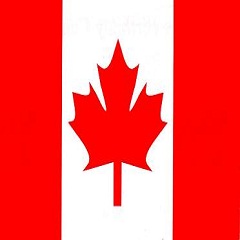
CASE: I-485 based on Approved I-140 (EB-2)
APPLICANT: Canadian Citizen who was born in China
LOCATION: South Dakota
Our client is an associate professor from Canada (Chinese national), who is currently working at the University in South Dakota who was willing to petition her for a second-preference petition (I-140). She has maintained her status as an H-1B visa holder in the United States. She had an approved I-140 petition which was filed by her current employer and this I-140 petition’s priority date was June 1, 2012.
Once her priority date became current, she contacted our office and retained us for her I-485 adjustment of status application. Our office filed an I-485 adjustment of status application for our client on July 13, 2015. Everything went smoothly and the receipt notices and fingerprint appointment came on time.
Although there was a simple RFE request from the USCIS (they requested our client’s expired passport pages), on March 31, 2016, the USCIS Nebraska Service Center approved our client’s adjustment of status application. She is now a green card holder.
{ 0 comments }
Connect With Us


FREE CONSULTATIONS
Approvals by State
- Ohio
- Alabama
- Mississippi
- North Dakota
- Virgin Islands
- Iowa
- Virgin Islands
- Maine
- Idaho
- South Dakota
- Hawaii
- DC
- Minnesota
- North Carolina
- Saipan
- Kansas
- Colorado
- South Carolina
- Montana
- Kentucky
- Wyoming
- Nevada
- Arkansas
- New York
- California
- Texas
- Washington
- Virginia
- Arizona
- Nebraska
- Maryland
- Illinois
- Pennsylvania
- New Jersey
- Georgia
- Connecticut
- Missouri
- Wisconsin
- Indiana
- Louisiana
- Florida
- Tennessee
- Oklahoma
- Michigan
- Massachusetts
- New Mexico
Country Approvals
- Philippines
- Ecuador
- Gabon
- Bulgaria
- Yemen
- Netherlands
- Zambia
- Morocco
- Iraq
- Burkina Faso
- Turkey
- United Kingdom
- Venezuela
- Japan
- Egypt
- Sierra Leone
- Australia
- Lebanon
- Thailand
- Kyrgyzstan
- Saint Lucia
- Angola
- Ireland
- Macedonia
- Hong Kong
- Algeria
- Belgium
- UAE
- Serbia
- China
- South Korea
- India
- Kenya
- Indonesia
- Ghana
- Pakistan
- Nepal
- Britain
- Jamaica
- Canada
- Senegal
- Benin
- Colombia
- Moldova
- Jordan
- Romania
- Malaysia
- Guatemala
- Saudi Arabia
- Cameroon
- Africa
- Mexico
- Ethiopia
- Germany
- Ukraine
- Sweden
- Vietnam
- Costa Rica
- Cambodia
- El Salvador
- Nigeria
- Hungary
- Singapore
- Argentina
- Brazil
- Albania
- Sri Lanka
- Russia
- Zimbabwe
- Bangladesh
- Peru
- Guyana
- Iran
- Italy
- Suriname
- Honduras
- Gambia
- Cote D’Ivoire
- Hubei
- Grenada
- Spain
- Slovakia
- France
- Taiwan
- Tunisia
- Cuba
- Croatia
- Bahamas