
5005 Rockside Road Ste. 600
Cleveland Ohio 44131
(216) 573-3712
FREE CONSULTATIONS






CONTACT US
CLIENTS’ CHOICE AWARD
Success Stories

CASE: I-140 / National Interest Waiver
CLIENT: Filipino
LOCATION: Boise, ID
Our client contacted us in March 2019 about the possibility of doing a National Interest Waiver self-petition. He is a researcher from the Philippines and has a Ph.D. Degree in Atmospheric Science. He is already considered an exceptional researcher and scientist in the field of atmospheric science research.
Our client’s significant contributions have placed him at the pinnacle of his field. Our client’s research centers on ozone, a key air pollutant that is produced from precursor emissions and has adverse impacts on human health and ecosystems. Because of his innovative research, our client’s research works were highly evaluated by the reviewers of various journals and by colleagues and experts in the field.
Upon review of his credentials and qualifications, our office determined that he was definitely qualified for the National Interest Waiver (NIW) category. Being qualified for NIW is beneficial since you would not need an employer nor family member to petition for you for green card purposes. You’d be eligible for a self-petition and unless you are from China or India, in which case you’d still have to wait for priority dates to be current, you would be eligible to apply for adjustment of status (green card) immediately without any lag in priority dates.
As a primer, NIW applicants must have a master’s or higher degree. While we prepared his case, the AAO set the new standards for NIW cases in Matter of Dhanasar, 26 I&N Dec. 884 (AAO 2016). Under the new standard, the petitioner must demonstrate that the foreign national’s proposed endeavor has both substantial merit and national importance. Next, it must be shown that he or she is well positioned to advance the proposed endeavor. Finally, the petitioner seeking the waiver needs to demonstrate that, on balance, it would be beneficial to the United States to waive the job offer and labor certification requirements. Id.
Our office prepared a 24-page brief for our client’s NIW filing. Our client also obtained 8 letters of recommendation from his colleagues and internationally-recognized researchers. Our office also included his publication records, presentation records, and conference materials in the NIW application. We demonstrated that our client is one of the few elite researchers who have made significant and substantial contributions to his field of endeavor, that he is well positioned to advance the proposed endeavor, and it would be beneficial to the United States to waive the requirements of a job offer and thus of a labor certification for our client.
Our office filed his I-140(NIW) petition to the USCIS Nebraska Service Center on June 10, 2019. Eventually, on November 20, 2019, the USCIS approved his I-140 petition without any Requests for Evidence. Now, he can file his adjustment of status application.
{ 0 comments }

CASE: I-485 based on Approved I-140 (EB-2)
APPLICANT: Korean
LOCATION: Bowling Green, Ohio
Our client is an assistant professor from South Korea, who is currently teaching at a state university which was willing to petition her for a second-preference petition (I-140). Our client has a Ph.D. degree and has worked for this school since 2017. She has maintained her status as an H-1B visa holder in the United States. She had an approved I-140 petition which was filed by her current employer and this I-140 petition’s priority date was June 12, 2018.
In November 2018, she contacted our office and retained us for her I-485 adjustment of status application. Our office filed an I-485 adjustment of status application for our client on March 14, 2019. Everything went smoothly and the receipt notices and fingerprint appointment came on time.
Prior to the interview, we thoroughly prepared our client via conference call as well. On September 17, 2019, our client was interviewed at Cleveland Ohio USCIS office. Attorney Sung Hee (Glen) Yu from our office also accompanied our client as well. Though her interview went well, the visa numbers were not available for her case in September of 2019. Nevertheless, on November 15, 2019, her green card application was approved.
{ 0 comments }
CASE: I-485 Adjustment of Status based on Approved EB-2 Schedule A I-140
EMPLOYER: Outpatient Mental Health Center
BENEFICIARY: Korean Nurse Practitioner
LOCATION: Orem, Utah
Our client is a certified mental health nurse practitioner. His current employer was willing to petition him for a second-preference employment immigrant visa petition (I-140). Since he is a certified mental health nurse practitioner, she was eligible for “Schedule A” classification.
The Department of Labor (DOL) maintains a schedule of occupations in its regulations, Schedule A included, for which the individual permanent labor certification procedure is not required. The schedule of pre-certified occupations is referred to as Schedule A, and is included in DOL regulations at 20 CFR 656.10. Based on an occupation’s inclusion on Schedule A, an employer may file an immigrant visa petition (I-140) directly with the (USCIS) without first going to the DOL for a labor certification. Usually, prior to filing I-140 petitions (EB-2 or EB-3 category), the employer must file a Labor Certification to the Department of Labor. However, for Schedule A cases, the employer does not have to go through the labor certification process. The position of Nurse Practitioner is included in Schedule A.
Our client has a Ph.D. degree in nursing and is a certified Nurse Practitioner. Our office was retained on August 9, 2018, and we filed the Prevailing Wage Determination immediately.
We filed the I-140 application on January 18, 2019 via premium processing. We included the job offer letter, the notice of filing, employment letter, and other necessary supporting documents.
In our cover brief, we included the “ability to pay” argument and why nurse practitioners must fall under the Schedule A designation. Eventually, on January 30, 2019, the USCIS Nebraska Service Center approved his EB-2 I-140 petition.
Once his I-140 petition was approved, he retained our office again and determined to file an adjustment of status application for him and his wife. On February 26, 2019, our office filed an I-485 adjustment of status application for our client and his wife. Everything went smoothly and the receipt notices and fingerprint appointment came on time.
Prior to the interview, we thoroughly prepared our client via conference calls as well. On September 16, 2019, our client was interviewed at Salt Lake City Utah USCIS office. Attorney Sung Hee (Glen) Yu from our office also accompanied our clients. Though their interview went well, the visa numbers were not available for their cases in September of 2019. Nevertheless, on November 13, 2019, their I-485 applications were approved by the USCIS.
{ 0 comments }

CASE: I-485 Adjustment of Status / 245(k)
APPLICANT: Filipino Speech Language Pathologist
LOCATION: North Dakota
Our client has a current employer that was willing to petition him for a second-preference I-140. Our client has a master’s degree in speech language pathology, a valid North Dakota speech language pathologist license, and has worked for his current employer since August 2015. Based on our client’s education and work background, our office determined that he is clearly eligible for EB-2 classification for his I-140 petition. Our client eventually retained us in March 2017.
Prior to filing PERM, our firm prepared the prevailing wage request, job order, advertisements, internal job posting, recruitment report, and all other steps which are important pre-PERM filing. Take note that the PERM application could be filed at least 60 days from the job posting date or 30 days from the last ad. Within a week from our retention, the prevailing wage request was filed. After we obtained the PW determination, our office filed the job order on June 20, 2017. On December 13, 2017, we promptly filed PERM. Eventually, on April 26, 2018, the PERM Labor Certification was approved – an EB2 position for the Filipino beneficiary.
We then proceeded with the I-140 Petition filing. We submitted the “ability to pay” letter for the I-140 petition application. We included the job offer letter, employer’s tax records, and other necessary supporting documents. The I-140 Petition was filed on July 26, 2018 via premium processing service.
However, on August 6, 2018, the USCIS Nebraska Service Center issued Request for Evidence (RFE) and requested our client to submit the documents to show special skills for Beneficiary. On September 5, 2018, our office filed Response to RFE and included the letter from the Petitioner regarding the proof that Beneficiary already obtained his special skills for the proffered position. Eventually, on September 14, 2018, the I-140 EB2 Petition for our Filipino client was approved.
Once his I-140 petition was approved, he retained our office again and determined to file an adjustment of status application for him and his immediate family members. However, our office was informed that our client’s DS-2019 was not extended by his employer and he has continuously worked for his employer without the DHS’ authorization. Thus, he worked without authorization and overstayed his visa status.
Section 245(k) of the Immigration and Nationality Act can render the normal bars to adjustment of status found in section 245(c)(2), (c)(7), and (c)(8) inapplicable to certain employment-based adjustment of status applicants who, since their last lawful admission to the United States have not, for an aggregate period of more than 180 days:
- Failed to maintain, continuously, a lawful status;
- Engaged in unauthorized employment; or
- Otherwise violated the terms and conditions of his or her admission
INA §245(k).
An eligible derivative of an alien may benefit from section 245(k) in his or her own right if he or she has failed to maintain continuously a lawful status, worked without authorization, or otherwise violated the terms and conditions of his or her admission for an aggregate of 180 days or less pursuant to a lawful admission.
(See page 2, Neufeld Memorandum July 14, 2008, “Applicability of section 245(k) to Certain Employment-Based Adjustment of Status Applications filed under Section 245(a).
At least, our client has not accrued over 180 days of “failure to maintain lawful status” nor over 180 days of “unauthorized employment”, and as such, he was still eligible to adjust status based on the I-485 filing through INA 245(k).
On December 21, 2018, our office filed an I-485 adjustment of status application for our client and his immediate family members. Our office also submitted a detailed cover brief and explained why our client is still eligible for the adjustment of status through 245K subsection despite his overstay and unauthorized employment. Everything went smoothly and the receipt notices and fingerprint appointment came on time.
Prior to the interview, we thoroughly prepared our client via conference calls as well. On November 6, 2019, our client was interviewed at Minneapolis, Minnesota USCIS office. Attorney Sung Hee (Glen) Yu from our office also accompanied our clients. Though interview was thoroughly held, on November 8, 2019, their I-485 applications were approved by the USCIS.
{ 0 comments }
EB-3 Green Card Approval for Malaysian Financial Planning & Analysis Manager in Boston Massachusetts
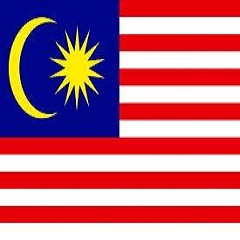
CASE: EB-3 I-485 Adjustment of Status
EMPLOYER: Oleo-chemical manufacturer company in Boston, MA
BENEFICIARY: Malaysian Financial Planning & Analysis Manager
Our client is from Malaysia. His current employer was willing to do an immigration petition for him, third-preference. Our client has a Bachelor’s degree in Business Administration. After talking to our client, our firm concluded that his employer can petition him as a Financial Planning & Analysis Manager. Based on our client’s education and work background, our office determined that he is eligible for EB-3 classification.
Prior to filing PERM, our firm prepared the prevailing wage request, job order, advertisements, internal job posting, recruitment report, and all other steps which are important pre-PERM filing. Take note that PERM could be filed at least 60 days from the job posting date or 30 days from the last ad. On May 2, 2018, the prevailing wage request was filed. After we obtained Prevailing Wage determination, our office filed the job order on August 14, 2018. On October 17, 2018, we promptly filed PERM. Eventually, on January 8, 2019, the PERM Labor Certification was approved – an EB3 position for the Malaysian beneficiary.
We then proceeded with the I-140 Petition filing. We submitted the “ability to pay” letter for the I-140 petition application. We included the job offer letter, employer’s tax records, and other necessary supporting documents.
The I-140 Petition was filed on February 1, 2019 via premium processing service. Eventually, on February 14, 2019, the I-140 EB3 Petition for our Malaysian client was approved without any Request for Evidence (RFE).
Once the I-140 petition was approved, our client retained our office again for the I-485 adjustment of status applications for him and his wife. Our office filed an I-485 adjustment of status application for our clients on March 15, 2019. Everything went smoothly and the receipt notices and fingerprint appointment came on time.
Prior to the interview, we thoroughly prepared our client via conference call as well. On November 6, 2019, our client was interviewed at Boston Massachusetts USCIS office. Eventually, on the same day of the interview, our clients’ green card applications were approved.
{ 0 comments }
CASE: I-140 (EB-3 Category) / Schedule A
EMPLOYER: Nursing / Rehabilitation Center
BENEFICIARY: Filipina Registered Nurse in Overland Park, KS
LOCATION: Houston, TX
Our client is Filipina registered nurse who currently resides in Overland Park, KS. Her prospective employer was willing to petition her for a third-preference employment immigrant visa petition (I-140) as a registered nurse.
Since she is a registered nurse, she is eligible for “Schedule A” classification. The Department of Labor (DOL) maintains a schedule of occupations in its regulations, Schedule A included, for which the individual permanent labor certification procedure is not required. The schedule of pre-certified occupations is referred to as Schedule A, and is included in DOL regulations at 20 CFR 656.10. Based on an occupation’s inclusion on Schedule A, an employer may file an immigrant visa petition (I-140) directly with the (USCIS) without first going to the DOL for a labor certification. Usually, prior to filing I-140 petitions (EB-2 or EB-3 category), the employer must file a Labor Certification to the Department of Labor. However, for Schedule A cases, the employer does not have to go through the labor certification process. The position of Professional Nurses is included in Schedule A.
Our client has a nursing degree and has Texas Registered Nursing License. Our firm told her that her prospective employer can petition her as a Registered Nurse under the schedule A category. Our office was retained on May 8, 2019 and started on her Prevailing Wage Request.
We filed the I-140 application on September 26, 2019 via regular processing. We included the job offer letter, the notice of filing, and other necessary supporting documents. On October 24, 2019, our office filed I-907 premium processing upgrade request for this petition. Without any issuance of Request for Evidence (RFE), on November 6, 2019, the I-140 was approved. Now, our client can file an adjustment of status application based on the approved I-140 petition when her priority dates become current.
{ 0 comments }

CASE: I-485 Adjustment of Status / Schedule A
APPLICANT: Nepalese Registered Nurse
LOCATION: Lincoln, NE
Our client is a registered nurse from Nepal licensed in the state of Nebraska. She came to the United States and currently works in the United States with her TPS status. Her current employer was willing to petition her for a third-preference employment immigrant visa petition (I-140).
Since she is a registered nurse, she is eligible for “Schedule A” classification. The Department of Labor (DOL) maintains a schedule of occupations in its regulations, Schedule A included, for which the individual permanent labor certification procedure is not required. The schedule of pre-certified occupations is referred to as Schedule A, and is included in DOL regulations at 20 CFR 656.10. Based on an occupation’s inclusion on Schedule A, an employer may file an immigrant visa petition (I-140) directly with the (USCIS) without first going to the DOL for a labor certification. Usually, prior to filing I-140 petitions (EB-2 or EB-3 category), the employer must file a Labor Certification to the Department of Labor. However, for Schedule A cases, the employer does not have to go through the labor certification process. The position of Professional Nurses is included in Schedule A.
Our client has a nursing degree and has worked for the sponsor-employer. Our firm told her that her employer can petition her as a Registered Nurse under the schedule A category. Our office was retained on April 12, 2018 and started on her Prevailing Wage Request.
We filed the I-140 application on July 31, 2018 via premium processing. We included the job offer letter, the notice of filing, and other necessary supporting documents. However, the USCIS issued Request for Evidence on August 8, 2018 and requested our client to submit the Petitioner’s financial record to show ability to pay the proffered wage for our client. We filed the Response to RFE on August 21, 2018 and eventually, on September 1, 2018, the I-140 was approved.
Once her I-140 petition was approved, she retained our office again and determined to file an adjustment of status application for her and her husband. On October 15, 2018, our office filed an I-485 adjustment of status application for our client and her husband. Everything went smoothly and the receipt notices and fingerprint appointment came on time.
Prior to the interview, we thoroughly prepared our client via conference calls as well. On August 8, 2019, our client was interviewed at Omaha Nebraska USCIS office. Though their interview went well, the visa numbers were not available for their cases in August and September of 2019. Nevertheless, on October 30, 2019, their I-485 applications were approved by the USCIS.
{ 0 comments }

CASE: J-1 Waiver (No Objection Statement)
NATIONALITY: Philippines
LOCATION: Williston, ND
Our client came to the United States as a J-1 exchange visa holder to work as s speech language pathologist. His current U.S. employer filed an I-140 petition in 2018 for him and this petition was approved by the USCIS. Our client and his family members filed their adjustment of status application in December 2018. However, it was not clear whether his program was subject to the two-year foreign residency requirement. His J-1 visa page clearly states that he is not subject to the requirement; though his wife’s J-2 visa page states that she is subject to the requirement. In order to clarify it, our office filed an advisory opinion request to the Department of State in January 2019. The DOS responded that our client is subject to the 2-year foreign residency requirement.
If someone is subject to the two-year foreign residency requirement, he or she cannot get a green card in the United States until he or she fulfills the requirement or obtains a waiver. Our client needs a waiver and sought for our legal assistance on this matter.
Upon retention, our office promptly prepared a waiver request through a No Objection Statement (NOS) from the Philippine Embassy in the United States and eventually the EVP in the Philippines.
On May 9, 2019, the J-1 Waiver Application (Form DS-3035) was filed to the Department of State. We also sent a request to the North Dakota State Government to get authentication for the necessary documents. Later, these authenticated documents and No Objection Application (for the Philippines Government) were sent to the Philippines Consulate General in Chicago for further authentication. On May 22, 2019, our office sent our client’s materials to the Waiver Review Committee in Manila, Philippines. Then, the Waiver Review Committee forwarded the materials and favorable recommendation to the Philippine Embassy in D.C. who eventually issued a No Objection Statement.
On the Waiver Review Division issued a favorable recommendation based on the No Objection statement. Eventually, on October 31, 2019, the USCIS issued an I-612 approval notice for the waiver.
{ 0 comments }
CASE: I-485 based on Approved I-140 (EB-2)
APPLICANT: Korean
LOCATION: Erie, PA
Our client is an assistant professor from South Korea, who is currently teaching at a state university which was willing to petition him for a second-preference petition (I-140). Our client has a Ph.D. degree and has worked for this school since August 2017. He has maintained her status as an H-1B visa holder in the United States. He had an approved I-140 petition which was filed by his current employer and this I-140 petition’s priority date was July 5, 2018.
In November 2018, he contacted our office and retained us for his I-485 adjustment of status application. Our office filed an I-485 adjustment of status application for our client on November 21, 2018. Everything went smoothly and the receipt notices and fingerprint appointment came on time.
Prior to the interview, we thoroughly prepared our client via conference call as well. On August 26, 2019, our client and his wife were interviewed at Buffalo New York USCIS office. The interview went well; however, the visa number was not available after the interview. Eventually, on October 28, 2019, his and his wife’s green card applications were approved.
{ 0 comments }
CASE: EB-3 I-140
EMPLOYER: Rehabilitation Center in Katy, TX
BENEFICIARY: Filipina SM Network and Computer Systems Administrator in Malaysia
Our client has a prospective employer that as willing to petition her for a third-preference petition (I-140). Our client has a Bachelor’s degree in Computer Science and currently works for an IT consulting company in Malaysia. Based on our client’s education and work background, our office determined that she is eligible for EB-3 classification for her I-140 petition. Our client eventually retained us in April 2018.
Prior to filing PERM, our firm prepared the prevailing wage request, job order, advertisements, internal job posting, recruitment report, and all other steps which are important pre-PERM filing. Take note that the PERM application could be filed at least 60 days from the job posting date or 30 days from the last ad. Within a week from our retention, the prevailing wage request was filed. After we obtained the PW determination, the job order was filed on September 27, 2018. On January 21, 2019, we promptly filed PERM.
However, on May 24, 2019, the Department of Labor issued a request for audit. The DOL requested documents from Petitioner to determine whether the recruitment process was done properly. In response to the Audit request, our office prepared the response to Audit brief along with Employer’s declaration, notice of filing, and recruitment documentation on June 6, 2019.
Eventually, on August 29, 2019, the PERM Labor Certification was approved – an EB3 position for the Filipina beneficiary.
We then proceeded with the I-140 Petition filing. We submitted the “ability to pay” letter for the I-140 petition application. We included the job offer letter, employee’s academic credential documents, and other necessary supporting documents.
The I-140 Petition was filed on September 18, 2019 via regular processing service. Eventually, on October 11, 2019, the I-140 EB3 Petition for our Filipina client was approved.
{ 0 comments }
Connect With Us


FREE CONSULTATIONS
Approvals by State
- Ohio
- Alabama
- Mississippi
- North Dakota
- Virgin Islands
- Iowa
- Virgin Islands
- Maine
- Idaho
- South Dakota
- Hawaii
- DC
- Minnesota
- North Carolina
- Saipan
- Kansas
- Colorado
- South Carolina
- Montana
- Kentucky
- Wyoming
- Nevada
- Arkansas
- New York
- California
- Texas
- Washington
- Virginia
- Arizona
- Nebraska
- Maryland
- Illinois
- Pennsylvania
- New Jersey
- Georgia
- Connecticut
- Missouri
- Wisconsin
- Indiana
- Louisiana
- Florida
- Tennessee
- Oklahoma
- Michigan
- Massachusetts
- New Mexico
Country Approvals
- Philippines
- Ecuador
- Gabon
- Bulgaria
- Yemen
- Netherlands
- Zambia
- Morocco
- Iraq
- Burkina Faso
- Turkey
- United Kingdom
- Venezuela
- Japan
- Egypt
- Sierra Leone
- Australia
- Lebanon
- Thailand
- Kyrgyzstan
- Saint Lucia
- Angola
- Ireland
- Macedonia
- Hong Kong
- Algeria
- Belgium
- UAE
- Serbia
- China
- South Korea
- India
- Kenya
- Indonesia
- Ghana
- Pakistan
- Nepal
- Britain
- Jamaica
- Canada
- Senegal
- Benin
- Colombia
- Moldova
- Jordan
- Romania
- Malaysia
- Guatemala
- Saudi Arabia
- Cameroon
- Africa
- Mexico
- Ethiopia
- Germany
- Ukraine
- Sweden
- Vietnam
- Costa Rica
- Cambodia
- El Salvador
- Nigeria
- Hungary
- Singapore
- Argentina
- Brazil
- Albania
- Sri Lanka
- Russia
- Zimbabwe
- Bangladesh
- Peru
- Guyana
- Iran
- Italy
- Suriname
- Honduras
- Gambia
- Cote D’Ivoire
- Hubei
- Grenada
- Spain
- Slovakia
- France
- Taiwan
- Tunisia
- Cuba
- Croatia
- Bahamas