
5005 Rockside Road Ste. 600
Cleveland Ohio 44131
(216) 573-3712
FREE CONSULTATIONS






CONTACT US
CLIENTS’ CHOICE AWARD
Success Stories

CASE: I-130 Motion to Reopen Nunc Pro Tunc
CLIENT: U.S. Citizen Petitioner in California / Indian Beneficiaries in India
LOCATION: California
Our client is a naturalized U.S. citizen who resides in California. In August 2004, our client filed three I-130 petitions for her siblings who are in India. Shortly after the filing of the I-130 petitions, our client received a receipt notice from the USCIS. Since the time that our client filed the I-130s, she has never moved and has never received any Requests for Evidence or decisions in the mail.
After she filed the petition, for the next nine years, she has always called the USCIS Customer Service Center to inquire about the status of the I-130 petitions. The CIS customer service personnel have always told our client that there were all in process. Petitioner has contacted the USCIS Customer Service Center throughout the last 9 years (from 2004 to 2013), and the only answer she got from the USCIS was that the Petition was still pending.
In August of 2013, our client made an Infopass appointment with the local USCIS office and went. When she went to the Infopass appointment, the officer there informed her that one of her cases was denied due to abandonment in 2009 and two of her I-130 petition cases were administratively closed in 2009 as well.
Over the past 9 years, our client and her siblings were waiting for the CIS decision with regard to the I-130 petition. Our client timely filed all requested documents at the time of initial filing of the I-130. There were no Requests for Evidence or denial decisions received in the mail. Despite her efforts, our client never received any succeeding notice about the I-130 petition. Only in August 2013 did she find out about the real processing status of the 3 Petitions when she went for an Infopass.
Our client became so disappointed and sought legal assistance to resolve this matter.
She retained our office on September 18, 2013 and our office promptly prepared and filed a Motion to Reopen to the USCIS the three petitions and asked the Service to exercise its discretion in re-opening nun pro tunc the cases beyond the filing deadline since our client has never been served nor informed by the CIS with regard to the administrative closure of the I-130 petitions.
Moreover, our Motion requested the CIS to summarily approve the I-130 petition for our client’s siblings because our client and her siblings have been waiting for the CIS decision for more than 9 years, without any decision from the USCIS.
The Motion noted that it would be extremely unfortunate and unfair for our client and her siblings if she has to re-file the I-130 petitions again since the priority date will be moved and they would have to wait another ten years.
Our office filed the Motions with Form I-290Bs on September 24, 2013.
On February 17, 2014, the USCIS California Center informed us that the cases are transferred to National Visa Center.
On February 25, 2014, the USCIS moved to reopen the matter, and also approved the two of her three I-130s with the old priority date.
Two of client’s 9-year pending I-130 petitions finally got an approval, and once priority dates become current, her siblings can file an Immigrant Visa in India, without having to re-file another I-130 and wait 10 more years.
{ 0 comments }
CASE: Marriage-Based Adjustment of Status
CLIENT: Indian
LOCATION: Long Island, NY
Our client came to the United States in September 2006 with an H-1B work visa from India. Since then, he has maintained his H-1B status, and his employer filed an I-140 petition for him as well.
He married a U.S. Citizen in June 2013 and retained our office on August 7, 2013 for his adjustment of status application.
Our firm prepared and filed the I-130 Petition and Adjustment of Status Application on October 9, 2013. Everything went smoothly and the receipt notices, fingerprint appointment, and work permits all came on time.
Prior to the interview, we thoroughly prepared our clients through conference calls. On March 6, 2014, our client was interviewed at the Holtsville, NY USCIS. Attorney Sung Hee (Glen) Yu from our office also accompanied our client as well. On the same day, his green card application was approved.
{ 0 comments }
CASE: Marriage to US Citizen Green Card
CLIENT: Indian
LOCATION: Cleveland, OH
Our client came to the United States from India. Currently, she is working for her employer under an H-1B visa. Later, she married her current husband, who was a green card holder at the time of filing, in September 2012.
Our client retained our office in the middle of September 2013 for her I-130 petition and I-485 adjustment of status application. Although the Petitioner was a green card holder, we could file the I-130 / I-485 simultaneously at that time because the priority date for the F2A category was current in August and September 2013.
Our office prepared and filed an I-130 petition and I-485 adjustment of status application, together with all necessary supporting documents, on September 26, 2013. Everything went smoothly and the receipt notices, fingerprint appointment, and work permits all came on time.
While her green card application was pending, our client’s husband took his naturalization test and interview in February 2014. Prior to the interview, we thoroughly prepared our clients at our office. On February 6, 2014, our client was interviewed at the Cleveland, Ohio USCIS office.
The interview went well, however, our client’s green card application could not be adjudicated because of the retrogression of priority dates.
On February 21, 2014, our client’s husband finally took his oath and became a naturalized U.S. citizen. After the ceremony, our client’s husband gave us a copy of his naturalization certificate which our office eventually submitted to the USCIS office on the same day.
By doing this, our client’s case was upgraded from the F2A category to Immediate Relative, which has available immigrant visa numbers all the time. Eventually, on February 27, 2014, the USCIS approved our client’s green card application.
{ 0 comments }

CASE: Adjustment of Status Based on Approved K-1 Visa
CLIENT: Filipino
LOCATION: Dallas, TX
Our client came to the United States in November 2012 as a K-1 visa entrant from the Philippines. Our client is the beneficiary of an approved I-129F petition. He came to the United States as a K-1 Fiancé of a U.S. Citizen whom he married within 90 days of his entry. By law, if you married your petitioner-fiancé within 90 days of your K-1 visa entry, you are eligible to apply for adjustment of status (green card) in the United States.
Our client contacted our office initially in the middle of February 2013 and consulted with us for his adjustment of status application. After retention, our firm quickly prepared and filed the I-485 Adjustment of Status Application on March 11, 2013. Things went smoothly and the receipt notices, and the fingerprint appointment all came on time.
It is not mandatory to have an adjustment of status interview for an applicant who entered on a K-1 visa. However, the USCIS may require an interview to test the validity and bona fide nature of the marriage between the Petitioner and Beneficiary. The USCIS did not require an adjustment interview for our client. On February 19, 2014, his green card application was approved.
{ 0 comments }

CASE: Marriage-Based Green Card
CLIENT: Chinese
LOCATION: Cleveland, Ohio
Our client came to the United States in May 2003 with a B-1 Visa from China. After his authorized stay expired, he remained in the United States. He married a U.S. Citizen in August 2013. Our client retained our office for his I-130 petition and I-485 adjustment of status application on October 8, 2013. Our firm prepared and filed the I-130 petition and I-485 adjustment of status application, together with all necessary supporting documents, on November 25, 2013. Everything went smoothly and the receipt notices, fingerprint appointment, and work permits all came on time. There were no requests for evidence.
Prior to the interview, we thoroughly prepared our clients at our office. On February 14, 2014, our client was interviewed at the Cleveland, Ohio USCIS office. Attorney Sung Hee (Glen) Yu accompanied them as well. On the same day, his green card application was approved.
{ 0 comments }
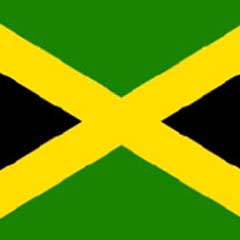
CASE: Marriage-Based Green Card
CLIENT: Jamaican
LOCATION: Cleveland, Ohio
Our client is a professional football player who plays for the Cleveland Browns in the NFL. He came to the United States from Jamaica when he was a high school student and went to college as an F-1 student. After he was drafted by the Baltimore Ravens, he started to play in the NFL as a P-1 visa holder. Later on he was picked up by the Cleveland Browns as a free agent.
He married a U.S. Citizen in August 2012.
Months later, our client retained our office for his I-130 petition and I-485 adjustment of status application, and our firm prepared and filed the I-130 petition and I-485 adjustment of status application, together with all necessary supporting documents, on November 25, 2013. Everything went smoothly and the receipt notices, fingerprint appointment, and work permits all came on time. There were no requests for evidence.
Prior to the interview, we thoroughly prepared our clients at our office. On February 14, 2014, our client was interviewed at the Cleveland, Ohio USCIS office. Attorney Sung Hee (Glen) Yu accompanied them as well. On the same day, his green card application was approved.
{ 0 comments }
CASE: I-601 Hardship Waiver of Inadmissibility
APPLICANT / BENEFICIARY: Indian
LOCATION: Mumbai, India (Applicant) / North Carolina (I-130 Petitioner / Applicant’s US Citizen wife)
Our client first came to the United States on a valid F-1 visa in May 2007 to attend college in the U.S. Unbeknownst to him, he fell out of status in November 2007. After he found out about this in 2009, he immediately applied for F-1 reinstatement and filed Form I-539 to the USCIS Vermont Service Center in 2009. The USCIS approved his application and reinstated his F-1 status.
After his studies were over, our client was employed and his employer petitioned him for H-1B status in February 2011. The Petition was approved and he started working and paying taxes in accordance with the terms and conditions of his H-1B.
Our client then married his U.S. Citizen wife in India in November 2011.
In February 2012, our client went to the U.S. Consulate in Mumbai, India for his H-1B visa stamping. Over there, the consular officer denied his H-1B visa stamping on his passport and gave him a 221g form, asking for some documents such as tax returns, an approved I-797C letter from H-1B status, and pictures of the work place, pay stubs, and etc. Our client submitted all of the requested documents, however, when he appeared for his second visa stamping interview, the consulate officer denied his visa and gave him a letter which states that he is inadmissible under the INA Section 212(a)(6)(c), alleging that our client submitted fraudulent documents to obtain immigration benefits or a visa.
Our client did not commit fraud, but instead of appealing the decision, he planned to file a waiver of inadmissibility to re-unite him with his U.S. citizen wife faster. Our client’s wife retained us on April 9, 2013 for the I-601 waiver for her husband. Our firm thoroughly analyzed whether the I-601 waiver application will likely be successful. Based on our client’s story and surrounding circumstances (hardship to U.S. citizen wife) if our client is barred to come to the United States), our office determined that her husband has a good chance of winning the I-601 application as long as it is extensively prepared.
If someone is found to be inadmissible under Section 212(a)(6)(C)(i) of the INA, INA Section 212(i) provides for a discretionary waiver of the fraud or misrepresentation inadmissibility ground. To qualify for the waiver, the alien must establish that his or her US Citizen spouse would suffer extreme hardship if the alien were denied admission. INA Section 212(i)(l). In addition to the equities presented, the USCIS may consider the nature of the fraud or misrepresentation.
There is a seminal BIA case that deals with this waiver. In Matter of Cervantes, 22 I & N Dec. 560 (BIA 1999), the BIA identified the factors to be considered in determining whether a qualifying relative would suffer extreme hardship if the alien were denied admission. Those factors include: the presence of LPR or USC family ties both within and outside the United States; the conditions in the country to which the qualifying relative would relocate and the extent of the qualifying relative’s ties to that country; the financial impact of departure from the United States; and significant conditions of health, particularly when tied to the unavailability of suitable medical care in the country to which the qualifying relative would relocate.
Our client’s I-601 application had a good chance since our client’s wife (U.S. Citizen) recently had surgery. Also, our client’s wife has always encountered various diseases whenever she goes back to India. She had typhoid and chickenguniya when she visited India in 2011 and 2012. She also suffers depression, anxiety, and insomnia due to the hardship of not having a husband to help with her expenses and provide for her needs. In the I-601 brief and supporting documents, our office included extensive medical reports of our client’s wife. We argued that if our client is barred to enter the United States, extreme hardship to her is clearly foreseeable and evident. Our client needs consistent and continuous medical check-ups with her doctors for her recent surgery and its related symptoms. Also, it would be extremely difficult for our client’s wife to get the same level of medical care and satisfactory access to medical services in India in case our client’s wife joins our client there.
In our brief, we also argued that our client has maintained strong family ties in the United States and that she will have difficulty finding the same level of employment in India.
On January 2, 2014, we submitted our I-601 waiver application to the USCIS which included a brief in support, our client’s medical records, and other documents that demonstrated hardship to our client’s wife if our client is barred to come to the United States. The I-601 waiver for our client was approved on February 7, 2014. Now, without the inadmissibility ground, our client is eligible for an immigrant visa.
{ 0 comments }
CASE: Adjustment of Status / 245(i)
CLIENT: Filipina
LOCATION: Virginia
Our Filipina client came to the U.S. on an H-1B visa in February 2000. After August 2003, her H-1B visa expired and she overstayed her status. Currently, she resides in Virginia.
Our client contacted us around October of 2010 for consultation and sought legal assistance for her and her minor son’s adjustment of status. After consultation, we determined that she is eligible for adjustment of status under INA 245(i) and the priority date for her case was current for November 2010. Our client retained us on October 14, 2010.
Prior to retaining our firm, her sister filed an I-130 petition for her back in 1990. As some of you know, priority dates for Philippine nationals under the family-based immigration category are more retrogressed than other countries. The I-130 petition was approved by the INS in 1990. However, she could not apply for her green card until her priority date became current. Therefore, she had to wait for more than 20 years in order to even apply for her green card.
Section 245(i) of the INA allows certain foreign nationals to become permanent residents of the United States despite entering without inspection (EWI) or overstaying (if beneficiary of petitions filed not by an immediate relative). Immigrants are barred from adjusting their status if they entered the United States without first being inspected and admitted by a Customs and Border Patrol officer and if they have either failed to maintain lawful status or been unlawfully employed in the country, with certain exceptions. Section 245(i) was first added to law in 1994 to allow certain people who otherwise would not be eligible to adjust their status to be able to do so upon payment of a $1,000 fine.
Four years later, on January 14, 1998, Congress phased Section 245(i) out of law. Immigrants and their families who had already begun the process of changing their status under Section 245(i) by January 14, 1998 were grandfathered into the section’s benefits. However, this left thousands of otherwise qualified persons who had not begun the process unable to adjust status in the United States. They could not return to their countries to begin the legal process of obtaining their permanent residency in the United States also without being subject to either a three- or a 10-year bar upon returning to the United States.
On December 21, 2000, Congress extended the qualifying date for Section 245(i) benefits to April 30, 2001. This law allowed immigrants who had labor certifications or visa petitions filed on their behalf between 1998 and April 30, 2001, to qualify for adjustment of status. Those who were beneficiaries of petitions filed prior to January 14, 1998 could still adjust despite an EWI record, and those people do not have to meet the December 2000 physical presence requirement.
On November 10, 2010, our office filed their I-485 adjustment of status applications under the 245(i) category for our client and her son. However, the priority date for the F4 category Philippines backlogged. She got work permits though throughout the duration of the 485’s pendency. Our client had to wait until the priority date becomes current. In February 2014, her priority date became current. Eventually, our client and her son’s adjustment application were approved by the USCIS on February 6. 2014. After a long wait, our client is finally a green card holder.
{ 0 comments }
CASE: Marriage to US Citizen Green Card
CLIENT: Indian
LOCATION: Cleveland, OH
Our client came to the United States from India. Currently, he is working for his employer under an H-1B visa. Later, he married his current wife, who was a green card holder at the time of filing, in June 2011.
Our client retained our office in early September 2013 for his I-130 petition and I-485 adjustment of status application. Although the Petitioner was a green card holder, we could file the I-130 / I-485 simultaneously at that time because the priority date for the F2A category was current in August and September 2013.
Our office prepared and filed an I-130 petition and I-485 adjustment of status application, together with all necessary supporting documents, on September 26, 2013. Everything went smoothly and the receipt notices, fingerprint appointment, and work permits all came on time.
While his green card application was pending, our client’s wife took her naturalization test and interview on January 7, 2014. Prior to the interview, we thoroughly prepared our clients at our office. On January 10, 2014, our client was interviewed at the Cleveland, Ohio USCIS office.
The interview went well, however, our client’s green card application could not be adjudicated because of the retrogression of the priority date.
On February 7, 2014, our client’s wife finally took her oath and became a naturalized U.S. citizen. After the ceremony, our client’s wife gave us a copy of her naturalization certificate which our office eventually submitted to the USCIS office on the same day.
By doing this, our client’s case can be upgraded from the F2A category to Immediate Relative, which has available immigrant visa numbers all the time. Eventually, on February 10, 2014, the USCIS approved our client’s green card application.
{ 2 comments }

CASE: Termination of Proceedings / I-751
APPLICANT: Ecuadorian
LOCATION: Cleveland, Ohio
Our client contacted our office in April 2012 regarding her removal proceedings representation and I-751 application.
She is from Ecuador and married a U.S. citizen in October 2004. Through her marriage, she obtained a 2-year conditional green card in September 2006. Her conditional residency terminated in September 2008.
To comply with immigration requirements, our client and her husband had to file an I-751 Joint Petition to Remove Conditions. However, they filed their I-751 application late. Later on, our client was placed in removal proceedings and had to appear for her Master Calendar hearing at the Cleveland Immigration Court on May 2, 2012. Our client retained our office on April 30, 2012 and Attorney Sung Hee (Glen) Yu represented our client at her initial Master Calendar Hearing. After the hearing, the Court scheduled an individual hearing to review her denied I-751 application.
In the meantime, our office contacted the Cleveland DHS office to terminate her removal proceedings. We prepared an affidavit of “good cause” for the late filing and showed it together with the bona fide evidence to the DHS. As a result, on September 19, 2013, the DHS agreed to terminate her removal proceedings. Accordingly, the Immigration Judge terminated our client’s removal proceedings.
Once her removal proceeding was terminated, our office prepared an I-751 application for our client with other supplemental exhibits including a detailed brief on why she filed her initial I-751 application late.
On September 30, 2013, our office filed an I-751 application to the USCIS with multiple affidavits from her friends and family members, joint bank statements, utility bills, insurance policies, and photos of our client and her husband to demonstrate the bona fideness of their marriage.
Once the application was filed, the fingerprint notice was issued two weeks later. There was no RFE issuance or interview request for our client’s I-751 application. As a result, on January 29, 2014, the USCIS approved our client’s I-751 application and our client received her 10-year green card which removed conditions on her residency.
{ 0 comments }
Connect With Us


FREE CONSULTATIONS
Approvals by State
- Ohio
- Alabama
- Mississippi
- North Dakota
- Virgin Islands
- Iowa
- Virgin Islands
- Maine
- Idaho
- South Dakota
- Hawaii
- DC
- Minnesota
- North Carolina
- Saipan
- Kansas
- Colorado
- South Carolina
- Montana
- Kentucky
- Wyoming
- Nevada
- Arkansas
- New York
- California
- Texas
- Washington
- Virginia
- Arizona
- Nebraska
- Maryland
- Illinois
- Pennsylvania
- New Jersey
- Georgia
- Connecticut
- Missouri
- Wisconsin
- Indiana
- Louisiana
- Florida
- Tennessee
- Oklahoma
- Michigan
- Massachusetts
- New Mexico
Country Approvals
- Philippines
- Ecuador
- Gabon
- Bulgaria
- Yemen
- Netherlands
- Zambia
- Morocco
- Iraq
- Burkina Faso
- Turkey
- United Kingdom
- Venezuela
- Japan
- Egypt
- Sierra Leone
- Australia
- Lebanon
- Thailand
- Kyrgyzstan
- Saint Lucia
- Angola
- Ireland
- Macedonia
- Hong Kong
- Algeria
- Belgium
- UAE
- Serbia
- China
- South Korea
- India
- Kenya
- Indonesia
- Ghana
- Pakistan
- Nepal
- Britain
- Jamaica
- Canada
- Senegal
- Benin
- Colombia
- Moldova
- Jordan
- Romania
- Malaysia
- Guatemala
- Saudi Arabia
- Cameroon
- Africa
- Mexico
- Ethiopia
- Germany
- Ukraine
- Sweden
- Vietnam
- Costa Rica
- Cambodia
- El Salvador
- Nigeria
- Hungary
- Singapore
- Argentina
- Brazil
- Albania
- Sri Lanka
- Russia
- Zimbabwe
- Bangladesh
- Peru
- Guyana
- Iran
- Italy
- Suriname
- Honduras
- Gambia
- Cote D’Ivoire
- Hubei
- Grenada
- Spain
- Slovakia
- France
- Taiwan
- Tunisia
- Cuba
- Croatia
- Bahamas