
5005 Rockside Road Ste. 600
Cleveland Ohio 44131
(216) 573-3712
FREE CONSULTATIONS






CONTACT US
CLIENTS’ CHOICE AWARD
Success Stories

CASE: I-485 Adjustment of Status after Termination of Removal Proceedings with an Approved I-130 Petition
CLIENT: Malian
LOCATION: Cleveland, OH
Our client is from Mali who came to the U.S. on an F-1 Student Visa in August 2010 to study. Our client currently resides in the greater Cleveland area with his current U.S. Citizen wife. They were married in January 2015, and retained our office on January 6, 2016 for representation of at the Cleveland Immigration Court. Our client’s wife filed an I-130 Petition for our client with their former immigration lawyer in February 2015. While the I-130 petition was pending, our client appeared at the Cleveland Immigration Court on January 26, 2016 for his initial master calendar hearing. Attorney Sung Hee (Glen) Yu from our office represented him at the hearing, did the pleading and sought for adjustment of status relief upon the approval of the I-130 petition.
Our client’s I-130 interview was scheduled on June 21, 2016 at the Cleveland USCIS Filed Office. Prior to the interview, our office thoroughly prepared our client and his wife for the interview at our office. Attorney Yu also accompanied them for their interview. The interview lasted two hours, but the I-130 petition was eventually approved on August 25, 2016.
Once the I-130 was approved, our office filed a request to join in a Motion to terminate proceedings with the I-485 application and supporting documents. The DHS counsel in Cleveland agreed to terminate our client’s proceedings. Ultimately, the Immigration Judge granted the Motion to terminate without prejudice on January 5, 2017.
After his removal proceeding was terminated, our client retained us again for his I-485 adjustment of status application. Our firm prepared and filed the I-485 Adjustment of Status Application on February 2, 2017. Everything went smoothly and the receipt notices, fingerprint appointment, and work permit all came on time. Prior to the interview, we thoroughly prepared our clients at our office. On November 28, 2017, our client was interviewed at the Cleveland, OH USCIS. Attorney Sung Hee (Glen) Yu accompanied our clients as well. After the interview, his I-485 application was approved. Now, our client became a green card holder.
{ 0 comments }

CASE: I-485 Adjustment of Status after Termination of Removal Proceedings with an Approved I-130 Petition
CLIENT: Cameroonian
LOCATION: Atlanta, GA (USCIS) / Memphis, TN (EOIR)
Our Cameroonian client came to the United States in December 1999 on a F-1 student visa. In July 2001, he filed an asylum application to the USCIS, was interviewed by the USCIS, and later his case was referred to the Immigration Court. Thereafter, a Notice to Appear was issued and our client was placed in removal proceedings. After he got the Notice to Appear, he appeared at his initial master calendar hearing at the Memphis Immigration Court with his previous attorney.
His removal proceedings were continued, but he could not appear at his individual hearing in April 2003 due to the hospitalization. Thus, the Court found him removable and ordered him removed in absentia. Later, in April 2011, he filed Motion to Reopen with assistance of his previous immigration counsel. However, this Motion to Reopen was denied by the Court in July 2011. Thereafter, he contacted our office to determine whether he can file a Motion to Reopen again. After the consultation, we explained him that the only way the Court can reopen his case is based on changed country conditions in Cameroon. It is because our client’s second Motion to Reopen can be considered untimely filed and numerically barred. After the explanation, our client decided to retain our office and retained us on November 22, 2011 for Motion to Reopen based on changed country conditions.
Under immigration law, if an applicant seeks to make an asylum claim and a final order of removal has been entered and the ninety-day filing deadline for motions to reopen has passed, the BIA and the majority of Circuit Courts have found that the applicant may only file the asylum application through a motion to reopen and only under the “changed country conditions” provision of 8 C.F.R. § 1003.23(b)(4)(i). Thus, our office prepared the Motion to Reopen based on the changed country conditions in Cameroon.
On March 6, 2012, our office filed the Motion to Reopen with the Memphis Immigration Court. With 15-pages brief, we included a detailed affidavit regarding his involvement in political activist group in Cameroon, several affidavits from his fellow members who confirmed his involvement with the organization. We claimed that the number of arrests and detentions of his political group members has recently escalated since his original removal hearing in 2003 resulting in changed country conditions. We also attached a letter from a human rights officer in which he states that he knew our client’s political involvement in Cameroon. Moreover, other supporting documents such as newspaper articles and country report of Cameroon were submitted (24 exhibits). On March 29, 2012, the DHS filed a Response in Opposition to our Motion. Nevertheless, on May 2, 2012, the Memphis Immigration Court granted our motion and reopened our client’s case.
Once his case is reopened, he retained our office again. Our attorney Sung Hee (Glen) Yu appeared at his master calendar hearing via telephonic appearance and his individual hearing was scheduled on September 29, 2014 at the Memphis Immigration Court.
Our client was persecuted and harmed in Cameroon based on his political opinion and movement. Our client was scared to go back home to Cameroon, fearing that he will be persecuted based on his political opinion. Moreover, our client’s late father and his uncle were mistreated and harmed in Cameroon due to their political opinion as well.
We helped him file his asylum application and represented him in immigration court hearings. We also asked him to provide supporting documents corroborating his claim, some of which were a letter from his family, colleagues and friends in Cameroon. Our firm also did some research on articles related to his claim, and the type of persecution he will experience in Cameroon if sent back.
Our client’s individual hearing was scheduled on September 29, 2014 at the Memphis Immigration Court. Attorney Sung Hee Yu from our firm prepared him extensively. He also represented our client at his Individual Hearing at the Memphis Immigration Court.
Prior to the hearing, Immigration Judge held a pre-trial conference with Attorney Yu and the DHS counsel. During the pre-trial conference, and all of the possible issues were examined. At the conclusion of the conference, withholding of removal was granted. After the hearing, the Immigration Judge granted Withholding of Removal for our client based on his persecution in Cameroon.
In December 2014, our client married his current U.S. citizen wife. He retained our office again for the I-130 petition. Once we were retained, our office prepared and filed the I-130 petition for our client and filed it to USCIS on August 14, 2015.
Our client’s I-130 interview was scheduled on October 3, 2016 at Atlanta USCIS Field Office. Prior to the interview, our office thoroughly prepared our client and his wife for the interview via conference calls. Attorney Yu also accompanied them for their interview. The interview went well, and the I-130 petition was eventually approved on October 11, 2016.
Once the I-130 was approved, our office filed a request to join in a Motion to terminate proceedings with the I-485 application and supporting documents. The DHS counsel in Memphis, TN agreed to terminate our client’s proceedings. Ultimately, the Immigration Judge granted the Motion to terminate without prejudice on February 24, 2017.
After his removal proceeding was terminated, our client retained us again for his I-485 adjustment of status application. Our firm prepared and filed the I-485 Adjustment of Status Application on April 24, 2017. Everything went smoothly and the receipt notices, fingerprint appointment, and work permit all came on time. Prior to the interview, we thoroughly prepared our clients via conference call. On November 17, 2017, our client was interviewed at the Atlanta, GA USCIS. Attorney Sung Hee (Glen) Yu accompanied our clients as well. After the interview, his I-485 application was approved. Now, our client became a green card holder.
{ 0 comments }

CASE: Adjustment of Status / J-1 Hardship Waiver
NATIONALITY: Kenyan
LOCATION: Maryland
Our client came from Kenya in February 1993 on a valid J-1 visa. He got his J-1 status as a research scholar and received government funding for his research. His J-1 status made him subject to the two-year foreign residency requirement. Once his J-1 program was completed, he remained in the United States. Later, he married his current U.S. citizen wife and became a father of two U.S. citizen children. Our client would like to file his adjustment of status application along with his wife’s I-130 petition; however, due to the two-year foreign residency requirement, he had to obtain a waiver first.
Unlike our other J-1 clients, our client could not pursue his waiver under No Objection Statement or Interest Government Agency (IGA). As mentioned above, our client also received government funding for his research programs which made his case tougher for the No Objection Statement or IGA waiver route. Our client, though, would like to pursue his J-1 waiver based on exceptional hardship standard. In fact, our client’s U.S. citizen wife is experiencing exceptional medical hardships.
According to 8 C.F.R. Section 212.7(c)(5), “an alien who is subject to the foreign residence requirement and who believes that compliance therewith would impose exceptional hardship upon her spouse or child who is a citizen of the United States… may apply for a waiver on Form I-612.”
Some of the factors in analyzing extreme hardship are as follows: age of the subject, family ties in the U.S. and abroad, length and residency in the U.S., health / medical conditions, conditions in the country of removal – economic and political, financial status – business and occupation, position in / ties to the community. Matter of Anderson, 16 I&N Dec. 596 (BIA 1978).
After he retained our firm, we prepared and filed a waiver request through an exceptional hardship basis. On December 17, 2015, the J-1 Waiver (Form DS-3035) Application was filed to the Department of State. Thereafter, our office prepared affidavit of our client, extensive brief in support for our client’s J-1 waiver application, and other supporting documents. Our client provided us with extensive medical documents and doctor’s reports for his U.S. citizen wife’s medical conditions. On December 18, 2015, our office filed I-612 application to the USCIS and asked for them to issue and recommends this waiver based on the fact that our client’s wife would experience exceptional hardship if our client needs to go back to Kenya for two years.
However, on May 11, 2016, the USCIS issued a Request for Evidence (RFE) for our client’s I-612 case. The USCIS asked our client to submit more evidence to demonstrate the extreme hardship to his U.S. citizen wife if he has to go back to Kenya for 2 years. On August 2, 2016, our office filed the Response to RFE to USCIS along with additional documents to support the claim of financial and medical hardship including income and expenses, plus more recent medical documents of his U.S. citizen wife evidencing the hardship. Eventually, the USCIS approved his I-612 waiver on October 26, 2016.
Once his J-1 waiver was approved, our client retained our office again for his green card application. Our firm prepared and filed I-130 petition and I-485 adjustment of status application on December 6, 2016. Everything went smoothly and the receipt notices, fingerprint appointment, and work permits all came on time. Prior to the interview, we thoroughly prepared our clients through the conference calls. On July 25, 2017, our client was interviewed at the Baltimore, MD USCIS office.
However, on August 4, 2017, the USCIS issued the Request for Evidence for our client after the interview. The USCIS requested our client to submit the certified court disposition of his previous criminal record. Our client submitted the record to the USCIS on October 19, 2017.
Eventually, on November 2, 2017, his green card application was approved.
{ 0 comments }

CASE: I-130 / I-485 Adjustment of Status
NATIONALITY: Filipina
LOCATION: Montana
Our client came from the Philippines on a J-1 in September 2014 to work as a teacher. Based on her DS-2019, she was subject to the two-year foreign residency requirement.
In August 2016, she got married to her U.S. citizen husband and later on consulted with our firm for her J-1 visa waiver prior to applying for adjustment of status. If someone is subject to the two-year foreign residency requirement, he or she cannot get a green card in the United States until he or she fulfills the requirement or obtains a waiver.
Upon retention, our office promptly prepared a waiver request through a No Objection Statement (NOS) from the Philippine Embassy in the United States and eventually the EVP in the Philippines.
On December 7, 2016, the J-1 Waiver Application (Form DS-3035) was filed to the Department of State. We also sent a request to the Montana State Government to get authentication for the necessary documents. Later, these authenticated documents and No Objection Application (for the Philippines Government) were sent to the Philippines Consulate General in Chicago for further authentication. On March 23, 2017, our office sent our client’s materials to the Waiver Review Committee in Manila, Philippines. Then, the Waiver Review Committee forwarded the materials and favorable recommendation to the Philippine Embassy in D.C. who eventually issued a No Objection Statement.
On June 22, 2017, the Waiver Review Division issued a favorable recommendation based on the No Objection statement. Eventually, on July 6, 2017, the USCIS issued an I-612 approval notice for the waiver.
Once her J-1 waiver was approved, our client retained our office again for her adjustment of status application. Our firm prepared and filed the I-130 Petition and Adjustment of Status Application on July 28, 2017. Everything went smoothly and the receipt notices, fingerprint appointment, and work permits all came on time. Prior to the interview, we thoroughly prepared our clients through conference calls. On November 2, 2017, our client was interviewed at the Helena, Montana USCIS office. The interview went well, and eventually, on the same day of the interview, her green card application was approved.
{ 0 comments }
CASE: I-130 / I-485 Adjustment of Status
NATIONALITY: Filipina
LOCATION: Seattle, WA
Our client came from the Philippines on a J-1 visa in 2008. She got her J-1 as a recipient of a Fulbright Scholarship in the United States and her J-1 status made her subject to the two-year foreign residency requirement. Later, she changed her status from J-1 to F-1 and maintained her non-immigrant visa status.
In 2012, she married her U.S. citizen husband. She would like to file her adjustment of status application along with her husband’s I-130 petition, however, due to her two-year foreign residency requirement, she had to get a waiver or fulfill the requirement before she files an adjustment of status application.
Unlike our other J-1 clients, our client could not pursue her waiver under No Objection Statement or Interest Government Agency (IGA). Our client also received government funding (Fulbright Scholarship) for her research programs which made her case tougher for the No Objection Statement or IGA waiver route. Our client, though, would like to pursue her J-1 waiver based on exceptional hardship standard. In fact, our client’s U.S. citizen husband is experiencing exceptional medical hardships.
According to 8 C.F.R. Section 212.7(c)(5), “an alien who is subject to the foreign residence requirement and who believes that compliance therewith would impose exceptional hardship upon her spouse or child who is a citizen of the United States… may apply for a waiver on Form I-612.”
Some of the factors in analyzing extreme hardship are as follows: age of the subject, family ties in the U.S. and abroad, length and residency in the U.S., health / medical conditions, conditions in the country of removal – economic and political, financial status – business and occupation, position in / ties to the community. Matter of Anderson, 16 I&N Dec. 596 (BIA 1978).
After she retained our firm, we prepared and filed a waiver request through an exceptional hardship basis. On September 10, 2015 the J-1 Waiver (Form DS-3035) Application was filed to the Department of State. Thereafter, our office prepared affidavit of our client, extensive brief in support for our client’s J-1 waiver application, and other supporting documents. Our client provided us with extensive medical documents and doctor’s reports for her U.S. citizen husband’s medical conditions. On September 24, 2015, our office filed I-612 application to the USCIS and asked for them to issue and recommends this waiver based on the fact that our client’s husband would experience exceptional hardship if our client needs to go back to the Philippines for two years.
Eventually, the USCIS approved her I-612 waiver on December 15, 2016.
Once her J-1 waiver was approved, our client retained our office again for her adjustment of status application. Our firm prepared and filed the I-130 Petition and Adjustment of Status Application on January 4, 2017. Everything went smoothly and the receipt notices, fingerprint appointment, and work permits all came on time. Prior to the interview, we thoroughly prepared our clients through conference calls. On October 26, 2017, our client was interviewed at the Seattle, Washington USCIS office. The interview went well, and eventually, on the same day of the interview, her green card application was approved.
{ 0 comments }

CASE: Marriage-Based Adjustment of Status
NATIONALITY: Ghanaian
LOCATION: Columbus, OH
Our client is from Ghana who worked in the United States under an H-1B status. In August 2016, our client married his current U.S. citizen wife. He retained our office in September 2016 for his green card application. Our firm prepared and filed the I-130 Petition and I-485 Adjustment of Status Application on October 3, 2016. Everything went smoothly and the receipt notices, fingerprint appointment, and work permits all came on time. Prior to the interview, we thoroughly prepared our clients via conference call. On January 23, 2017, our client was interviewed at the Columbus Ohio USCIS office.
The USCIS issued a Request for Evidence (RFE) on August 24, 2017 for our client. The RFE letter requested our client to submit more “bona fide” marital documents between him and his U.S. citizen wife. On October 3, 2017, our office filed a Response to RFE to the USCIS with a joint lease, joint bank accounts, joint insurance, joint tax documents, and multiple affidavits from their family and friends regarding the bona fideness of their relationship. Eventually, on October 14, 2017, his green card application was approved.
{ 0 comments }

CASE: Marriage-Based Adjustment of Status
NATIONALITY: Indian
LOCATION: Tennessee
Our client is from India who last entered the U.S. on an H-1B visa. In December 2016, our client married his U.S. citizen wife. He retained our office in January 2017 for his green card application. Our firm prepared and filed the I-130 Petition and I-485 Adjustment of Status Application on February 14, 2017. Everything went smoothly and the receipt notices, fingerprint appointment, and work permits all came on time. Prior to the interview, we thoroughly prepared our clients via conference calls. On October 14, 2017, our client was interviewed at the Memphis, TN USCIS Field office. Eventually, on October 20, 2017, his green card application was approved.
{ 0 comments }
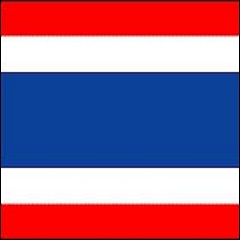
CASE: Marriage-Based Adjustment of Status
NATIONALITY: Thai
LOCATION: Cleveland, OH
Our client is from Thailand who came to the U.S. on a B-2 visitor’s visa in October 2006. After his authorized stay period expired, he remained in the United States. In September 2016, our client married his current U.S. citizen wife. He retained our office on January 31, 2017 for his green card application. Our firm prepared and filed the I-130 Petition and I-485 Adjustment of Status Application on April 24, 2017. Everything went smoothly and the receipt notices, fingerprint appointment, and work permits all came on time. Prior to the interview, we thoroughly prepared our clients at our office as well. On October 20, 2017, our client was interviewed at the Cleveland Ohio USCIS office. Attorney Sung Hee (Glen) Yu from our office also accompanied our clients as well. Eventually, on the same day of the interview, his green card application was approved.
{ 0 comments }

CASE: Marriage-Based Adjustment of Status
CLIENT: Canadian
LOCATION: Ohio
Our client came to the United States as a visitor from Canada. She married a U.S. Citizen husband in May 2017 and retained our office on June 6, 2017 for her adjustment of status application. Our firm prepared and filed the I-130 Petition and I-485 Adjustment of Status Application on July 10, 2017. Everything went smoothly and the receipt notices, fingerprint appointment, and work permit all came on time. Prior to the interview, we thoroughly prepared our clients at our office. On October 16, 2017, our client was interviewed at the Cleveland, Ohio USCIS. Attorney JP Sarmiento accompanied them at the interview as well. On October 18, 2017, her green card application was approved.
{ 0 comments }
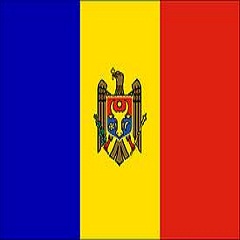
CASE: I-485 adjustment of status
CLIENT: Moldovan
LOCATION: Cleveland, OH
Our client came to the United States on a valid J-1 visa from Moldova in June 2007. He remained in the United States for a time longer than permitted. Later, he was placed in deportation proceedings due to his overstay and a Notice to Appear was issued. His asylum relief was denied by the Immigration Judge in April 2012, but an appeal was timely filed. The BIA appeal was pending when our client contacted our office in March 2014.
While the BIA appeal was pending, our client married his U.S. citizen wife in February 2013. His wife filed an I-130 petition for our client on March 7, 2013. He contacted our office for legal assistance for Motion to Remand and possible adjustment of status if the Motion is granted. We explained to him that the Motion to Remand procedure and he retained our office on April 8, 2014. On April 17, 2014, we prepared and filed a Motion to Remand for Adjustment of Status Based on a Pending I-130 on behalf our client. You typically want the I-130 to be approved prior to filing the Motion to Remand, but by submitting the actual I-130 application itself and its supporting documents attached to the Motion, you can show that it is approvable.
In Matter of Coelho, 20 I&N Dec. 464, 473 (BIA 1992), the BIA found that a motion to remand must conform to the same standards as a motion to reopen, where the respondent presents new evidence which would likely change the result of the case. In a Motion to Reopen before the BIA, the Applicant must show that the evidence is material, unavailable at time of original hearing, and could not have been discovered or presented at the original hearing. 8 C.F.R. § 1003.2(c)(1). In this case, the adjustment of status relief was not available for our client at his previous hearing since he was not married his U.S. Citizen wife.
Our office filed a Motion to Remand for Adjustment of Status based on a pending I-130 to the BIA on April 17, 2014. We argued that our client will be eligible for adjustment of status once the I-130 is approved since he had a legal entry to the U.S., has no criminal records, and has no other grounds of inadmissibility. We also attached lots of bona fide marital evidence between our client and his U.S. citizen wife to demonstrate the I-130 petition is approvable.
While his motion was pending before the BIA, he and his wife appeared for the I-130 interview on May 5, 2014. Prior to the interview, we thoroughly prepared our client at our office. On the day of our client’s I-130 interview, our attorney accompanied them at the Cleveland, OH USCIS. The interview went well, I-130 petition was approved for our client.
On June 6, 2014, the BIA granted our motion, reopened our client’s case, and the record was remanded for further proceedings.
His case was remanded and scheduled for master calendar hearing on July 12, 2017. With the approved I-130 petition, our office filed a request to join in a Motion to terminate proceedings with the I-485 application and supporting documents on July 3, 2017. The DHS counsel in Cleveland, OH agreed to terminate our client’s proceedings. Ultimately, the Immigration Judge granted the Motion to terminate without prejudice on July 12, 2017 hearing.
After his removal proceeding was terminated, our client retained us again for his I-485 adjustment of status application. Our firm prepared and filed the I-485 Adjustment of Status Application on August 2, 2017. Everything went smoothly and the receipt notices, fingerprint appointment, and work permit all came on time. Prior to the interview, we thoroughly prepared our clients. On October 19, 2017, our client was interviewed at the Cleveland, OH USCIS. Attorney JP Sarmiento accompanied our clients as well. After the interview, his I-485 application was approved. Now, our client became a green card holder.
{ 0 comments }
Connect With Us


FREE CONSULTATIONS
Approvals by State
- Ohio
- Alabama
- Mississippi
- North Dakota
- Virgin Islands
- Iowa
- Virgin Islands
- Maine
- Idaho
- South Dakota
- Hawaii
- DC
- Minnesota
- North Carolina
- Saipan
- Kansas
- Colorado
- South Carolina
- Montana
- Kentucky
- Wyoming
- Nevada
- Arkansas
- New York
- California
- Texas
- Washington
- Virginia
- Arizona
- Nebraska
- Maryland
- Illinois
- Pennsylvania
- New Jersey
- Georgia
- Connecticut
- Missouri
- Wisconsin
- Indiana
- Louisiana
- Florida
- Tennessee
- Oklahoma
- Michigan
- Massachusetts
- New Mexico
Country Approvals
- Philippines
- Ecuador
- Gabon
- Bulgaria
- Yemen
- Netherlands
- Zambia
- Morocco
- Iraq
- Burkina Faso
- Turkey
- United Kingdom
- Venezuela
- Japan
- Egypt
- Sierra Leone
- Australia
- Lebanon
- Thailand
- Kyrgyzstan
- Saint Lucia
- Angola
- Ireland
- Macedonia
- Hong Kong
- Algeria
- Belgium
- UAE
- Serbia
- China
- South Korea
- India
- Kenya
- Indonesia
- Ghana
- Pakistan
- Nepal
- Britain
- Jamaica
- Canada
- Senegal
- Benin
- Colombia
- Moldova
- Jordan
- Romania
- Malaysia
- Guatemala
- Saudi Arabia
- Cameroon
- Africa
- Mexico
- Ethiopia
- Germany
- Ukraine
- Sweden
- Vietnam
- Costa Rica
- Cambodia
- El Salvador
- Nigeria
- Hungary
- Singapore
- Argentina
- Brazil
- Albania
- Sri Lanka
- Russia
- Zimbabwe
- Bangladesh
- Peru
- Guyana
- Iran
- Italy
- Suriname
- Honduras
- Gambia
- Cote D’Ivoire
- Hubei
- Grenada
- Spain
- Slovakia
- France
- Taiwan
- Tunisia
- Cuba
- Croatia
- Bahamas