
5005 Rockside Road Ste. 600
Cleveland Ohio 44131
(216) 573-3712
FREE CONSULTATIONS






CONTACT US
CLIENTS’ CHOICE AWARD
Success Stories
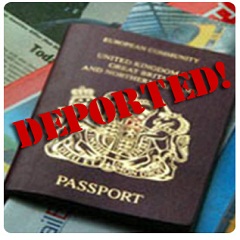
What is the difference between the I-130 Petition process in cases that are based on marriage to a US Citizen, between one where the marriage occurred before or without deportation proceedings being initiated and one where the marriage occurred after?
For both, there is a burden to show that the marriage is bona fide, but that burden is higher when the marriage occurred after deportation proceedings were initiated. Below is a list of some major differences.
- 485 filing
The first difference is on when you can file the I-485 green card application. If you entered legally and are not in removal proceedings, the I-130 and 485 could be filed simultaneously. Thus you can also file the I-765 work permit application together with it.
If you are placed in removal proceedings and the marriage occurred after, it is the I-130 that is filed first. Then you wait until that finally is approved, in the meantime seeking continuances with the Court while the I-130 is pending.
You cannot file a work permit 765 application while the I-130 is pending in a situation where the marriage occurred after deportation proceedings are initiated, because you still could not file the I-485. I-765s in these cases are approvable based on a pending I-485.
Once the I-130 is approved, you then can either seek termination of the case and then file the 485 green card application and 765 work permit application simultaneously with CIS once the case is terminated, or, should you seek adjustment with the Court, file the adjustment of status application with Court and file the work permit application with CIS.
- Bona Fide Marriage Exception Letter
As a primer, I-130s are not approvable when the marriage occurs after removal proceedings are initiated BUT they can be if a bona fide marriage exception letter is included plus proof of a bona fide marriage.
This is very important.
I have seen cases where couple would consult after an I-130 denial where an officer denied a seemingly bona fide marriage (some with kids even) simply because that one page letter was not included.
- Higher chance of Separation at Interview
There is also a higher chance that the couple would be separated at the interview. InNew York they undergo what’s called the Stokes interview. More questions are typically asked, and the interviews generally are longer. They would ask one person questions in private first, then ask the spouse separately, before checking if the answers match.
- More (evidence, time)
There is also “more” of a bunch of stuff.
More evidence is needed, so I ask for more joint documents, a lease, more affidavits, more pictures, more joint bank statements etc.
More interview questions are usually asked. More time is involved because the I-130 and I-485 are not filed simultaneously.
Ultimately though, if the marriage is bona fide, there should not be any reason why these I-130s can’t be approved. But again, it depends on how you prepare for the filing, and on how you prepare for the interview.
That said, it’s very important to have as much evidence as possible, and to be as prepared as possible to answer questions about your relationship.
FREE CONSULTATIONS
If you have any questions, please fill out the free consultation form below, and we will respond as soon as possible privately.
{ 0 comments }

As the country anticipates the overhauling of our immigration policy, different industries are doing its best to influence the specific of the policy. Big tech firms and private prisons are just some of the industries who are vigorously showing their interest in immigration reform.
Big tech firms such as Microsoft, Facebook and Intel want to see an increase in the number of available visas for highly skilled immigrant workers. Also showing great interest in immigration reform are those who build detention facilities housing illegal immigrants in the country. Companies such as Corrections Corporation of America are pushing heavily on lawmakers to take tough stances on the matter.
Although it is tough to track how much each lobbyist would spend for their interests to be heard, it has been reported that Microsoft spent $8 million for their lobbying efforts last year and even contributed $814,645 to President Obama during his re-election campaign. Intel, on the other hand, spent $3.7 million and Facebook didn’t mind spending $3.9 million in their lobbying efforts. These companies filed not less than eight reports.
Source: CNN.Com
FREE CONSULTATIONS
If you have any questions, please fill out the free consultation form below, and we will respond as soon as possible privately.
{ 0 comments }

Republican and former governor of Florida, Jeb Bush has been promoting his new book, “Immigration Wars: Forging an American Solution.” Early critics have said that his book is the exact opposite of his longtime position on immigration.
Fellow Republicans are complaining that Mr. Bush has shifted his support, from one of conservativeness to something more open to a path to citizenship, by calling Congress to welcome some form of legal status short of citizenship. Amidst confusion on what Mr. Bush’s real stand on immigration is, he stressed on “Face of Nation” that he supports a path to citizenship and further explained that his main premise is to make it easier and less costly for those entering the country legally, rather than having them come here illegally anyway.
Mr. Bush was also quick to encourage Republicans to accept a deficit-reduction deal with Mr. Obama, one that purports to cut the budget along the lines of government sequestration. This is quite the opposite of Representative Paul D. Ryan’s views during his appearance on “Fox News Sunday,” when he reiterated his opposition to the government’s recent deficit-reduction strategies. Mr. Ryan is keen on addressing the issue, paving the way towards a balanced budget, by reducing Medicare, Medicaide and federal pensions.
While Mr. Ryan ‘enjoyed the experience’ when he was a Republican nominee for vice president in 2012, Mr. Bush, on the other hand, quips that he is not even thinking about it.
Source: The New York Times
FREE CONSULTATIONS
If you have any questions, please fill out the free consultation form below, and we will respond as soon as possible privately.
{ 0 comments }
This is another post in our H-1B series. Other posts are:
- For H-1B Visas, Is a Bachelors Degree Enough for Approval?
- On H1B Visa Quotas, Cap, Processing Times, and OPT Cap Gap
We also have a page on our H-1B success stories.
So you’re an F-1 student on Optional Practical Training (OPT). You just came off graduation. You were in this stressful period trying to look for a job. And you got it. Something related to your degree.
So this bought you a year.
You work hard hoping your employer petitions you form an H-1B. The quota was still open when you started in, let’s say, June. You were hoping that they sponsor you for an H-1B in that fiscal year, before the quota closes, while your OPT is still valid.
But that was not the case.
You still work for the employer close to a year a later, still working hard, then finally they decide to petition you for an H-1B on April 1, a couple of months or so from the expiration of your OPT.
You’ve heard of this thing called the cap gap. You wonder what it means. What happens to your immigration status between the expiration of your OPT and October 1?
Below are some FAQs around the topic of the cap gap.
Can I stay in theUSduring this cap gap period? Yes.
What is my status? F-1.
But my OPT card expired, will I get an OPT extension card? If not, what is my proof that my F-1 is extended? You’d have to go to the ISO officer of the school you had your most recent I-20, and have them reissue the I-20 with an OPT extension mark, which essentially extends your F-1 status.
Can I continue working? Yes you can, and you in fact should, because the validity of your OPT is also conditioned on certain periods that you should be working for a company doing a job related to your field or degree.
Okay. I know I can stay and I know I can continue to work, but during that gap, will I continue to get paid, or do I wait until October 1 before I get paid? I often get this question. You should continue receiving your salary from your employer during this period. They are allowed to. Your OPT was extended.
What about my driver’s license, can I extend it? If so, how long? Honestly, that’s the tricky part as some BMV admin people are used to the actual card – EAD cards or OPT / EAD cards. But, and this is a hassle because you have to go there again at some point, they should extend your DL up to at least September 30. Yes, it’s a hassle, because you go through that and pay the fees to get a mere 3 – 4 month extension on your card. But unfortunately that’s the case. I went through it myself when I was on OPT before.
FREE CONSULTATIONS
If you have any questions, please fill out the free consultation form below, and we will respond as soon as possible privately.
{ 0 comments }

A lot of inquiries come our way regarding the dates involved in H-1B petitions, particularly a couple of OPT folks whose employers are petitioning them for an H-1B. Confusions about the filing date, their status upon “approval”, and when the H-1B kicks in are often topics of inquiry. So here are some dates and timeframes. I’ll explain each below.
- April 1.
- 3-4 months.
- Premium Processing.
- Cap Gap.
- October 1.
There is a quota every year for H-1B issuances, unless the employer is exempt from this quota, which is another topic in and of itself.
65,000 is the quota, with an extra 20,000 for those with advanced degrees.
April 1 of each year is the first date that an H-1B could be filed (could be sent the day before, as long as it gets to CIS on April 1). From there the quota gets filled. Some 5 or 6 years ago, the quota was filled in a day. In 2009 though, it wasn’t filled until 2010. So it depends on the economy and hiring needs of companies.
The H-1B processing time is about 3 to 4 months regular processing (you can do premium processing and the H-1B will be adjudicated in about a week, barring RFEs). So if an H-1B petition is filed in April 1, approval on average should be July or August.
The confusion starts there.
Other non-immigrant visa change of status applications, including B1/B2 tourist or F-1 student status for example, upon approval, you will be in that particular status. Not for H-1B initial filings (unless there’s an exemption). That’s what confuses people.
For H-1Bs, in initial filing cases, especially for those who are in OPT whose H-1B petitions were filed in April 1 or early in the quota opening, H-1B status kicks in on October 1 even though the H-1B petition was approved earlier. In fact, on the H-1B petition approval (which goes to the employer and / or the employer’s attorney), October 1 would be the start date the H-1B status kicks in even though the “approval date” is earlier.
So what if the OPT expires before October 1?
That’s where the cap gap rule comes in.
The cap gap allows OPTers to remain employed, remain in status, and be permitted to continue getting paid on their OPT jobs. So let’s say you’ve been working for Company A on OPT and Company A petitions you in April 1. Your OPT expires June15. From June 16 to October 1, because of the cap gap (assuming your employer still wants to employ you), you can stay in the US and work for Company A until September 30. Your status will still be under F1.
Then in October 1, your H-1B status kicks in.
FREE CONSULTATIONS
If you have any questions, please fill out the free consultation form below, and we will respond as soon as possible privately.
{ 0 comments }

Foreigners who wish to start up a business in the US can’t do so. They either have to shell out 500,000 or 1 million dollars for the investors visa, or go be petitioned by an employer, be stuck for up to or even over 6 years, get a green card, quit after some time, before they can open up their business. This has been an issue for advocates of immigration reform since a lot of foreigners are entrepreneurial. In fact a big percentage of businesses in the Stats are started by foreigners.
The issue of employment though may provide a common ground for those who used to be against it, and those who are for it.
Employment has been a concern that the U.S.—known by many as the land of opportunity—has been experiencing for years now. For the past few years, the country has had increased employment as one of its goals since more and more citizens are without jobs. And withincreasing population in the country, unemployment is becoming one of its major concerns.
But contrary to what some citizens in the country believe, having immigrants in the country is not always an added problem. In fact, according to a Kauffman Foundation report, those foreign-born entrepreneurial types entering the country could create a huge number of jobs for everybody. This report is backed by what the National Foundation for American Policy reported showing that immigrants co-founded almost half of the top 50 top venture capital start-up ideas for 2011.
With the ongoing overhaul of our immigration system, it should be inevitable that a start-up visa would be passed. It benefits both the ambitious foreigner and the United States as well.
Source: The Next America
FREE CONSULTATIONS
If you have any questions, please fill out the free consultation form below, and we will respond as soon as possible privately.
{ 0 comments }
Immigration lawyers often get this inquiry from non-immigrants with a bachelors degree:
“I have a bachelors degree, can I apply for an H-1B?”
Or
Someone from an employer calls and asks:
“My niece (or nephew) has a degree, can I sponsor her (him), I own a store (or a restaurant, or any other business).”
On both instances, the proper answer is “it depends”. I can be technical actually and say the answer to the first question is always no because the REAL PETITIONER IN H-1BS IS THE EMPLOYER, not the beneficiary. In fact the employee does not even sign the I-129 forms.
A degree is just part of the equation. And yes, there is even a provision that allows for “degree equivalence” to be used for H-1Bs if your experience or combination of education and experience is evaluated by an accredited evaluating party as one equivalent to a Bachelors degree in the United States.
A Bachelors degree is simply part of the equation.
An H-1B analysis involves some sort of a triangle that has to be interconnected.
One. The Company.
Two. The POSITION. The most important part.
Three. The degree.
The focus is often on one and three, but to me, it is the position that is important.
The main inquiry: Does the position require the bachelors degree (or the advanced degree) that the beneficiary has?
Okay, let’s take the restaurant example.
Does a small restaurant with 3 employees really need the manager to have a bachelors degree? Can we prove it?
What about a restaurant with more employees but with just one branch, but which holds several banquets and mini-conferences?
What if other similarly sized restaurants (in size and scope) require a bachelors degree, can we use that as an argument?
And so you go through that same inquiry for each entity and each position and each degree for every situation. So oftentimes, even if the employer wants to petition someone, and if that someone has a bachelors degree, the inquiry does not stop there. The kind of business, the kinds of position, and the kind of degree must all relate to each other. It’s that connectionwhich determines the plausibility of a certain H-1B petition.
FREE CONSULTATIONS
If you have any questions, please fill out the free consultation form below, and we will respond as soon as possible privately.
{ 0 comments }

After representing several clients in marriage-based green card cases, we have learned more and more about the various interviewing techniques and questions from officers all over the country as well as the common evidence documents they request. They are varied, and NOTHING is certain. Interviews could be for over 2 hours, some could last just 10 minutes. They can separate you, or interview you together.
In this post I would like to explain some important aspects about THREE of the common requested documents as it relates to marriage-based I-130 petitions, mostly misconceptions on some of the common evidence.
- ID (address)
Some may think an ID is shown simply for identification. But it’s not just for that.
Right of the bat, what most officers ask for are the IDs of the parties, typically the passport of the beneficiary and the driver’s license or state ID of the petitioner.
What do they look for in the driver’s license?
Other than obviously the identity of the petitioner, they look at the address written on the DL. When was the DL issued? Was it issued after the marriage? Is the address then consistent with the address you purport to be living together?
If it was issued before you lived together, is the address consistent with what you have on the G-325A during those months?
- Bank Statements (activity)
Some people say once you open a joint bank statement, you should be good in terms of showing bona fide evidence.
That’s wrong.
What is important is MONTHLY ACTIVITY.
What is important also are the dates.
A bank statement opened a week before the interview with $100 on it and no activity at all (no debits no credits) is actually an indication of potential fraud. That may even hurt the case. They want to see not just proof of a joint bank account, they often want to see joint bank statements for as many months as possible, WITH ACTIVITY.
If there is suspicion about the bank statement, the officers usually also ask if each have their own individual bank statements.
Again, there is never an automatic approval or denial with each evidence. Some get approved without a joint bank statement (let’s say one could not be opened due to a lack of social security by the beneficiary… or because the petitioner simply does not have a bank account for some valid reason). But they often ask about this.
Again, some cases get approved even without a joint bank statement if there are other evidence of commingling of finances etc. But a joint bank account with no activity on it is actually worse.
Joint bank statements for multiple months with activity on it – good evidence.
- Pictures (variety / people)
What officers look for in pictures are friends, family, and variety. What they often ask the applicants are questions about the event in which the particular picture was taken, and they would ask the petitioner and or the beneficiary the names of the other people in the pictures.
So pictures of only you and your spouse with the same clothing on one event with nobody else in it, even if you have ten pictures, is also a no no. Let’s say you have 15 pictures of you and your spouse at the same park with the same clothes with different poses with nobody else. Not good.
Again, these are just some pointers on certain misconceptions about three of the common requested documents for marriage-based green card interviews. In the end the interview is very subjective. Some officers are more thorough than others, but as to the above common documents, it is important to note these pointers.
FREE CONSULTATIONS
If you have any questions, please fill out the free consultation form below, and we will respond as soon as possible privately.
{ 0 comments }

Republicans are angered by the decision of the government to release hundreds of detainees from detention centers around the country to save money. In spite of the assurance of the Immigration and Customs Enforcement that those who were released are non-criminals and low-risk offenders, Republicans, like Rep. Robert W. Goodlatte, believe the administration is endangering American lives.
Further, even after the release of these detainees, the charges are still not dropped for these people. Although there may be no other detainees who will be released this week, immigration officials are giving a heads up on more possible releases depending on how budget negotiations would turn out in the coming days.
Source: The New York Times
FREE CONSULTATIONS
If you have any questions, please fill out the free consultation form below, and we will respond as soon as possible privately.
<a href=”https://plus.google.com/107743308565341841259?rel=author”>Google</a>
{ 0 comments }
Let’s say you are in removal proceedings due to an overstay. Maybe you have an asylum application with the immigration court, or a cancellation of removal application, and during proceedings you got married to a US Citizen, or are the beneficiary of another I-130 petition, or even an I-360 self-petition.
And let’s say you are not otherwise inadmissible – no criminal record that would disqualify you from permanent residency, never had a false claim to US Citizenship (such as checking that you are a US Citizen on the I-9 form). And if not for removal proceedings (245i may have to apply in certain circumstances), would have been eligible for adjustment of status.
For those that get married in good faith after removal proceedings were initiated, it’s possible for you to be the beneficiary of an I-130 immigrant petition filed by your US Citizen spouse. You have to take note that the burden is higher when the marriage occurred after removal proceedings were commenced, and I-130s in this route are only approved if that higher burden is met. A bona fide marriage exception letter must be included as well as evidence of your bona fide relationship. It is common for the husband and wife to be separated at I-130 interviews in these cases. Some undergo what’s called the Stokes interview also, which is an intensive interview session where both parties are separated.
But what if the I-130 is approved? Or if there are other petitions approved, which are current, and which makes you eligible for adjustment but for removal proceedings.
Of course there are many factors involved, and the results depend on whether the DHS agrees and of course whether the Immigration Judge agrees too. Usually when the DHS agrees or does not oppose termination, the Immigration Judge will grant termination, but it’s never a certainty. Some Judges would still want the adjustment of status adjudicated in Court, which is fine. Some though would actually be happy to terminate it, as it lightens their docket.
Our firm has done a couple termination cases recently on situations similar to the above (case for asylum or other relief pending, legal entry overstay, married a US Citizen or beneficiary of other types of petition, family or otherwise).
- Baltimore – Marriage
- New York – Family I-130
- Cleveland – Marriage
- New York – Marriage
- Phoenix – Marriage
- Los Angeles – Family / Deceased Petitioner Issue
- San Diego – Marriage
So one thing that could be done is the filing of a Request to Join in a Motion to Terminate with the DHS, in which after they agree, the Joint Motion would then be filed with the Immigration Judge. Proceedings will then be likely terminated for you to apply for adjustment of status with the CIS. Procedurally that is the proper way to do it.
A Motion to Terminate filed with the Immigration Judge with service to the DHS will still yield on the DHS’s response on whether they oppose or not.
And in both instances above, not just the I-130 approval should be attached, but also as much of the I-485 supporting documents (and the 485s itself) to show the applicant’s eligibility.
FREE CONSULTATIONS
If you have any questions, please fill out the free consultation form below, and we will respond as soon as possible privately.
<a href=”https://plus.google.com/107743308565341841259?rel=author”>Google</a>
{ 0 comments }
Connect With Us


FREE CONSULTATIONS
Approvals by State
- Ohio
- Alabama
- Mississippi
- North Dakota
- Virgin Islands
- Iowa
- Virgin Islands
- Maine
- Idaho
- South Dakota
- Hawaii
- DC
- Minnesota
- North Carolina
- Saipan
- Kansas
- Colorado
- South Carolina
- Montana
- Kentucky
- Wyoming
- Nevada
- Arkansas
- New York
- California
- Texas
- Washington
- Virginia
- Arizona
- Nebraska
- Maryland
- Illinois
- Pennsylvania
- New Jersey
- Georgia
- Connecticut
- Missouri
- Wisconsin
- Indiana
- Louisiana
- Florida
- Tennessee
- Oklahoma
- Michigan
- Massachusetts
- New Mexico
Country Approvals
- Philippines
- Ecuador
- Gabon
- Bulgaria
- Yemen
- Netherlands
- Zambia
- Morocco
- Iraq
- Burkina Faso
- Turkey
- United Kingdom
- Venezuela
- Japan
- Egypt
- Sierra Leone
- Australia
- Lebanon
- Thailand
- Kyrgyzstan
- Saint Lucia
- Angola
- Ireland
- Macedonia
- Hong Kong
- Algeria
- Belgium
- UAE
- Serbia
- China
- South Korea
- India
- Kenya
- Indonesia
- Ghana
- Pakistan
- Nepal
- Britain
- Jamaica
- Canada
- Senegal
- Benin
- Colombia
- Moldova
- Jordan
- Romania
- Malaysia
- Guatemala
- Saudi Arabia
- Cameroon
- Africa
- Mexico
- Ethiopia
- Germany
- Ukraine
- Sweden
- Vietnam
- Costa Rica
- Cambodia
- El Salvador
- Nigeria
- Hungary
- Singapore
- Argentina
- Brazil
- Albania
- Sri Lanka
- Russia
- Zimbabwe
- Bangladesh
- Peru
- Guyana
- Iran
- Italy
- Suriname
- Honduras
- Gambia
- Cote D’Ivoire
- Hubei
- Grenada
- Spain
- Slovakia
- France
- Taiwan
- Tunisia
- Cuba
- Croatia
- Bahamas