
5005 Rockside Road Ste. 600
Cleveland Ohio 44131
(216) 573-3712
FREE CONSULTATIONS






CONTACT US
CLIENTS’ CHOICE AWARD
Success Stories

CASE: J-1 Waiver (No Objection Statement)
NATIONALITY: Philippines
LOCATION: California
Our client came from the Philippines on a J-1 in September 2007 to work as a trainee. According to her DS-2019, she was subject to the two-year foreign residency requirement. After her authorized stay period expired, she remained in the United States.
In December 2012, she got married to her U.S. citizen husband and later on consulted with our firm for her J-1 visa waiver prior to applying for adjustment of status. If someone is subject to the two-year foreign residency requirement, he or she cannot get a green card in the United States until he or she fulfills the requirement or obtains a waiver.
Upon retention, our office promptly prepared a waiver request through a No Objection Statement (NOS) from the Philippine Embassy in the United States and eventually the EVP in the Philippines.
On December 9, 2015, the J-1 Waiver Application (Form DS-3035) was filed to the Department of State. We also sent a request to the California State Government to get authentication for the necessary documents. Later, these authenticated documents and No Objection Application (for the Philippines Government) were sent to the Philippines Consulate General in San Francisco for further authentication. On February 16, 2015, our office sent our client’s materials to the Waiver Review Committee in Manila, Philippines. Then, the Waiver Review Committee forwarded the materials and favorable recommendation to the Philippine Embassy in D.C. who eventually issued a No Objection Statement.
On April 16, 2015, the Waiver Review Division issued a favorable recommendation based on the No Objection statement. Eventually, on May 19, 2015, the USCIS issued an I-612 approval notice for the waiver. Now, our client can file for her adjustment status application along with her U.S. Citizen husband’s I-130 petition for her.
{ 0 comments }

CASE: Marriage-Based Adjustment of Status
CLIENT: Lithuanian
LOCATION: Cleveland, OH
Our Lithuanian client came to the United States on a B-2 visitor’s visa in 2011. She married a U.S. Citizen in February 2015 and retained our office on March 1, 2015 for her green card application. Our firm prepared and filed the I-130 Petition and Adjustment of Status Application on March 2, 2015. Everything went smoothly and the receipt notices, fingerprint appointment, and work permits all came on time. Prior to the interview, we thoroughly prepared our clients as well. On May 21, 2015, our client was interviewed at the Cleveland, Ohio USCIS office. Attorney Sung Hee (Glen) Yu from our office accompanied our clients as well. Eventually, on the same date of the interview, her green card application was approved.
{ 0 comments }
CASE: H-1B Visa Extension
PETITIONER: Capital Investment Company in Georgia
BENEFICIARY: Lithuanian International Compliance Manager
Our client is a Capital Investment Company in Georgia which owns local and international travel clubs and sells memberships. They contacted our office in late March of 2015 to seek legal assistance for its foreign beneficiary’s H-1B extension..
The beneficiary is Lithuanian and obtained her Bachelor’s and Master’s Degree in International Law in Lithuania. The proffered position for the Beneficiary was for an International Compliance Manager which we argued qualified as a specialty occupation. We proffered that the minimum requirement for this position is a Bachelor’s Degree in International Law/Relations or its equivalent. She has been working for the Petitioner on a valid H-1B visa.
Once retained, our firm prepared and eventually filed the H-1B visa petition with various supporting documents on April 9, 2015 via regular processing. Eventually, without any RFE, our client’s H-1B extension was approved on May 12, 2015. Now, the Beneficiary can continue to work for the Petitioner on an H-1B status until December 7, 2016 (until her duration of H-1B status reaches the 6th year mark).
{ 0 comments }
CASE: Marriage-Based Adjustment of Status
CLIENT: Filipina
LOCATION: Miami, FL
Our Filipina client came to the United States on a B-2 visitor visa in June 2014. Later, she married a U.S. Citizen in September 2014 and retained our office on September 29, 2014 for her green card application. Once retained, our firm prepared and filed the I-130 Petition and I-485 Adjustment of Status Application on November 26, 2014. Everything went smoothly and the receipt notices, fingerprint appointment, and work permits all came on time. Prior to the interview, we thoroughly prepared our clients via conference calls as well. On March 2, 2015, our client was interviewed at the Miami, FL USCIS office.
However, after the interview, the USCIS officer requested more evidence to show the bona fide nature of our client’s marriage to her U.S. citizen husband. With our guidance, our client prepared and submitted more evidence to show the bona fide nature of her marriage. Eventually, on May 11, 2015, the USCIS approved our client’s I-485 adjustment of status application. Now, she is a green card holder.
{ 0 comments }

CASE: I-821D Application for Consideration for Deferred Action of Childhood Arrivals / I-765 Employment Authorization Document
APPLICANT / BENEFICIARY: Mexican Client in Indiana
The USCIS issued a memorandum in August 2012 regarding deferred action of childhood arrivals cases (DACA). According to the USCIS Deferred Action Memorandum, an individual who meets the following criteria may apply for deferred action:
· Was under the age of 31 as of June 15, 2012;
· Came to the U.S. before reaching his/her 16th birthday;
· Has continuously resided in the U.S. since June 15, 2007, up to the present time;
· Was physically present in the U.S. on June 15, 2012, and at the time of application to the USCIS;
· Entered without inspection before June 15, 2012, or lawful immigration status expired as of June 15, 2012;
· Is currently in school, has graduated or obtained a certificate of completion from high school, has obtained a GED, or is an honorably discharged veteran of the U.S. Coast Guard or the U.S. Armed Forces; and
· Has not been convicted of a felony, a “significant misdemeanor,” three or more other misdemeanors, or does not otherwise pose a threat to national security or public safety;
Our client initially came to the United States in August 1995 without inspection and admission through the U.S. / Mexico border when he was only 6 years old.
As of June 15, 2012, our client was twenty-three (23) years old.
Our client also finished high school in the United States in 2008.
Also, since his last entry to the United States in August 1995, our client never left.
He was physically present in the United States on June 15, 2012 and has continuously resided here since August of 1995.
Our client has never been convicted of a felony, a “significant misdemeanor,” three or more other misdemeanors, and does not otherwise pose a threat to national security or public safety.
Accordingly, our client was eligible for this relief.
After he retained our office, we informed him of all supporting documents we would need. Our client sent us supporting documents that proved our client’s education, physical presence in the United States, and his initial entry to the United States. Our office also prepared Form I-821D and I-765, and drafted a detailed cover letter demonstrating why our client should merit this relief.
On November 12, 2014, our office filed her I-821D and I-765 to the USCIS. However, on February 5, 2015, the USCIS issued Request for Evidence (RFE) and requested our client to submit more evidence to establish that he has continuously resided in the United States during the 5-year period immediately before June 15, 2102 and up to the time of filing. Our office prepared and filed the Response to RFE with more evidence to the USCIS on April 21, 2015. Eventually, on May 11, 2015, the USCIS approved our client’s I-821D and I-765, good for two years.
Our client can now work and study in the United States lawfully.
{ 0 comments }
CASE: Immigrant Visa/ I-140 (EB-2 Category) / Schedule A
EMPLOYER: Physician’s Office
BENEFICIARY: Filipina Nurse Practitioner
LOCATION: Petitioner is in Honolulu, Hawaii; Beneficiary is in Manila, Philippines
Our client is a certified nurse practitioner. Her prospective employer was willing to petition her for a second-preference employment immigrant visa petition (I-140). Since she was a certified nurse practitioner, she was eligible for “Schedule A” classification. The Department of Labor (DOL) maintains a schedule of occupations in its regulations, Schedule A included, for which the individual permanent labor certification procedure is not required. The schedule of pre-certified occupations is referred to as Schedule A, and is included in DOL regulations at 20 CFR 656.10. Based on an occupation’s inclusion on Schedule A, an employer may file an immigrant visa petition (I-140) directly with the (USCIS) without first going to the DOL for a labor certification. Usually, prior to filing I-140 petitions (EB-2 or EB-3 category), the employer must file a Labor Certification to the Department of Labor. However, for Schedule A cases, the employer does not have to go through the labor certification process. The position of Nurse Practitioner is included in Schedule A.
Our client has a Bachelor and Masters degree in nursing and is a certified Nurse Practitioner. Our office was retained on June 10, 2014 and we started the Prevailing Wage Determination filing and other related matters.
We filed the I-140 application on September 25, 2014 via premium processing. We included the job offer letter, the notice of filing, employment letter, and other necessary supporting documents. In our cover brief, we included the “ability to pay” argument and why nurse practitioners must fall under the Schedule A designation. On October 7, 2014, without any Request for Evidence (RFE), the USCIS Nebraska Service Center approved her EB-2 I-140 petition.
After her I-140 was approved, our client retained our office again for her immigrant visa processing. Once we were retained, our office filed the immigrant visa packets to the National Visa Center on January 12, 2015, who in turn forwarded the client’s materials to the U.S. Embassy in Manila, Philippines. An interview notice was set for the client at the U.S. Embassy in Philippines. On May 11, 2015, our client appeared at the U.S. Embassy in Manila, Philippines. The interview went well, and the Embassy approved and issued her immigrant visa.
With the approved Immigrant Visa, our client can come to the United States immediately, and she will get her green card within two months of entry.
{ 0 comments }
CASE: N-400 (Citizenship / Naturalization)
APPLICANT: Filipino
LOCATION: Chicago, IL
Our client contacted us in January 2015 to seek legal representation for his naturalization and citizenship N-400 application. He came to the United States from the Philippines and obtained his green card in June 2005 through his family’s petition. Our client would have filed his naturalization application before; however, he was hesitant to file it because of his criminal conviction and the related misrepresentation (not putting his DUI conviction on his immigrant visa application).
Before he became the green card holder, he came to the United States as a tourist and committed a DUI offense. He was convicted and he properly paid his fine. Thereafter, he went back to the Philippines before his authorized stay expired. However, when he applied for his immigrant visa, he did not disclose this DUI record. Nevertheless, his immigrant visa was issued and he became a green card holder in the U.S.
On his most recent trip abroad, at the point of entry, the CBP officer stopped him, and asked him about his DUI record. He disclosed it and eventually was let in. At that point he worried about any potential naturalization application because this DUI was not disclosed on his immigrant visa application prior to him gaining permanent residency.
Although he was admitted into the U.S., he started to worry about his permanent residency and eligibility to file his naturalization application. When he contacted our office, we thoroughly explained him that there an argument that could be made regarding his N-400 eligibility despite the aforementioned issue. He retained our office on January 7, 2015.
The N-400 application was filed on January 27, 2015. The application actually include a “yes” regarding previous misrepresentation but included a detailed explanation of it.
According to 9 FAM 40.63 N2, in order to find an alien inadmissible under INA 212(a)(6)(C)(i), it must be determined that:
(1) There has been a misrepresentation made by the applicant
(2) The misrepresentation was willfully made; and
(3) The fact misrepresented is material; and
(4) The alien by using fraud or misrepresentation seeks to procure, has sought to procure, or has procured a visa, other documentation, admission into the United States, or other benefit provided under the INA.
According to 9 FAM 40.63 N6.1 “Materiality” Defined:
“Materiality does not rest on the simple moral premise that an alien has lied, but must be measured pragmatically in the context of the individual case as to whether the misrepresentation was of direct and objective significance to the proper resolution of the alien’s application for a visa. The Attorney General has declared the definition of “materiality” with respect to INA 212(a)(6)(C)(i) to be as follows: “A misrepresentation made in connection with an application for a visa or other documents, or with entry into the United States, is material if either:
(1) The alien is inadmissible on the true facts; or
(2) The misrepresentation tends to shut off a line of inquiry which is relevant to the alien’s eligibility and which might well have resulted in a proper determination that he or she be inadmissible
Section 212(a) delineates several crimes and convictions that render a person inadmissible, such as crimes of moral turpitude, controlled substance violations, and aggravated felonies among others. Misdemeanor DUIs are not included.
Finally, the William Yates Interoffice Memorandum by the USCIS issued on September 19, 2005 is the seminal memorandum regarding good moral character determinations in naturalization applications. Based on the memorandum:
“One of the basic eligibility requirements for naturalization is that of establishing good moral character. An applicant for naturalization must show that, during the statutorily prescribed period, he or she has been and continuous to be a person of good moral character…
Proper application of 8 C.F.R. § 316.10(b)(3)(iii) requires that naturalization adjudicators not seize upon minor unlawful acts committed by an applicant without engaging in an individualized analysis of whether the commission of those acts does in fat reflect adversely upon the applicant’s moral character.”
Our argument lied on the premise that the underlying facts would not have rendered him inadmissible, the misrepresentation was not material, and finally, that is beyond the 5-year statutory period for “good moral character”.
Prior to his citizenship interview, our office thoroughly prepared him via conference calls. On May 12, 2015, our client appeared at the Chicago, IL USCIS office for his naturalization interview. Attorney Sung Hee (Glen) Yu from our office accompanied our client. Our client answered all questions correctly and passed his naturalization and citizenship interview. Eventually, his application was approved only 2 days later on May 14, 2015. His oath taking is scheduled in which he will become a naturalized U.S. Citizen.
{ 0 comments }

CASE: Change of Status from H-1B to F-1 / Response to RFE
CLIENT: Chinese
LOCATION: Cleveland, OH
Our client has been on H-1B status for many years and has worked in the United States. In late 2014, she decided to study further in the United States and got admitted. She filed her I-539 Change of Status application to change status from H-1B to F-1 to USCIS.
However, she received a Request for Evidence for her application and the RFE letter was very extensive and involved multiple issues. In order to receive legal assistance from us, she contacted our office in early April of this year for the response to RFE. Eventually, she retained our office on April 7, 2015.
Once retained, we helped our client obtain supporting documents for the Change of Status and prepared the response brief for the RFE. We fully explained her financial ability to pursue her studies in the U.S., her ties to her home country, and maintenance of status.
The start date of her program on the I-20 was AFTER her last day at work on H-1B, but it was within 30 days of it. Plus, she filed the change of status before her last day at H-1B.
On April 21, 2015, we filed the Response to RFE for her I-539 Change of Status with an extensive response brief and numerous supporting documents.
On May, 1, 2015, the Change of Status was approved. Our client is now on F-1 and can start her accounting program soon.
{ 0 comments }
CASE: I-140 / National Interest Waiver
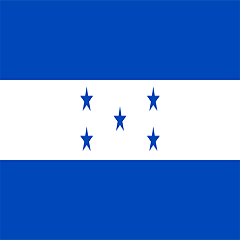
CLIENT: Honduran
LOCATION: Washington, D.C.
Our client contacted us in 2014 about the possibility of doing a National Interest Waiver. He is a researcher in the field of agriculture and geography research, and is currently working as a Research Analyst / Geospatial Analyst at one of the International NGOs in Washington, D.C.
His significant contributions have placed him at the pinnacle of the field of agriculture and geography research; specifically, advancement in finding policy solutions for food and nutrition security in developing areas domestically and developing countries through the application of geographical analysis tools and approaches. Throughout his research career, our client has provided innovative solutions for determining measurable geographical features that relates to different levels of West Nile virus transmission and vector abundance. Although our client does not have a Ph. D. degree (He has Master’s Degree), our client’s work has been highly evaluated by the reviewers of various journals and by colleagues and experts in his field of endeavor.
Upon review of his credentials and qualifications, our office determined that he was qualified for the National Interest Waiver (NIW) category. Being qualified for NIW is beneficial since you would not need an employer nor family member to petition for you for green card purposes. You’d be eligible for a self-petition and unless you are from China or India, in which case you’d still have to wait for priority dates to be current, you would be eligible to apply for adjustment of status (green card) immediately without any lag in priority dates.
As a primer, NIW applicants must have a master’s or higher degree. The landmark immigration case that discusses the standards for NIWs is Matter of New York State Department of Transportation, 22 I&N Dec. 215 (Comm.1998). This case held that the qualifying applicant must show the following elements in his or her I-140 NIW petition: First, it must be shown that the alien seeks employment in an area of substantial intrinsic merit. Next, it must be shown that the proposed benefit will be national in scope. Finally, the petitioner seeking the waiver must establish that the alien will serve the national interest to a substantially greater degree than would an available U. S. worker having the same minimum qualifications.
Our office prepared a 22-page brief for our client’s NIW filing. Our client also obtained 9 letters of recommendation from his colleagues and internationally-recognized researchers in his field. Our office also included his publication records, presentation records, and conference materials in the NIW application. We demonstrated the intrinsic merit of our client’s research in the United States, the national scope of his research, and asserted that our client would serve the national interest to a substantially greater degree than would an available U.S. worker having the same minimum qualifications. His NIW application contained 36 exhibits (Exhibit A to JJ).
Our office filed his I-140(NIW) petition to the USCIS Texas Service Center on June 16, 2014. On May 6, 2015, the USCIS approved his I-140 petition without any Requests for Evidence. Now, with the approved NIW I-140 petition, he can file his adjustment of status application at any time.
{ 0 comments }

CASE: I-485 Adjustment of Status / 245(k) / I-140 (EB-2 Category) / Schedule A
APPLICANT: Ghanaian Psychiatric Mental Health Nurse Practitioner
LOCATION: Indiana
Our client is a certified nurse practitioner. Her prospective employer-sponsor was willing to petition her for a second-preference employment immigrant visa petition (I-140). Since she is a certified nurse practitioner, she is eligible for “Schedule A” classification.
The Department of Labor (DOL) maintains a schedule of occupations in its regulations, Schedule A included, for which the individual permanent labor certification procedure is not required. The schedule of pre-certified occupations is referred to as Schedule A, and is included in DOL regulations at 20 CFR 656.10. Based on an occupation’s inclusion on Schedule A, an employer may file an immigrant visa petition (I-140) directly with the (USCIS) without having to file a Labor Certification with the Department of Labor. Usually, prior to filing I-140 petitions (EB-2 or EB-3 category), the employer must file a Labor Certification to the Department of Labor. However, for Schedule A cases, the employer does not have to go through the labor certification process. We argued that the position of Nurse Practitioner is included in Schedule A.
Our client has both a Bachelor’s and Master’s degrees in nursing. She has a Registered Nurse license and has an ANCC Psychiatric-Mental Health Nurse Practitioner Certificate. Our office was retained on June 17, 2014 and we started the Prevailing Wage Determination filing and other related matters.
Once the prevailing wage was determined, we filed the I-140 application on October 24, 2014 via premium processing. We included the job offer letter, the notice of filing, her pay stubs, and other necessary supporting documents. In our cover brief, we included the “ability to pay” argument and why nurse practitioners must fall under the Schedule A designation.
However, on November 8, 2014, the USCIS Nebraska Service Center issued a Request for Evidence (RFE) and requested our client’s CGFNS certificate. Our office prepared the response to RFE and filed it along with CGFNS certificate on November 20, 2014 to the USCIS. On November 28, 2014, the USCIS Nebraska Service Center approved her EB-2 I-140 petition.
When we filed her I-140 petition, our client simultaneously filed her I-485 adjustment of status application as well. We also included an extensive brief to argue that our client is eligible to adjust under the INA Section 245(k).
Section 245(k) of the INA can render the normal bars to adjustment of status found in section 245(c)(2), (c)(7), and (c)(8) inapplicable to certain employment-based adjustment of status applicants who, since their last lawful admission to the United States have not, for an aggregate period of more than 180 days:
(A)Failed to maintain, continuously, a lawful status;
(B) Engaged in authorized employment; or
(C) Otherwise violated the terms and conditions of his or her admission.
Our client maintained lawful F-1 status, and maintained full-time student status, up until May 2014. However, she did not extend her F-1 status or changed to other non-immigrant status in the United States before the filing of her I-485 adjustment of status application. Nevertheless, our client has not accrued over 180 days of “failure to maintain lawful status” nor over 180 days of “unauthorized employment”, and as such, she is still eligible to adjust status based on her approved I-140.
However, on April 20, 2015, the USCIS Nebraska Service Center issued a Request for Evidence (RFE) and requested our client’s CGFNS certificate again. Our office prepared the response to RFE and filed it along with CGFNS certificate on April 24, 2015 to the USCIS.
Finally, the USCIS approved our client’s I-485 adjustment of status application on May 8, 2015. Now, our client becomes a green card holder.
{ 0 comments }
Connect With Us


FREE CONSULTATIONS
Approvals by State
- Ohio
- Alabama
- Mississippi
- North Dakota
- Virgin Islands
- Iowa
- Virgin Islands
- Maine
- Idaho
- South Dakota
- Hawaii
- DC
- Minnesota
- North Carolina
- Saipan
- Kansas
- Colorado
- South Carolina
- Montana
- Kentucky
- Wyoming
- Nevada
- Arkansas
- New York
- California
- Texas
- Washington
- Virginia
- Arizona
- Nebraska
- Maryland
- Illinois
- Pennsylvania
- New Jersey
- Georgia
- Connecticut
- Missouri
- Wisconsin
- Indiana
- Louisiana
- Florida
- Tennessee
- Oklahoma
- Michigan
- Massachusetts
- New Mexico
Country Approvals
- Philippines
- Ecuador
- Gabon
- Bulgaria
- Yemen
- Netherlands
- Zambia
- Morocco
- Iraq
- Burkina Faso
- Turkey
- United Kingdom
- Venezuela
- Japan
- Egypt
- Sierra Leone
- Australia
- Lebanon
- Thailand
- Kyrgyzstan
- Saint Lucia
- Angola
- Ireland
- Macedonia
- Hong Kong
- Algeria
- Belgium
- UAE
- Serbia
- China
- South Korea
- India
- Kenya
- Indonesia
- Ghana
- Pakistan
- Nepal
- Britain
- Jamaica
- Canada
- Senegal
- Benin
- Colombia
- Moldova
- Jordan
- Romania
- Malaysia
- Guatemala
- Saudi Arabia
- Cameroon
- Africa
- Mexico
- Ethiopia
- Germany
- Ukraine
- Sweden
- Vietnam
- Costa Rica
- Cambodia
- El Salvador
- Nigeria
- Hungary
- Singapore
- Argentina
- Brazil
- Albania
- Sri Lanka
- Russia
- Zimbabwe
- Bangladesh
- Peru
- Guyana
- Iran
- Italy
- Suriname
- Honduras
- Gambia
- Cote D’Ivoire
- Hubei
- Grenada
- Spain
- Slovakia
- France
- Taiwan
- Tunisia
- Cuba
- Croatia
- Bahamas