
5005 Rockside Road Ste. 600
Cleveland Ohio 44131
(216) 573-3712
FREE CONSULTATIONS






CONTACT US
CLIENTS’ CHOICE AWARD
Success Stories

CASE: I-751
APPLICANT: Filipino
LOCATION: New Jersey
Our client contacted our office in December of 2017 regarding his I-751 application.
He is from the Philippines and he married a U.S. citizen in May 2015. Through his marriage, he obtained a 2-year conditional green card in April of 2016. His conditional residency terminated in April 2018.
To comply with immigration requirements, our client and his wife had to file an I-751 Joint Petition to Remove Conditions. He retained our office again on December 19, 2017, and our office prepared an I-751 application for our client with other supplemental exhibits.
On January 25, 2018, our office filed an I-751 application to the USCIS with multiple affidavits from his friends and family members, joint bank statements, joint taxes, utility bills, insurance policies, and photos of our client and his wife to demonstrate the bona fideness of their marriage.
Once the application was filed, the fingerprint notice was issued two weeks later. There was no RFE issuance or interview request for our client’s I-751 application. As a result, on March 19, 2019, the USCIS approved our client’s I-751 application and our client received his 10-year green card which removed the conditions.
{ 0 comments }
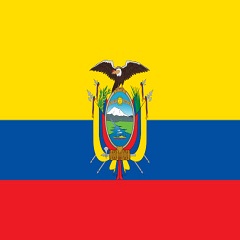
CASE: Adjustment of Status / 245i / I-140 (EB-3)
APPLICANT: Ecuadorian BAS/HVAC Controls Technician
LOCATION: New York
Our client is from Ecuador. His current employer was willing to do an immigration petition for him, third-preference. Our client has more than 2 years of experience as a HVAC Technician. After talking to our client, our firm concluded that his employer can petition him as a BAS/HVAC Controls Technician. Based on our client’s education and work background, our office determined that he eligible for EB-3 classification and our client eventually retained us in May 2017.
Prior to filing PERM, our firm prepared the prevailing wage request, job order, advertisements, internal job posting, recruitment report, and all other steps which are important pre-PERM filing. Take note that PERM could be filed at least 60 days from the job posting date or 30 days from the last ad. On June 2, 2017, the prevailing wage request was filed. After we got the PW determination, our office filed the job order on August 21, 2017. On October 27, 2017, we promptly filed PERM.
However, on April 19, 2018, the Department of Labor issued a request for audit. The DOL requested documents from Petitioner to determine whether the recruitment process was done properly. In response to the Audit request, our office prepared the response to Audit brief along with Employer’s declaration, notice of filing, and recruitment documentation on May 16, 2018.
Eventually, on July 11, 2018, the PERM Labor Certification was approved.
We then proceeded with the I-140 Petition filing. We submitted the “ability to pay” letter for the I-140 petition application. We included the job offer letter, past experience letters, employer’s tax records, and other necessary supporting documents. The I-140 Petition was filed on August 8, 2018 via premium processing service. Eventually, on August 17, 2018, the I-140 EB3 Petition for our client was approved without any Request for Evidence (RFE).
Then, he retained our office for the adjustment of status applications for him and his family members. In fact, our client failed to maintain his status in the United States; nonetheless, he could be eligible to file adjustment of status under the INA Section 245(i). Our client is the derivative beneficiary of an I-130 F4 petition filed by his US Citizen uncle to his father filed back in September 1989 and approved in December 1989. Our client was 10 years old at that time.
INA Section 245(i) allows a person to apply to adjust status notwithstanding the fact that he overstayed his immigration status. Thus, a person who entered legally but overstayed can adjust status based on an approved and current I-140 EB3 Petition if he paid the special fee required of $1000 and files Supplement A to I-485, as long as he is the beneficiary or derivative beneficiary of any approvable immigrant petition under section 204 (including I-130 F4 Petitions) that was filed on or before April 30, 2001 and proves physical presence as of December 21, 2000. INA 245(i). Beneficiaries or derivative beneficiaries who were petitioned prior to January 14, 1998 do not have to prove physical presence in 2000.
According to the Robert Bach’s “Accepting Applications for Adjustment of Status Under Section 245(i) of the “Immigration and Nationality Act” memorandum (“Bach Memo June 10, 1999).
“Section 245(i) defines the term “beneficiary” to include a spouse or child eligible to receive a visa under section 203(d) of the Act’ This applies to spouses or children ‘accompanying or following to join’ the principal alien…. The spouse or child of a grandfathered alien as of January 14 is also grandfathered for 245(i) purposes. This means that the spouse or child is grandfathered irrespective of whether the spouse or child adjusts with the principal. The pre-January 15 spouse or child also are grandfathered even after losing the status of spouse or child, such as by divorce or by becoming 21 years of age…
Often, a principal alien who has filed a visa petition or labor certification application will have a “child” who reaches the age of 21, and thus no longer meet the statutory definition of child, before the petition or application is approved or the principal alien adjusts status. However, such an “aged-out” beneficiary will remain a beneficiary for the purpose of determining whether he or she may use section 245(i) to adjust status.”
(Bach Memo June 10, 1999)
Thus, since our client was the derivative beneficiary of an I-130 F4 Petition filed in September 1989, which was before January 14, 1998, he and his family are eligible for adjustment of status by virtue of INA 245(i) despite their overstay.
Our office filed their I-485 adjustment of status applications under the 245(i) category for our client on August 29, 2018. Everything went smoothly and the receipt notices and fingerprint appointment all came on time. We thoroughly prepared our clients prior to their interviews as well.
On March 20, 2019, our client was interviewed at the Queens, New York USCIS Field Office. Attorney Sung Hee (Glen) Yu, Esq. from our office accompanied our clients as well. Eventually, their green card applications were approved by the USCIS on the same day of the interview.
{ 0 comments }

CASE: Marriage-Based Adjustment of Status
NATIONALITY: Italian
LOCATION: Cleveland, OH
Our client is from Italy who came to the U.S. on a B-2 visitor’s visa in April 2018. In August 2018, our client married his current U.S. citizen wife. He retained our office on August 21, 2018 for his green card application. Our firm prepared and filed the I-130 Petition and I-485 Adjustment of Status Application on September 17, 2018. Everything went smoothly and the receipt notices, fingerprint appointment, and work permits all came on time. Prior to the interview, we thoroughly prepared our clients at our office. On March 22, 2019, our client was interviewed at the Cleveland Ohio USCIS office. Attorney Sung Hee (Glen) Yu from our office accompanied our clients at their interview as well. The interview went well and eventually his green card application was approved after the interview.
{ 0 comments }

CASE: I-485 (Adjustment of Status) / I-140 / National Interest Waiver
CLIENT: Korean
LOCATION: Virginia
Our client contacted us in October 2016 about the possibility of doing a National Interest Waiver self-petition. He is a researcher from South Korea and he is an exceptional researcher and scientist in the field of urban forestry and urban ecosystem research.
Our client’s significant contributions have placed him at the pinnacle of his field. He has identified innovative solutions for improving energy conservation in dense urban areas. Specifically, our client is making significant contribution in the area of urban forestry for energy conservation and other ecosystem services. His research is revealing and identifying how trees influence local climate and can decrease building energy consumption which has important implications for city, state, federal policies across the United States.
Upon review of his credentials and qualifications, our office determined that he was definitely qualified for the National Interest Waiver (NIW) category. Being qualified for NIW is beneficial since you would not need an employer nor family member to petition for you for green card purposes. You’d be eligible for a self-petition and unless you are from China or India, in which case you’d still have to wait for priority dates to be current, you would be eligible to apply for adjustment of status (green card) immediately without any lag in priority dates.
As a primer, NIW applicants must have a master’s or higher degree. While we prepared his case, the AAO set the new standards for NIW cases in Matter of Dhanasar, 26 I&N Dec. 884 (AAO 2016). Under the new standard, the petitioner must demonstrate that the foreign national’s proposed endeavor has both substantial merit and national importance. Next, it must be shown that he or she is well positioned to advance the proposed endeavor. Finally, the petitioner seeking the waiver needs to demonstrate that, on balance, it would be beneficial to the United States to waive the job offer and labor certification requirements. Id.
Our office prepared a 24-page brief for our client’s NIW filing. Our client also obtained 11 letters of recommendation from his colleagues and internationally-recognized researchers. Our office also included his publication records, presentation records, and conference materials in the NIW application. We demonstrated that our client is one of the few elite researchers who have made significant and substantial contributions to his field of endeavor, that he is well positioned to advance the proposed endeavor, and it would be beneficial to the United States to waive the requirements of a job offer and thus of a labor certification for our client. His NIW application contained 43 exhibits (Exhibit A to QQ).
Our office filed his I-140(NIW) petition to the USCIS Texas Service Center on January 26, 2017. Eventually, on September 27, 2017, the USCIS approved his I-140 petition without any Requests for Evidence.
When we filed his I-140, he concurrently filed his I-485 adjustment of status application. Everything went smoothly and the receipt notices and fingerprint appointment came on time. Prior to the interview, we thoroughly prepared our client via conference calls. On January 9, 2018, our client was interviewed at Norfolk, Virginia USCIS office. The interview went well, and the officer recommended his case for approval.
However, without any reasons, our client’s case remained pending after his interview. Our office sent multiple follow-up letters to USCIS Norfolk Field Office and made multiple inquiries to the USCIS. Our client also visited the field office with the Infopass. None of us did hear any reasons for the delay. Our client even contacted Senator Tim Kane’s office for help.
In August 2018, our client and his wife received the Request for Evidence (RFE) from the USCIS to submit updated I-693 vaccination records. Our client received new physical exams and responded to his RFE. His case was transferred to the USCIS Texas Service Center and in February 2019, his case was transferred to the USCIS National Benefits Center.
Nevertheless, our client and his wife’s adjustment of status applications were approved on March 15, 2019. Now, he becomes a green card holder after the long wait.
{ 0 comments }

CASE: Fiancé Visa
PETITIONER: US Citizen in Grand Rapids, MI
BENEFICIARY: British
PETITION FILED: June 27, 2018
PETITION APPROVED: January 8, 2019
K-1 VISA APPROVED: March 18, 2019
Our client, a US Citizen Petitioner, met his fiancée in 2016. They started their relationship, and visited each other several times. They decided to get married and our client decided to file a fiancé petition for his fiancée. He retained our firm to file a fiancé petition for her on June 11, 2018.
After retention, we informed our client about the necessary supporting documents to demonstrate the bona fide nature of their relationship. We helped him and his fiancée draft letters in support of the fiancé petition, and we filed the petition on June 27, 2019.
On January 8, 2019, the I-129F fiancé petition was approved. On March 18, 2019, our client’s fiancée appeared at the U.S. Embassy in London, United Kingdom for her K-1 visa interview. The interview went well, and after the interview, the U.S. Embassy issued her K-1 visa.
{ 0 comments }

CASE: J-1 Waiver of the Two-Year Foreign Residency Requirement, Extreme Hardship
NATIONALITY: Nepalese
LOCATION: South Dakota
Our Nepalese client came to the U.S. as a J-1 scholar with a Fulbright scholarship in 2014. His J-1 status made him subject to the two-year foreign resident requirement. Our client would like to file his adjustment of status application along with his I-140 NIW application; however, due to the two-year foreign residency requirement, he had to obtain a waiver first.
Unlike our other J-1 clients, our client could not pursue his waiver under No Objection Statement or Interest Government Agency (IGA). Our client also received government funding (Fulbright scholarship) for his research programs which made his case pretty much impossible for the No Objection Statement or IGA waiver route. Our client, though, would like to pursue his J-1 waiver based on exceptional hardship standard. In fact, our client’s U.S. citizen son is experiencing exceptional medical hardships.
According to 8 C.F.R. Section 212.7(c)(5), “an alien who is subject to the foreign residence requirement and who believes that compliance therewith would impose exceptional hardship upon her spouse or child who is a citizen of the United States… may apply for a waiver on Form I-612.”
Some of the factors in analyzing extreme hardship are as follows: age of the subject, family ties in the U.S. and abroad, length and residency in the U.S., health / medical conditions, conditions in the country of removal – economic and political, financial status – business and occupation, position in / ties to the community. Matter of Anderson, 16 I&N Dec. 596 (BIA 1978).
After he retained our firm, we prepared and filed a waiver request through an exceptional hardship basis. On October 3, 2017, the J-1 Waiver (Form DS-3035) Application was filed to the Department of State. Thereafter, our office prepared affidavit of our client, extensive brief in support for our client’s J-1 waiver application, and other supporting documents. Our client provided us with extensive medical documents and doctor’s reports for his U.S. citizen son’s medical conditions. On October 20, 2017, our office filed I-612 application to the USCIS and asked for them to issue and recommends this waiver based on the fact that our client’s son would experience exceptional hardship if our client needs to go back to Nepal for two years.
However, the USCIS issued Request for Evidence on July 25, 2018 and requested more hardship evidence from our client. Our office filed Response to RFE on August 29, 2018.
Eventually, the USCIS approved his I-612 waiver on March 13, 2019. Now that our client’s two-year foreign residency requirement is waived, he can file his adjustment of status application along with his NIW I-140 self-petition in the United States.
{ 0 comments }
CASE: N-400 (Citizenship / Naturalization)
APPLICANT: Filipino
LOCATION: El Paso, TX
Our client contacted us in July 2018 to seek legal representation for his naturalization and citizenship N-400 application. He came to the United States from the Philippines and obtained his green card in April 2013.
After retention, his N-400 application was filed on August 28, 2018 with all supporting documents. Prior to his citizenship interview, our office prepared him via conference calls. On January 16, 2019, our client appeared at the El Paso, Texas USCIS office for his naturalization interview. Our client answered all questions correctly and passed his naturalization and citizenship interview. However, the USCIS issued a Request for Evidence (RFE) asking our client to submit a copy of all of his children’s birth certificates and his divorce decrees. Our office filed the response to RFE on January 28, 2019.
Eventually, his application was approved on March 6, 2019. His oath taking is scheduled in which he will become a naturalized U.S. Citizen.
{ 0 comments }

CASE: J-1 Waiver of the Two-Year Foreign Residency Requirement – Hardship
NATIONALITY: Iranian
LOCATION: Alabama
Our client came from Iran as a J-1 short-term scholar in 2011. In 2012, he got his F-1 status as a Ph.D. Student in the United States. His J-1 visa made him subject to the two-year foreign residency requirement. Our client would like to file his adjustment of status application along with his I-140 NIW application; however, due to the two-year foreign residency requirement, he had to obtain a waiver first.
Unlike our other J-1 clients, our client could not pursue his waiver under No Objection Statement or Interest Government Agency (IGA). Our client also received government funding for his research programs which made his case tougher for the No Objection Statement or IGA waiver route. Our client, though, would like to pursue his J-1 waiver based on exceptional hardship standard. In fact, our client’s U.S. citizen daughter is experiencing exceptional medical hardships.
According to 8 C.F.R. Section 212.7(c)(5), “an alien who is subject to the foreign residence requirement and who believes that compliance therewith would impose exceptional hardship upon her spouse or child who is a citizen of the United States… may apply for a waiver on Form I-612.”
Some of the factors in analyzing extreme hardship are as follows: age of the subject, family ties in the U.S. and abroad, length and residency in the U.S., health / medical conditions, conditions in the country of removal – economic and political, financial status – business and occupation, position in / ties to the community. Matter of Anderson, 16 I&N Dec. 596 (BIA 1978).
After he retained our firm, we prepared and filed a waiver request through an exceptional hardship basis. On September 7, 2017, the J-1 Waiver (Form DS-3035) Application was filed to the Department of State. Thereafter, our office prepared affidavit of our client, extensive brief in support for our client’s J-1 waiver application, and other supporting documents. Our client provided us with extensive medical documents and doctor’s reports for his U.S. citizen daughter’s medical conditions. On September 25, 2017, our office filed I-612 application to the USCIS and asked for them to issue and recommends this waiver based on the fact that our client’s daughter would experience exceptional hardship if our client needs to go back to Iran for two years.
However, the USCIS issued Request for Evidence on July 5, 2018 and requested more hardship evidence from our client. Our office filed Response to RFE on July 19, 2018.
Eventually, the USCIS approved his I-612 waiver on March 4, 2019. Now that our client’s two-year foreign residency requirement is waived, he can file his adjustment of status application along with his NIW I-140 self-petition in the United States.
{ 0 comments }

CASE: Marriage-Based Green Card (Same Sex Marriage Case)
CLIENT: Singaporean
LOCATION: Wyoming
Our client came to the United States from Singapore as a visa waiver visitor in March 2018. He married his U.S. Citizen same-sex spouse in June 2018.
On June 26, 2013, the U.S. Supreme Court held that restricting U.S. federal interpretation of “marriage” and “spouse” to apply only to heterosexual unions, by Section 3 of the defense of Marriage Act (DOMA), is unconstitutional under the Due Process Clause of the Fifth Amendment. United States v. Windsor, 570 U.S. ___ (2013). After Windsor decision, the USCIS implemented a new policy that the USCIS officer must review immigration via petitions filed on behalf of a same-sex spouse in the same manner as those filed on behalf of an opposite-sex spouse. As long as a same-sex couple is married in a U.S. state that recognizes same-sex marriage, their marriage shall be considered a valid marriage under the immigration law.
They married in Wyoming where same-sex marriage is recognized. Our client contacted our office and retained us on June 12, 2018 for his I-130 petition and I-485 adjustment of status application. Our firm prepared and filed the I-130 petition and I-485 adjustment of status application, together with all necessary supporting documents, on September 11, 2018. Everything went smoothly and the receipt notices, fingerprint appointment, and work permits all came on time.
Prior to the interview, we thoroughly prepared our clients via conference calls. On March 12, 2019, our client was interviewed at the Centennial, Colorado USCIS office. The interview went well and his green card application was approved on the same day.
{ 0 comments }
CASE: N-400 (Citizenship / Naturalization)
APPLICANT: Filipino
LOCATION: Houston, TX
Our client contacted us in February 2018 to seek legal representation for his naturalization and citizenship N-400 application. He came to the United States from the Philippines and obtained his green card in August 2012.
After retention, we filed his N-400 application on February 16, 2018 with all supporting documents. Prior to his citizenship interview, our office prepared him via conference calls. On February 29, 2019, our client appeared at the Houston, Texas USCIS office for his naturalization interview. Our client answered all questions correctly and passed his naturalization and citizenship interview. Eventually, his application was approved on March 7, 2019. His oath taking is scheduled in which he will become a naturalized U.S. Citizen.
{ 0 comments }
Connect With Us


FREE CONSULTATIONS
Approvals by State
- Ohio
- Alabama
- Mississippi
- North Dakota
- Virgin Islands
- Iowa
- Virgin Islands
- Maine
- Idaho
- South Dakota
- Hawaii
- DC
- Minnesota
- North Carolina
- Saipan
- Kansas
- Colorado
- South Carolina
- Montana
- Kentucky
- Wyoming
- Nevada
- Arkansas
- New York
- California
- Texas
- Washington
- Virginia
- Arizona
- Nebraska
- Maryland
- Illinois
- Pennsylvania
- New Jersey
- Georgia
- Connecticut
- Missouri
- Wisconsin
- Indiana
- Louisiana
- Florida
- Tennessee
- Oklahoma
- Michigan
- Massachusetts
- New Mexico
Country Approvals
- Philippines
- Ecuador
- Gabon
- Bulgaria
- Yemen
- Netherlands
- Zambia
- Morocco
- Iraq
- Burkina Faso
- Turkey
- United Kingdom
- Venezuela
- Japan
- Egypt
- Sierra Leone
- Australia
- Lebanon
- Thailand
- Kyrgyzstan
- Saint Lucia
- Angola
- Ireland
- Macedonia
- Hong Kong
- Algeria
- Belgium
- UAE
- Serbia
- China
- South Korea
- India
- Kenya
- Indonesia
- Ghana
- Pakistan
- Nepal
- Britain
- Jamaica
- Canada
- Senegal
- Benin
- Colombia
- Moldova
- Jordan
- Romania
- Malaysia
- Guatemala
- Saudi Arabia
- Cameroon
- Africa
- Mexico
- Ethiopia
- Germany
- Ukraine
- Sweden
- Vietnam
- Costa Rica
- Cambodia
- El Salvador
- Nigeria
- Hungary
- Singapore
- Argentina
- Brazil
- Albania
- Sri Lanka
- Russia
- Zimbabwe
- Bangladesh
- Peru
- Guyana
- Iran
- Italy
- Suriname
- Honduras
- Gambia
- Cote D’Ivoire
- Hubei
- Grenada
- Spain
- Slovakia
- France
- Taiwan
- Tunisia
- Cuba
- Croatia
- Bahamas