
5005 Rockside Road Ste. 600
Cleveland Ohio 44131
(216) 573-3712
FREE CONSULTATIONS






CONTACT US
CLIENTS’ CHOICE AWARD
Success Stories
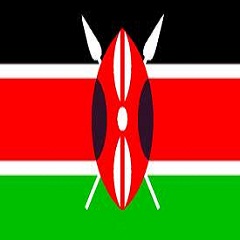
CASE: J-2 Waiver of Two-Year Foreign Residency Requirement Post-Divorce
NATIONALITY: Kenyan
LOCATION: Las Vegas, NV
Our client is a citizen of Kenya who came to the U.S. on a J-2 Visa in 2007. She came with her husband who held a J-1 Visa as a Ph.D student. Both were subject to the two-year foreign residency requirement.
Unfortunately, while they are residing in the United States, her marriage did not work out well. Eventually, she got divorced from her ex-husband. Thereafter, she lost her J-2 status in the United States; but she was still subject to the two-year foreign residency requirement. Later in July 2015, she married her U.S. Citizen husband. He intends to file I-130 petition for her, but she could not file adjustment of status in the U.S. and change her status to other non-immigrant visa in the United States because of the 2 year foreign residency requirement.
In August of this year, our client contacted our office. She retained our firm to do her J-2 waiver on August 8, 2016. On August 11, 2016 the J-2 Waiver (DS-3035) was filed to the Department of State. We also sent a request to the DOS to be an interested government agency and recommend this waiver based on the fact that our client was divorced from the J-1 visa holder. Eventually, on August 29, 2016, the DOS recommended to the United States Citizenship and Immigration Service (USCIS) that our client be granted a waiver. Finally, the USCIS issued I-612 waiver approval notice on September 21, 2016. Now, our client’s U.S. citizen husband can file I-130 petition for our client and our client can file an adjustment of status application (I-485) for her green card with a waiver.
{ 0 comments }

CASE: H-1B Visa Petition
PETITIONER: Healthcare staffing firm
BENEFICIARY: Pharmacist
ISSUES: Cap-Exempt, Research Organization, Off-Site Employment
Our client is one of the leading healthcare staffing firms in Northeast Ohio, serving the general staffing needs of regional hospitals and clinics. They contacted our office in early March to seek legal assistance from our office for their foreign employee’s H-1B Extension.
The beneficiary is a licensed pharmacist who obtained his Doctor of Pharmacy degree in the United States. The proffered position for the Beneficiary is a Pharmacist. We showed that this is a “specialty occupation” because the minimum requirement for this position is a Doctor of Pharmacy Degree with a registered Pharmacist license. With our office’s legal assistance, she got her H-1B in May 2013.
Her H-1B extension is quite unique due to the nature of her employment. The Petitioner is qualified for some of the exemption provisions for the H-1B cap. We explained that we can argue the nonprofit exemption, as well as cite some CIS memorandums regarding eligibility for H-1B petitions despite off-site employment. We showed that the main reason for cap-exemption is that the foreign employee will be placed at two hospitals which are non-profit research organizations as defined in 8 C.F.R. 214.2(h)(19)(iii)(C).
Our office argued that this H-1B petition is exempted from the H-1B numerical limitations (cap-exempt) because the Petitioner will employ the beneficiary to perform job duties at non-profit research organizations (two hospitals) as defined in 8 C.F.R. 214(h)(19)(iii)(C) that directly and predominately furthers the normal, primary, or essential purpose, mission, objectives, or function of the qualifying institution (nonprofit research).
We also argued that these two hospitals are clearly qualified as non-profit research organizations as defined in 8 C.F.R. 214(h)(19)(iii)(C). These two organizations are primarily engaged in basic research and/or applied research. Moreover, the beneficiary’s job duties, which will be performed on-site at qualifying non-profit research organizations, will be similar to those performed by actual employees (Pharmacists) of the two hospitals in the furtherance of the qualifying entities’ mission.
Furthermore, we explained that the Petitioner will comply with the statutory and regulatory requirements of the H-1B non-immigrant classification for the placement of the beneficiary at the two hospitals during the period of employment. We mentioned that the beneficiary will be paid higher than the prevailing wage for the pharmacist position by the Petitioner, and Petitioner-Employer will maintain an employer-employee relationship with the beneficiary. The Petitioner has the right to control the work of the beneficiary on a day-to-day basis as well. We explained that the Petitioner has a sole right to hire, pay, and has the ability to fire the beneficiary as well.
Once retained, our office filed the H-1B visa extension petition with various supporting documents on March 15, 2016.
Eventually, our client’s H-1B application was approved on September 22, 2016 without any Request for Evidence (RFE). She can now work for her employer for three more years.
{ 0 comments }

CASE: J-1 Waiver of the Two-Year Foreign Residency Requirement, Exceptional Hardship
NATIONALITY: Egyptian
LOCATION: Maryland
Our client came from Egypt and has maintained his J-1 status from May 2011. He got his J-1 status as a research scholar and was receiving government funding for his research. His J-1 status made him subject to the two-year foreign resident requirement. Our client would like to file his adjustment of status application along with his I-140 NIW application; however, due to the two-year foreign residency requirement, he had to obtain a waiver first.
Unlike our other J-1 clients, our client could not pursue his waiver under No Objection Statement or Interest Government Agency (IGA). As mentioned above, our client also received government funding for his research programs which made his case tougher for the No Objection Statement or IGA waiver route. Our client, though, would like to pursue his J-1 waiver based on exceptional hardship standard. In fact, our client’s U.S. citizen daughter is experiencing exceptional medical hardships.
According to 8 C.F.R. Section 212.7(c)(5), “an alien who is subject to the foreign residence requirement and who believes that compliance therewith would impose exceptional hardship upon her spouse or child who is a citizen of the United States… may apply for a waiver on Form I-612.”
Some of the factors in analyzing exceptional hardship are as follows: age of the subject, family ties in the U.S. and abroad, length and residency in the U.S., health / medical conditions, conditions in the country of removal – economic and political, financial status – business and occupation, position in / ties to the community. Matter of Anderson, 16 I&N Dec. 596 (BIA 1978).
After he retained our firm, we prepared and filed a waiver request through an exceptional hardship basis. On February 18, 2016 the J-1 Waiver (Form DS-3035) Application was filed to the Department of State. Thereafter, our office prepared affidavit of our client, extensive brief in support for our client’s J-1 waiver application, and other supporting documents. Our client provided us with extensive medical documents and doctor’s reports for his U.S. citizen daughter’s medical conditions. On March 4, 2016, our office filed I-612 application to the USCIS and asked for them to issue and recommends this waiver based on the fact that our client’s daughter would experience exceptional hardship if our client needs to go back to Egypt for two years.
Eventually, the USCIS approved his I-612 waiver on September 21, 2016. Now that our client’s two-year foreign residency requirement is waived, he can file his adjustment of status application along with his NIW I-140 self-petition in the United States.
{ 0 comments }

CASE: Adjustment of Status Based on Approved K-1 Visa
CLIENT: Filipina
LOCATION: Cleveland, OH
Our client came to the United States in January 2016 as a K-1 visa entrant from the Philippines. Our client is the beneficiary of an approved I-129F petition. She came to the United States as a K-1 Fiancée of a U.S. Citizen whom she married within 90 days of her entry. By law, if you married your petitioner-fiancé within 90 days of your K-1 visa entry, you are eligible to apply for adjustment of status (green card) in the United States. She also has a minor child who came with her with valid K-2 visa.
Our client contacted our office initially in May 2016 and consulted with us for her and her child’s adjustment of status application. After the retention, our firm quickly prepared and filed the I-485 Adjustment of Status Applications on May 6, 2016. Things went smoothly and the receipt notices, and the fingerprint appointment all came on time.
It is not mandatory to have an adjustment of status interview for an applicant who entered on a K-1 visa. However, the USCIS may require an interview to test the validity and bona fide nature of the marriage between the Petitioner and Beneficiary. The USCIS did not require an adjustment interview for our client. On August 28, 2016, her green card application was finally approved. Her child (U.S. citizen’s step-child)’s adjustment of status application was also approved.
{ 0 comments }

CASE: J-1 Waiver of the Two-Year Foreign Residency Requirement, No Objection Statement
NATIONALITY: Nepalese
LOCATION: Michigan
Our Nepalese client came to the U.S. on an F-1 student visa and finished his Ph.D. program. Thereafter, he changed his status from F-1 to J-1 to work as a research scholar. However, his J-1 visa made him subject to the two-year foreign resident requirement. In April 2015, he filed an I-140 EB-2 NIW Self-Petition to the USCIS and it was approved in August 2015. However, due to the two-year foreign residency requirement, he had to obtain a waiver first before he can file an adjustment of status application.
After he retained our firm, we prepared and filed a waiver request through a No Objection Statement (NOS) from the Nepalese Embassy in the United States. Our office contacted the Nepalese Embassy in Washington D.C. to make sure we knew all the requirements needed for their office to issue a no objection statement. The Embassy requested numerous documents including a statement of reason for the waiver, the applicant’s resume, a copy of his valid Nepalese passport, the approved copy of I-140 notice, a copy of DS-2019, and a copy of Third Party Bar Code Page
On January 12, 2016, the J-1 Waiver (Form DS-3035) Application was filed to the Department of State. We also sent a request to the Nepalese Embassy to issue a No Objection Statement and recommend this waiver based on the fact that our client would have been eligible to file an employment-based adjustment of status application but for the waiver.
The Nepalese Embassy eventually issued a No Objection Statement for our client, and sent this letter to the State Department’s Waiver Review Division. On March 7, 2016, the Waiver Review Division issued a favorable recommendation based on the No Objection statement. The CIS then issued a receipt and an I-612 approval notice on August 23, 2016. Now that our client’s two-year foreign residency requirement is waived, he can file adjustment of status application with the approved I-140 petition.
{ 0 comments }

CASE: Fiancé Visa
PETITIONER: US Citizen in Cleveland Ohio
BENEFICIARY: Italian
PETITION FILED: February 16, 2016
PETITION APPROVED: April 18, 2016
K-1 VISA APPROVED: July 1, 2016
Our client, a US Citizen Petitioner, met her Italian fiancé in the airplane in 2013. They started their relationship, and she visited Italy. They have lived together in Italy and have two kids together. However, they did not get married yet. In 2016, they decided to get married and our client decided to file a fiancé petition for her fiancé. She retained our firm to file a fiancé petition for him on February 4, 2016.
After retention, we informed our client about the necessary supporting documents to demonstrate the bona fide nature of their relationship. We helped her and her fiancé draft letters in support of the fiancé petition, and we filed the petition on February 16, 2016.
On April 18, 2016, little after two months of filing, the I-129F fiancée petition was approved. On July 1, 2016, our client’s fiancé appeared at the U.S. Consulate in Naples, Italy for his K-1 visa interview. The interview went well, and on July 1, 2016, the U.S. Embassy issued his K-1 visa. After the issuance of K-1 visa, our client’s fiancé came to the United States. They married on August 11, 2016 in Cleveland, Ohio and our client’s husband filed I-485 adjustment of status application to get his green card.
{ 0 comments }
CASE: H-1B Visa Petition
PETITIONER: Dental Clinic
BENEFICIARY: Nepalese Dentist in Cleveland, OH
Our client is a dental clinic located in Cleveland, Ohio. They contacted our office in early March of this year to seek legal assistance for a possible H-1B petition for their foreign employee.
The beneficiary obtained her Doctor of Dental Surgery in the United States. Moreover, she is a licensed dentist in the state of Ohio. The proffered position for the Beneficiary is an associate dentist which clearly qualifies as a specialty occupation.
Upon retention, our office prepared and eventually filed the H-1B visa petition with various supporting documents on March 31, 2016 via regular processing service. This H-1B petition was selected after the lottery.
However, the USCIS issued Request for Evidence (RFE) on June 8, 2016 and requested beneficiary’s pay stubs during her OPT employment. Moreover, the USCIS asked Beneficiary to submit evidence to show whether she has maintained her non-immigrant status lawfully in the United States. Our office gathered the evidence from Beneficiary and submitted the Response to RFE to USCIS on June 22, 2016. Eventually, our client’s H-1B application was approved on August 24, 2016.
{ 0 comments }

CASE: Marriage-Based Adjustment of Status
CLIENT: Indian
LOCATION: Cleveland, OH
Our client came to the United States from India on a B-2 visitor’s visa in December 2015. He married a U.S. Citizen in June 2015 in India and came to the United States with his wife to visit his in-laws. Later, they changed their plan and decided to stay in the United States. They contacted and retained our office for his green card application. They were concerned about possible immigrant intent issues due to the entry on a B-2 visa despite getting married in India prior to this entry. Our firm prepared and filed the I-130 Petition and I-485 Adjustment of Status Application on May 9, 2016. Everything went smoothly and the receipt notices, fingerprint appointment, and work permits all came on time. Prior to the interview, we thoroughly prepared our clients at our office. On August 15, 2016, our client was interviewed at Cleveland, Ohio USCIS office. Attorney Sung Hee (Glen) Yu from our office accompanied our clients as well. Eventually, after the interview, his green card application was approved.
{ 0 comments }
CASE: H-1B Visa Petition
PETITIONER: Sales Leads Provider
BENEFICIARY: Nepalese Software Developer –Web Applications in Omaha, NE
Our client is a Sales Leads provider located in Omaha, NE. They contacted our office in later February of this year to seek legal assistance for a possible H-1B petition for their foreign employee.
The beneficiary obtained his Master of Science in Management Information Systems in the United States. The proffered position for the Beneficiary is a Software Developer – Web Applications which clearly qualifies as a specialty occupation.
Upon retention, our office prepared and eventually filed the H-1B visa petition with various supporting documents on March 31, 2016 via regular processing service. This H-1B petition was selected after the lottery. Our client’s H-1B application was approved on June 28, 2016.
{ 0 comments }

CASE: J-2 Waiver of Two-Year Foreign Residency Requirement / Over 21-year-old dependent child
NATIONALITY: Iranian
LOCATION: Georgia
Our client is a citizen of Iran who came to the U.S. on a J-2 Visa in October 2006. He came with his father who came on a J-1 Visa for his research program in the United States. Both were subject to the two-year foreign residency requirement, meaning they had to go back to their home country for two-years before they can apply for permanent residency or some non-immigrant visa such as the H, L, and O visas.
After our client came to the United States, he has remained in the United States beyond the expiration of his authorized stay period. He turned 21 in 2011. Later, our client married his current U.S. citizen wife in September 2015. He would like to get a waiver because he can get a green card based on his U.S. citizen wife’s I-130 petition. However, because of his two-year foreign residency requirement, our client cannot change his status in the United States without the fulfillment of the requirement or a waiver.
Although J-2 dependents cannot independently apply for a waiver, in cases where a J-2 child reaches 21, the Waiver Review Division may consider requests for waivers on behalf of the J-2 dependent. The Department of State’s policy allows for that process in instances where the J-2 dependent obtains a divorce form the J-1 principal, the J-1 principal dies, or in cases where the J-2 dependent turns 21, which is our client’s case. In fact, our client turned 21 in 2011.
Our firm was retained to do his J-2 waiver, and on May 26, 2016, the J-2 Waiver application (Form DS-3035 and supporting documents) was filed to the Department of State. We also sent a request to the DOS to be an interested government agency and recommend this waiver based on the fact that our client reached the age of 21 and was not a dependent of a J-1 visa holder anymore. Eventually, on June 20, 2016, the DOS recommended to the United States Citizenship and Immigration Service (USCIS) that our client be granted a waiver. On July 7, 2016, the USCIS issued an I-612 approval notice for our client’s waiver request.
{ 0 comments }
Connect With Us


FREE CONSULTATIONS
Approvals by State
- Ohio
- Alabama
- Mississippi
- North Dakota
- Virgin Islands
- Iowa
- Virgin Islands
- Maine
- Idaho
- South Dakota
- Hawaii
- DC
- Minnesota
- North Carolina
- Saipan
- Kansas
- Colorado
- South Carolina
- Montana
- Kentucky
- Wyoming
- Nevada
- Arkansas
- New York
- California
- Texas
- Washington
- Virginia
- Arizona
- Nebraska
- Maryland
- Illinois
- Pennsylvania
- New Jersey
- Georgia
- Connecticut
- Missouri
- Wisconsin
- Indiana
- Louisiana
- Florida
- Tennessee
- Oklahoma
- Michigan
- Massachusetts
- New Mexico
Country Approvals
- Philippines
- Ecuador
- Gabon
- Bulgaria
- Yemen
- Netherlands
- Zambia
- Morocco
- Iraq
- Burkina Faso
- Turkey
- United Kingdom
- Venezuela
- Japan
- Egypt
- Sierra Leone
- Australia
- Lebanon
- Thailand
- Kyrgyzstan
- Saint Lucia
- Angola
- Ireland
- Macedonia
- Hong Kong
- Algeria
- Belgium
- UAE
- Serbia
- China
- South Korea
- India
- Kenya
- Indonesia
- Ghana
- Pakistan
- Nepal
- Britain
- Jamaica
- Canada
- Senegal
- Benin
- Colombia
- Moldova
- Jordan
- Romania
- Malaysia
- Guatemala
- Saudi Arabia
- Cameroon
- Africa
- Mexico
- Ethiopia
- Germany
- Ukraine
- Sweden
- Vietnam
- Costa Rica
- Cambodia
- El Salvador
- Nigeria
- Hungary
- Singapore
- Argentina
- Brazil
- Albania
- Sri Lanka
- Russia
- Zimbabwe
- Bangladesh
- Peru
- Guyana
- Iran
- Italy
- Suriname
- Honduras
- Gambia
- Cote D’Ivoire
- Hubei
- Grenada
- Spain
- Slovakia
- France
- Taiwan
- Tunisia
- Cuba
- Croatia
- Bahamas