
5005 Rockside Road Ste. 600
Cleveland Ohio 44131
(216) 573-3712
FREE CONSULTATIONS






CONTACT US
CLIENTS’ CHOICE AWARD
Success Stories

CASE: H-1B Visa Extension
PETITIONER: Capital Investment Company in Georgia
BENEFICIARY: Lithuanian International Compliance Manager
Our client is a Capital Investment Company in Georgia which owns local and international travel clubs and sells memberships. They contacted our office in late March of 2015 to seek legal assistance for its foreign beneficiary’s H-1B extension..
The beneficiary is Lithuanian and obtained her Bachelor’s and Master’s Degree in International Law in Lithuania. The proffered position for the Beneficiary was for an International Compliance Manager which we argued qualified as a specialty occupation. We proffered that the minimum requirement for this position is a Bachelor’s Degree in International Law/Relations or its equivalent. She has been working for the Petitioner on a valid H-1B visa.
Once retained, our firm prepared and eventually filed the H-1B visa petition with various supporting documents on April 9, 2015 via regular processing. Eventually, without any RFE, our client’s H-1B extension was approved on May 12, 2015. Now, the Beneficiary can continue to work for the Petitioner on an H-1B status until December 7, 2016 (until her duration of H-1B status reaches the 6th year mark).
{ 0 comments }

CASE: Change of Status from H-1B to F-1 / Response to RFE
CLIENT: Chinese
LOCATION: Cleveland, OH
Our client has been on H-1B status for many years and has worked in the United States. In late 2014, she decided to study further in the United States and got admitted. She filed her I-539 Change of Status application to change status from H-1B to F-1 to USCIS.
However, she received a Request for Evidence for her application and the RFE letter was very extensive and involved multiple issues. In order to receive legal assistance from us, she contacted our office in early April of this year for the response to RFE. Eventually, she retained our office on April 7, 2015.
Once retained, we helped our client obtain supporting documents for the Change of Status and prepared the response brief for the RFE. We fully explained her financial ability to pursue her studies in the U.S., her ties to her home country, and maintenance of status.
The start date of her program on the I-20 was AFTER her last day at work on H-1B, but it was within 30 days of it. Plus, she filed the change of status before her last day at H-1B.
On April 21, 2015, we filed the Response to RFE for her I-539 Change of Status with an extensive response brief and numerous supporting documents.
On May, 1, 2015, the Change of Status was approved. Our client is now on F-1 and can start her accounting program soon.
{ 0 comments }
CASE: J-2 Waiver of Two-Year Foreign Residency Requirement / Over 21-year-old dependent child
NATIONALITY: Chinese
LOCATION: San Francisco, California
Our client was a citizen of Canada who came to the U.S. on a J-2 Visa in January 1992 when she was a Chinese Citizen. She came with her mother who came on a J-1 Visa for her research program in the United States. Both were subject to the two-year foreign residency requirement, meaning they had to go back to their home country for two-years before they can apply for permanent residency or some non-immigrant visa such as the H, L, and O visas.
Once her mother’s program was completed, her family immigrated to Canada. In 1999, our client came back to the U.S. on a TD visa (dependent of TN visa holder) with her parents. She finished her high school and went back to Canada for her undergraduate degree. In 2009, she came back to the U.S. on an F-1 student visa to pursue her degree. Later, she married her current husband and she filed her adjustment of status application as a derivative applicant of her husband’s application.
She turned 21 in 2005. However, because of her two-year foreign residency requirement, the USCIS requested her to show whether she has complied with the 2 year foreign residency rule. She was not aware of this requirement since she was so young when she came to the United States in 1992.
Although J-2 dependents cannot independently apply for a waiver, in cases where a J-2 child reaches 21, the Waiver Review Division may consider requests for waivers on behalf of the J-2 dependent. The Department of State’s policy allows for that process in instances where the J-2 dependent obtains a divorce form the J-1 principal, the J-1 principal dies, or in cases where the J-2 dependent turns 21, which is our client’s case. In fact, our client turned 21 in December 2005.
In order to obtain aJ-2 waiver before her RFE deadline, she contacted our office. Our firm was retained to do her J-2 waiver on March 2, 2015. On March 4, 2015, the J-2 Waiver application (Form DS-3035 and supporting documents) was filed to the Department of State. We also sent a request to the DOS to be an interested government agency and recommend this waiver based on the fact that our client reached the age of 21 and was not a dependent of a J-1 visa holder anymore. Eventually, on April 9, 2015 the DOS recommended to the United States Citizenship and Immigration Service (USCIS) that our client be granted a waiver. On May 4, 2015, the USCIS issued an I-612 approval notice for our client’s waiver request.
{ 0 comments }

CASE: J-1 Waiver of Two-Year Foreign Residency Requirement, No Objection Statement
NATIONALITY: Korean
LOCATION: Ohio
Our client is from South Korea who came to the U.S. on a J-1 Visa in December 2002 as a visiting scholar. His J-1 program made him subject to the two-year foreign residence requirement. He retained our office to seek legal assistance for his H-1b visa.. Before his H-1b gets approved, he has to get a waiver of his two-year foreign residency requirement.
Once retained, our office promptly prepared and filed a waiver request through the No Objection Statement (NOS) from the Korean Embassy in the United States.
Attorney Sung Hee (Glen) Yu from our office contacted the Korean Consulate General Office in Chicago to pursue the waiver for our client. The Consulate requested six different documents including a statement of reason for the waiver, the applicant’s resume, a J-1 visa waiver confirmation application, and a letter of reason for obtaining the J-1 waiver. Most of those documents needed to be written in Korean, so Attorney Yu, a Korean himself, assisted our client in completing those documents.
On January 28, 2015 the J-1 Waiver (Form DS-3035) Application was filed to the Department of State. We also sent a request to the Korean Embassy to issue a No Objection Statement and recommend this waiver based on the fact that our client is eligible to file a National Interest Waiver petition and adjustment of status application.
The Korean Consulate General in Chicago forwarded our client’s documents to the Korean Embassy in DC. After that, the Korean Embassy issued a No Objection Statement for our client, and sent this letter to the State Department’s Waiver Review Division. On March 25, 2015, the Waiver Review Division issued a favorable recommendation based on the No Objection statement. Eventually, the USCIS issued an I-612 approval on May 1, 2015.
{ 0 comments }
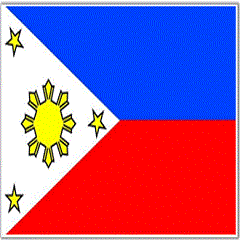
CASE: J-1 Waiver (No Objection Statement)
NATIONALITY: Philippines
LOCATION: California
Our client came from the Philippines on a J-1 in September 2007 to work as a trainee. According to her DS-2019, she was subject to the two-year foreign residency requirement. After her authorized stay period was expired, she has remained in the United States.
In March 2014, she got married to her U.S. citizen husband and later on consulted with our firm for her J-1 visa waiver prior to applying for adjustment of status. If someone is subject to the two-year foreign residency requirement, he or she cannot get a green card in the United States until he or she fulfills the requirement or obtains a waiver.
Upon retention, our office promptly prepared a waiver request through a No Objection Statement (NOS) from the Philippine Embassy in the United States and eventually the EVP in the Philippines.
On August 29, 2014, the J-1 Waiver Application (Form DS-3035) was filed to the Department of State. We also sent a request to the California State Government to get authentication for the necessary documents. Later, these authenticated documents and No Objection Application (for the Philippine Government) were sent to the Philippine Consulate General in San Francisco for further authentication. On November 4, 2014, our office sent our client’s materials to the Waiver Review Committee in Manila, Philippines. Then, the Waiver Review Committee forwarded the materials and favorable recommendation to the Philippine Embassy in D.C. who eventually issued a No Objection Statement.
On March 9, 2015, the Waiver Review Division issued a favorable recommendation based on the No Objection statement. Eventually, on April 6, 2015, the USCIS issued an I-612 approval notice for the waiver. Now, our client can file for her adjustment status application along with her U.S. Citizen husband’s I-130 petition for her.
{ 0 comments }
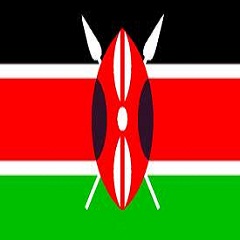
CASE: J-1 Waiver of Two-Year Foreign Residency Requirement, No Objection Statement
NATIONALITY: Kenyan
LOCATION: Atlanta, GA
Our client is from Kenya who came to the U.S. on a J-1 Visa in May 2002. After she finished her J-1 program, she remained in the United States. In February 2009, our client married her current U.S. citizen husband. However, she was not able to adjust her status because she had to get a waiver for the 2-year foreign residency requirements. When she came to the United States in 2002, her program made her subject to the 2-year foreign residency program.
Thereafter, our office promptly prepared the filing of a waiver request through a No Objection Statement (NOS) from the Kenyan Embassy in the United States. Every country’s Embassy maintains different procedures and policies with regard to the J-1 No Objection Statement waiver. Our office contacted the Kenyan Embassy in D.C. to pursue the waiver for our client. The Embassy requested several documents including a statement of reason for the waiver, the clearance letter from J-1 program sponsor, Clearance certificate from HELB and KSCE in Kenya, and a letter of reason for obtaining J-1 waiver.
On December 9, 2014 the J-1 Waiver (Form DS-3035) Application was filed to the Department of State. We also sent a request to the Kenyan Embassy to issue a No Objection Statement and recommend this waiver based on the fact that our client is eligible to adjust based on her marriage to U.S. citizen spouse.
Eventually, the Kenyan Embassy issued a No Objection Statement for our client and sent this letter to the State Department’s Waiver Review Division. On February 18, 2015, the Waiver Review Division issued a favorable recommendation based on the No Objection statement. On March 20, 2015, the USCIS issued an I-612 approval notice for the waiver of our client’s two-year foreign residency requirement. Now, our client can file I-485 adjustment of status application along with her husband’s I-130 petition.
{ 0 comments }

CASE: H-1B Change of Employer / Re-capture and reclaim issues
PETITIONER: Software Development and IT Staffing Company
BENEFICIARY: Indian Computer Systems Analyst
LOCATION: Jacksonville, FL
Our client is a fast growing software developing and IT consulting company located in Jacksonville, FL. They contacted our office in August 2014 to seek assistance from our office for their foreign employee. The beneficiary is from India and he obtained his Bachelor’s Degree in Information Systems. The proffered position for the Beneficiary is a Computer Systems Analyst which we argued qualifies as a specialty occupation
The foreign beneficiary in this case already had his H-1B from his previous employer which was in a similar industry. However, he changed his status from H-1B to H-4 after his employment was terminated with his previous employer. Nevertheless, his previous H-1B was valid until September 2016 so our office argued that his unused H-1B time can be recaptured and his H-1B petition can be filed under a change of employer basis which means no cap limitation.
After retention, our office promptly filed the H-1B visa petition with various supporting documents on August 27, 2014 via regular processing. However, the USCIS mailed a Request for Evidence to the Petitioner-Employer and requested Petitioner to submit additional evidence to establish that the proffered position to the beneficiary qualified as a “Specialty Occupation” on October 24, 2014, plus additional questions about the “in-house” nature of the employment.
We gathered supporting documents from both the Petitioner and Beneficiary and did research on the industry, focusing on similarly sized businesses, to demonstrate that a bachelor’s degree is commonly required for this position. We also provided in-house employment proof.
In the response brief, our office argued that the degree requirement is common to this industry in parallel positions among similar organizations. We provided evidence that the position of Systems Analyst or Computer Systems Analyst is a common position required by similarly sized IT consulting companies. Also, we provided evidence that Petitioner’s competitors normally require degrees in a specific specialty for closely related positions like that of Systems Analyst. Moreover, our office asserted that the nature of the specific duties is so specialized and complex that knowledge required to perform the duties is usually associated with the attainment of a baccalaureate or higher degree in a specific specialty. Other documents pertaining to an in-house project was also submitted.
Our office filed a detailed Response to RFE brief with many exhibits to the USCIS Vermont Service Center on January 13, 2015. Eventually, our client’s H-1B application was approved on February 11, 2015.
{ 0 comments }
CASE: J-1 Waiver of the Two-Year Foreign Residency Requirement, Extreme Hardship
NATIONALITY: Kenyan
LOCATION: Maryland
Our client came to the U.S. on a J-1 Visa in August 2004 from Kenya. She came to the U.S. for her studies, and her J-1 visa made her subject to the two-year foreign resident requirement. After her J-1 status expired, she remained in the United States.
Later, she married her U.S. citizen husband in 2006. Our client’s husband intended to apply for an I-130 petition for her and our client wanted to file an adjustment of status application. However, due to the two-year foreign residency requirement, she had to obtain a waiver first.
Our client could not pursue her waiver under the No Objection Statement or Interest Government Agency (IGA) due to lack of mandatory documents. Our client, though, would like to pursue her J-1 waiver based on the exceptional hardship standard. Our client’s U.S. citizen son is experiencing exceptional medical hardships.
According to 8 C.F.R. Section 212.7(c)(5), “an alien who is subject to the foreign residence requirement and who believes that compliance therewith would impose exceptional hardship upon her spouse or child who is a citizen of the United States… may apply for a waiver on Form I-612.”
Some of the factors in analyzing exceptional hardship are as follows: age of the subject, family ties in the U.S. and abroad, length and residency in the U.S., health / medical conditions, conditions in the country of removal – economic and political, financial status – business and occupation, position in / ties to the community. Matter of Anderson, 16 I&N Dec. 596 (BIA 1978).
After she retained our firm, we prepared and filed a waiver request through the exceptional hardship basis. On July 23, 2014 the J-1 Waiver (Form DS-3035) Application was filed to the Department of State. Thereafter, our office prepared an affidavit for our client, an extensive brief in support of our client’s J-1 waiver application, and other supporting documents. Our client provided us with extensive medical documents and doctor’s reports for her U.S. citizen son’s medical condition. On October 15, 2014, our office filed an I-612 application to the USCIS.
Eventually, the Department of State recommended a waiver for our client on January 14, 2015. Subsequently, the USCIS approved her I-612 waiver on January 26, 2015. Now that our client’s two-year foreign residency requirement is waived, she can file an adjustment of status application in the United States along with her husband’s I-130 petition for her.
{ 0 comments }
CASE: J-2 Waiver of Two-Year Foreign Residency Requirement / Over 21-year-old dependent child
NATIONALITY: Korean
LOCATION: Los Angeles, California
Our client is a citizen of South Korea who came to the U.S. on a J-2 Visa in August 2005. She came with her father who came on a J-1 Visa for his research program in the United States. Both were subject to the two-year foreign residency requirement, meaning they had to go back to their home country for two-years before they can apply for permanent residency or some non-immigrant visa such as the H, L, and O visas.
After our client came to the United States, she completed her ESL courses and was admitted to the University to pursue her bachelor’s degree. In July 2006, she went back to South Korea and got her F-1 student visa at the U.S. Embassy in Seoul, and came back to the United States with her F-1 student visa.
She turned 21 in 2007. This year, she would like to change her status from F-1 to H-1B if her prospective employer files an I-129 petition for her in April. Moreover, she also has an approved I-140 petition and currently is waiting for her priority date to be current. However, because of her two-year foreign residency requirement, our client cannot change her status in the United States without fulfilling the requirement or getting a waiver.
Although J-2 dependents cannot independently apply for a waiver, in cases where a J-2 child reaches 21, the Waiver Review Division may consider requests for waivers on behalf of the J-2 dependent. The Department of State’s policy allows for that process in instances where the J-2 dependent obtains a divorce form the J-1 principal, the J-1 principal dies, or in cases where the J-2 dependent turns 21, which is our client’s case. In fact, our client turned 21 in March 2007.
Our firm was retained to do her J-2 waiver on December 11, 2014. On December 12, 2014, the J-2 Waiver application (Form DS-3035 and supporting documents) was filed to the Department of State. We also sent a request to the DOS to be an interested government agency and recommend this waiver based on the fact that our client reached the age of 21 and was not a dependent of a J-1 visa holder anymore. Eventually, on January 9, 2015 the DOS recommended to the United States Citizenship and Immigration Service (USCIS) that our client be granted a waiver. On January 20, 2015, the USCIS issued an I-612 approval notice for our client’s waiver request.
{ 0 comments }

CASE: Diversity Immigrant Visa
CLIENT: Cameroonians
LOCATION: Cameroon
Our client was in the United States on an F-1 status. He stopped school and stayed here anyway. In 2014 our client applied for the Diversity Visa program and won the lottery. The question for him was whether his F-1 overstay would allow him to get an immigrant visa when he goes home. He was hesitant at first, but we explained to him that being out of status is not equivalent to being unlawfully present. As an F-1 student, if you overstay, only if DHS or Court finds you unlawfully present would unlawful presence incur. Thus, he did not have a three or ten year bar.
The Diversity Immigrant Visa program is a United States congressionally mandated lottery program for receiving a United States Permanent Resident Card. It is also known as the Green Card Lottery. The lottery is administered on an annual basis by the Department of State and conducted under the terms of Section 203(c) of the Immigration and Nationality Act (INA). Section 131 of the Immigration Act of 1990 (Pub. L. 101-649) amended INA 203 to provide for a new class of immigrants known as “diversity immigrants” (DV immigrants). The Act makes available 55,000 permanent resident visas annually to natives of countries deemed to have low rates of immigration to the United States.
Our client retained our office on May 14, 2014 for his and his wife’s immigrant visa packets. Our office prepared and filed the immigrant visa packets, together with all necessary supporting documents, on May 22, 2014. Our office also prepared and drafted a brief to explain the eligibility of his diversity lottery based immigrant visa DESPITE HIS F-1 OVERSTAY. Our argument was that since he came on an F-1 and was never caught overstaying, that he did not have a bar to coming back because he did not incur unlawful presence.
Prior to the interview, we thoroughly prepared our clients. On December 23, 2014, our client was interviewed at the U.S. Embassy in Yaoundé, Cameroon. The interview went well, and the Embassy issued immigrant visas for our client and his wife.
{ 0 comments }
Connect With Us


FREE CONSULTATIONS
Approvals by State
- Ohio
- Alabama
- Mississippi
- North Dakota
- Virgin Islands
- Iowa
- Virgin Islands
- Maine
- Idaho
- South Dakota
- Hawaii
- DC
- Minnesota
- North Carolina
- Saipan
- Kansas
- Colorado
- South Carolina
- Montana
- Kentucky
- Wyoming
- Nevada
- Arkansas
- New York
- California
- Texas
- Washington
- Virginia
- Arizona
- Nebraska
- Maryland
- Illinois
- Pennsylvania
- New Jersey
- Georgia
- Connecticut
- Missouri
- Wisconsin
- Indiana
- Louisiana
- Florida
- Tennessee
- Oklahoma
- Michigan
- Massachusetts
- New Mexico
Country Approvals
- Philippines
- Ecuador
- Gabon
- Bulgaria
- Yemen
- Netherlands
- Zambia
- Morocco
- Iraq
- Burkina Faso
- Turkey
- United Kingdom
- Venezuela
- Japan
- Egypt
- Sierra Leone
- Australia
- Lebanon
- Thailand
- Kyrgyzstan
- Saint Lucia
- Angola
- Ireland
- Macedonia
- Hong Kong
- Algeria
- Belgium
- UAE
- Serbia
- China
- South Korea
- India
- Kenya
- Indonesia
- Ghana
- Pakistan
- Nepal
- Britain
- Jamaica
- Canada
- Senegal
- Benin
- Colombia
- Moldova
- Jordan
- Romania
- Malaysia
- Guatemala
- Saudi Arabia
- Cameroon
- Africa
- Mexico
- Ethiopia
- Germany
- Ukraine
- Sweden
- Vietnam
- Costa Rica
- Cambodia
- El Salvador
- Nigeria
- Hungary
- Singapore
- Argentina
- Brazil
- Albania
- Sri Lanka
- Russia
- Zimbabwe
- Bangladesh
- Peru
- Guyana
- Iran
- Italy
- Suriname
- Honduras
- Gambia
- Cote D’Ivoire
- Hubei
- Grenada
- Spain
- Slovakia
- France
- Taiwan
- Tunisia
- Cuba
- Croatia
- Bahamas