
5005 Rockside Road Ste. 600
Cleveland Ohio 44131
(216) 573-3712
FREE CONSULTATIONS






CONTACT US
CLIENTS’ CHOICE AWARD
Success Stories

CASE: I-140 (EB-3)
EMPLOYER: Fashion Design Company
BENEFICIARY: Korean Fashion / Technical Designer
LOCATION: Los Angeles, CA
Our client has a prospective employer who was willing to petition her for a third-preference petition (I-140). Our client has a bachelor’s degree in fashion design and has relevant work experience. Based on our client’s education and work background, our office determined that she is eligible for EB-3 classification for her I-140 petition. Our client eventually retained us in February 2017.
Prior to filing PERM, our firm prepared the prevailing wage request, job order, advertisements, internal job posting, recruitment report, and all other steps which are important pre-PERM filing. Take note that the PERM application could be filed at least 60 days from the job posting date or 30 days from the last ad. Within a week from our retention, the prevailing wage request was filed. After we obtained the PW determination, our office filed the job order on June 23, 2017. On August 28, 2017, we promptly filed PERM.
However, on January 24, 2018, the Department of Labor issued a request for audit. The DOL requested documents from Petitioner to determine whether the recruitment process was done properly. In response to the Audit request, our office prepared the response to Audit brief along with Employer’s declaration, notice of filing, and recruitment documentation on February 5, 2018. Eventually, on May 7, 2018, the PERM Labor Certification was approved – an EB3 position for the Korean beneficiary.
We then proceeded with the I-140 Petition filing. We submitted the “ability to pay” letter for the I-140 petition application. We included the job offer letter, employer’s most recent federal tax return, and other necessary supporting documents.
The I-140 Petition was filed on May 18, 2018 via premium processing service. Eventually, on June 1, 2018, the I-140 EB3 Petition for our Korean client was approved without any Request for Evidence (RFE). She can file an I-485 adjustment of status application for her green at any time since her priority dates are current.
{ 0 comments }
CASE: PERM Labor Certification
EMPLOYER: Fashion Design Company
BENEFICIARY: Korean Fashion / Technical Designer
LOCATION: Los Angeles, CA
Our client has a prospective employer that was willing to petition her for a third-preference petition (I-140). Our client has a bachelor’s degree in fashion design and has relevant work experience. Based on our client’s education and work background, our office determined that she is eligible for EB-3 classification for her I-140 petition. Our client eventually retained us in February 2017.
Prior to filing PERM, our firm prepared the prevailing wage request, job order, advertisements, internal job posting, recruitment report, and all other steps which are important pre-PERM filing. Take note that the PERM application could be filed at least 60 days from the job posting date or 30 days from the last ad. Within a week from our retention, the prevailing wage request was filed. After we obtained the PW determination, our office filed the job order on June 23, 2017. On August 28, 2017, we promptly filed PERM.
However, on January 24, 2018, the Department of Labor issued a request for audit. The DOL requested documents from Petitioner to determine whether the recruitment process was done properly. In response to the Audit request, our office prepared the response to Audit brief along with Employer’s declaration, notice of filing, and recruitment documentation on February 5, 2018.
Eventually, on May 7, 2018, the PERM Labor Certification was approved – an EB3 position for the Korean beneficiary. Since her priority date is current, our client can file the I-140, I-485 green card application, and I-765 simultaneously.
{ 0 comments }

CASE: I-140 (EB-2)
EMPLOYER: Civil Engineering Company in California
BENEFICIARY: Filipino Building Project Engineer Manager
Our client is from the Philippines. His prospective employer was willing to do an immigration petition for him, second-preference. Our client has a Bachelor’s degree in Civil Engineering and has more than 5 years of work experience as a Design and Structural Engineer. After talking to our client, our firm concluded that his employer can petition him as a Building Project Engineer Manager. Based on our client’s education and work background, our office determined that he is clearly eligible for EB-2 classification.
Prior to filing PERM, our firm prepared the prevailing wage request, job order, advertisements, internal job posting, recruitment report, and all other steps which are important pre-PERM filing. Take note that PERM could be filed at least 60 days from the job posting date or 30 days from the last ad. On January 30, 2017, the prevailing wage request was filed. After we obtained Prevailing Wage determination, our office filed the job order on April 26, 2017. On September 18, 2017, we promptly filed PERM. Eventually, on March 8, 2018, the PERM Labor Certification was approved – an EB2 position for the Filipino beneficiary.
We then proceeded with the I-140 Petition filing. We submitted the “ability to pay” letter for the I-140 petition application. We included the job offer letter, employer’s tax records, and other necessary supporting documents.
The I-140 Petition was filed on April 13, 2018 via premium processing service. Eventually, on April 19, 2018, the I-140 EB2 Petition for our Filipino client was approved without any Request for Evidence (RFE).
{ 0 comments }

CASE: PERM Labor Certification
EMPLOYER: Civil Engineering Company in California
BENEFICIARY: Filipino Building Project Engineer Manager
Our client is from the Philippines. His prospective employer is willing to do an immigration petition for him, second-preference. Our client has a Bachelor’s degree in Civil Engineering and has more than 5 years of work experience as a Design and Structural Engineer. After talking to our client, our firm concluded that his employer can petition him as a Building Project Engineer Manager. Based on our client’s educational, professional and working backgrounds, our office determined that he is clearly eligible for EB-2 classification.
Prior to filing PERM, our firm prepared the prevailing wage request, job order, advertisements, internal job posting, recruitment report, and all other steps which are important pre-PERM filing. Take note that PERM could be filed at least 60 days from the job posting date or 30 days from the last ad. On January 30, 2017, the prevailing wage request was filed. After we obtained Prevailing Wage determination, our office filed the job order on April 26, 2017. On September 18, 2017, we promptly filed PERM. Eventually, on March 8, 2018, the PERM Labor Certification was approved – an EB2 position for the Filipino beneficiary. Now our client can file the I-140 petition.
{ 0 comments }
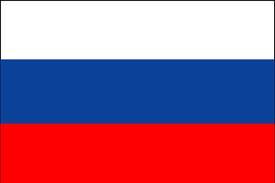
CASE: I-130 (Petition for Mother) and Adjustment of Status
CLIENT: Russian
LOCATION: San Francisco, CA
Our client retained us to petition her mother for her green card. Our client was born and raised in Russia, but was naturalized in the United States in 2012. She contacted our office in February of 2017 and discussed with us the green card process. After consultation, she retained our office on February 6, 2017.
Once retained, our firm prepared and filed the I-130 Petition and I-485 Adjustment of Status Applications on March 23, 2017 for her mother. Everything went smoothly and the receipt notices, fingerprint appointment, and work permit all came on time. On February 21, 2018, our client appeared at her I-485 adjustment of status interview at the San Francisco, California USCIS Field Office. Prior to the interview, our office prepared her via conference calls. Eventually, on February 22, 2018, our client’s mother’s adjustment of status application was approved. Now, she is a green card holder.
{ 0 comments }
CASE: F-1 Reinstatement
APPLICANT: Korean
LOCATION: Anaheim, CA
Our client came from South Korea in 2012 to pursue her Pre-Med Program. Later, she enlisted at the US Army through the MAVNI program. The contract was valid for 2 years supposedly for deployment. While waiting, and to further her studies, she applied for and was issued an I-20 to obtain her Bachelor’s program in Biology. But delays over delays occurred which weren’t her fault, and thus, she was not able to be shipped out for deployment. As such, her I-20 expired in February 16, 2016. She continued on fully expecting her MAVNI application to be approved. She obtained a fingerprint notice on January 20, 2017 for fingerprinting at February 1, 2017. However, delays after delays then eventually a cancellation of her deployment happened. Thus, she failed to maintain her F-1 visa status.
There are many reasons why some F-1 students fall out of status. In limited circumstances, they could still apply for F-1 reinstatement if they meet the requirements. It starts by talking to the school’s international student immigration representative. Upon providing all the necessary documentation, your immigration advisor should issue you a new I-20 with a reinstatement endorsement. Each school has its own guidelines on what you need to show. Typically you should explain the exceptional circumstances which led you to not maintain full-time course load.
For the USCIS to grant reinstatement, the standards are as follows:
- The student became out of status due to circumstances beyond the student’s control, or the student would suffer extreme hardship if not reinstated
- The student intends to pursue full-time study
- No other grounds of removability (criminal cases, for example) apply to the student other than the overstay or status violation
- The student has not worked illegally off-campus
- The period being out of status is not more than five months, or there were exceptional circumstances for being out of status longer and the application was filed as soon as possible
- The student does not have a record of repeated immigration violations
In July of 2017, our client contacted our office to do her F-1 reinstatement application. Our office promptly prepared her application with various supporting documents to demonstrate that she became out of status due to circumstances beyond her control and that she would suffer extreme hardship if not reinstated. Moreover, our office explained that our client never had any status violations prior to this incident and never engaged in unauthorized employment. Our office filed her F-1 reinstatement application on August 15, 2017 to USCIS.
However, in November 22, 2017, the USCIS issued Request for Evidence and asked our client to submit Form I-134 from her financial sponsor. We filed the response to RFE along with I-134 form on December 6, 2017.
On January 4, 2018, our office was notified by the USCIS that our client’s F-1 reinstatement is granted. Now, our client has a chance to pursue her Bachelor’s program in the United States.
{ 0 comments }
CASE: Immigrant Visa / I-601A Hardship Waiver of Inadmissibility
APPLICANT / BENEFICIARY: Filipino
LOCATION: California / Manila, Philippines (Visa Interview)
Our client came to the United States from the Philippines in 2002 on a C1/D visa (Crewman). He remained in the United States after his entry in 2002. He married his U.S. citizen wife in 2009. His U.S. Citizen wife filed an I-130 petition for him in November 2009. This I-130 petition was approved on April 13, 2010.
However, our client cannot file for adjustment of status application due to his ground of inadmissibility (crewman entry and overstay). He needed a waiver of inadmissibility to become a green card holder.
Under current law, immediate relatives of U.S. citizens who are not eligible to adjust status in the United States must travel abroad and obtain an immigrant visa. Individuals who have accrued more than 180 days of unlawful presence while in the United States must obtain a waiver of inadmissibility to overcome the unlawful presence bars under section 212(a)(9)(B) of the Immigration and Nationality Act before they can return to the United States
In 2013, the USCIS announced of new policy called the provisional unlawful presence waiver. Beginning March 4, 2013, certain immigrant visa applicants who are spouses, children and parents of U.S. citizens (immediate relatives) can apply for provisional unlawful presence waivers before they leave the United States. The provisional unlawful presence waiver process allows individuals, who only need a waiver of inadmissibility for unlawful presence, to apply for a waiver in the United States.
The new process is expected to shorten the time U.S. citizens are separated from their immediate relatives while those family members are obtaining immigrant visas to become lawful permanent residents of the United States.
INA § 212(i) provides for a discretionary waiver of the entry without inspection inadmissibility ground. To qualify for the waiver, the alien must establish that his or her US Citizen spouse would suffer extreme hardship if the alien were denied admission. INA § 212(i)(1). In addition to the equities presented, the USCIS may consider the nature of the inadmissibility ground.
There is a seminal BIA case that deals with this waiver. In Matter of Cervantes, 22 I & N Dec. 560 (BIA 1999), the BIA identified the factors to be considered in determining whether a qualifying relative would suffer extreme hardship if the alien were denied admission. Those factors include: the presence of LPR or USC family ties both within and outside the United States; the conditions in the country to which the qualifying relative would relocate and the extent of the qualifying relative’s ties to that country; the financial impact of departure from the United States; and significant conditions of health, particularly when tied to the unavailability of suitable medical care in the country to which the qualifying relative would relocate.
In 2013, our client filed his first I-601A application to USCIS. However, USCIS denied it because his case does not demonstrate that his U.S. citizen wife will not suffer “extreme hardship.” He contacted our office in June 2016 and retained our office on July 6, 2016 for the re-file of I-601A application.
Our client’s I-601A application had a good chance since our client’s U.S. Citizen wife suffers from a great degree of hardship. We argued that if he was removed from the United States, extreme hardship to his wife is clearly foreseeable and evident. She would not be able to take care of her own needs and the bulk of their family chores, most importantly taking care of their child. Also, it would be extremely difficult for her to get the same level of economic stability in the Philippines in case she joins our client there.
In our brief, we also argued that our client and his wife have maintained strong family ties in the United States, that his wife will have difficulty in finding the same level of employment in the Philippines, and that his U.S. citizen children and his wife will face extreme emotional difficulties if he is removed.
On October 13, 2016, we filed the I-601A waiver application which included the brief in support, and documents that demonstrated hardship to his wife if he is removed from the United States. Eventually, his I-601A waiver was approved on February 21, 2017.
Once his I-601A waiver was approved, he retained our office again for his immigrant visa processing. Our office prepared and filed his immigrant visa application on July 6, 2017. In October 2017, the U.S. Embassy in Manila, Philippines informed our office that they scheduled an immigrant visa interview for our client. Our client went back to the Philippines to appear at his interview on November 27, 2017. On November 27, 2017, our client appeared at his immigrant visa interview at the Embassy. Eventually, on December 22, 2017, and the U.S. Embassy approved his immigrant visa.
Now, our client successfully came back to the United States with an approved immigrant visa and he will get his green card in a mail within two months.
{ 0 comments }

CASE: J-2 Waiver of Two-Year Foreign Residency Requirement / Over 21-year-old dependent child
NATIONALITY: Chinese
LOCATION: Mountain View, CA
Our client was a citizen of China who came to the U.S. on a J-2 Visa in September 1996. He came with his father who came on a J-1 Visa for his research program in the United States. Both were subject to the two-year foreign residency requirement, meaning they had to go back to their home country for two-years before they can apply for permanent residency or some non-immigrant visa such as the H, L, and O visas.
After our client’s father’s J-1 program was completed, his family moved to Canada.
He turned 21 in 2015. He would like to get a waiver because he has a prospective employer who will file the H-1b petition for me next year. However, because of his two-year foreign residency requirement, our client cannot change his status in the United States without the fulfillment of requirement or the waiver.
Although J-2 dependents cannot independently apply for a waiver, in cases where a J-2 child reaches 21, the Waiver Review Division may consider requests for waivers on behalf of the J-2 dependent. The Department of State’s policy allows for that process in instances where the J-2 dependent obtains a divorce form the J-1 principal, the J-1 principal dies, or in cases where the J-2 dependent turns 21, which is our client’s case. In fact, our client turned 21 in June 2015.
Our firm was retained to do his J-2 waiver, and on October 20, 2017, the J-2 Waiver application (Form DS-3035 and supporting documents) was filed to the Department of State. We also sent a request to the DOS to be an interested government agency and recommend this waiver based on the fact that our client reached the age of 21 and was not a dependent of a J-1 visa holder anymore. Eventually, on November 10, 2017, the DOS recommended to the United States Citizenship and Immigration Service (USCIS) that our client be granted a waiver. On December 10, 2017, the USCIS issued an I-612 approval notice for our client’s waiver request.
{ 0 comments }
CASE: J-2 Waiver of Two-Year Foreign Residency Requirement / Over 21-year-old dependent child
NATIONALITY: Filipino
LOCATION: San Francisco, CA
Our client is a citizen of the Philippines who came to the U.S. on a J-2 Visa in November 2015. He came with his mother who came on a J-1 Visa for her teaching program in the United States. Both were subject to the two-year foreign residency requirement, meaning they had to go back to their home country for two-years before they can apply for permanent residency or some non-immigrant visa such as the H, L, F, and O visas.
After our client came to the United States, he completed his high school and was admitted to the University to pursue his bachelor’s degree. He wanted to change his status from J-2 to F-1 in the United States.
He turned 21 in September 2017. He would like to get a waiver because he wanted to change his status from J-2 to F-1. However, because of his two-year foreign residency requirement, our client cannot change his status in the United States without the fulfillment of requirement or the waiver.
Although J-2 dependents cannot independently apply for a waiver, in cases where a J-2 child reaches 21, the Waiver Review Division may consider requests for waivers on behalf of the J-2 dependent. The Department of State’s policy allows for that process in instances where the J-2 dependent obtains a divorce form the J-1 principal, the J-1 principal dies, or in cases where the J-2 dependent turns 21, which is our client’s case. In fact, our client turned 21 in September 2017.
Our firm was retained to do his J-2 waiver, and on September 22, 2017, the J-2 Waiver application (Form DS-3035 and supporting documents) was filed to the Department of State. We also sent a request to the DOS to be an interested government agency and recommend this waiver based on the fact that our client reached the age of 21 and was not a dependent of a J-1 visa holder anymore. Eventually, on October 16, 2017, the DOS recommended to the United States Citizenship and Immigration Service (USCIS) that our client be granted a waiver. On November 14, 2017, the USCIS issued an I-612 approval notice for our client’s waiver request.
{ 0 comments }

CASE: Termination of Removal Proceedings with an Approved I-130 Petition
CLIENT: British
LOCATION: Applicant (Dallas, TX area), EOIR (Los Angeles, CA)
Our client is from the United Kingdom who came to the U.S. on a visa waiver visitor in 2002. Soon after her entrance to the U.S., she filed for asylum in the United States. However, her asylum application was denied by the immigration judge at the Los Angeles Immigration Court in October 2003. She appealed the Immigration Judge’s decision to the Board of Immigration Appeals and the BIA remanded her case to the Immigration Court in July 2009. Her case was administratively closed by the immigration judge in August 2014.
Our client married her U.S. citizen husband in December 2013. In August 2014, her husband filed an I-130 petition for her, and this petition was approved in November 2016. In January 2017, she contacted our office to seek legal assistance for the representation of her removal proceedings, termination of removal proceedings, and her adjustment of status application with the USCIS.
In October 9, 2017, our office filed a request to Motion to Re-Calendar and terminate proceedings with an attached I-485 application and its supporting documents to the Los Angeles Immigration Court. Eventually, the Immigration Judge granted the Motion to terminate without prejudice on October 17, 2017. Now, she can file his I-485 adjustment of status application to USCIS to obtain her green card.
{ 0 comments }
Connect With Us


FREE CONSULTATIONS
Approvals by State
- Ohio
- Alabama
- Mississippi
- North Dakota
- Virgin Islands
- Iowa
- Virgin Islands
- Maine
- Idaho
- South Dakota
- Hawaii
- DC
- Minnesota
- North Carolina
- Saipan
- Kansas
- Colorado
- South Carolina
- Montana
- Kentucky
- Wyoming
- Nevada
- Arkansas
- New York
- California
- Texas
- Washington
- Virginia
- Arizona
- Nebraska
- Maryland
- Illinois
- Pennsylvania
- New Jersey
- Georgia
- Connecticut
- Missouri
- Wisconsin
- Indiana
- Louisiana
- Florida
- Tennessee
- Oklahoma
- Michigan
- Massachusetts
- New Mexico
Country Approvals
- Philippines
- Ecuador
- Gabon
- Bulgaria
- Yemen
- Netherlands
- Zambia
- Morocco
- Iraq
- Burkina Faso
- Turkey
- United Kingdom
- Venezuela
- Japan
- Egypt
- Sierra Leone
- Australia
- Lebanon
- Thailand
- Kyrgyzstan
- Saint Lucia
- Angola
- Ireland
- Macedonia
- Hong Kong
- Algeria
- Belgium
- UAE
- Serbia
- China
- South Korea
- India
- Kenya
- Indonesia
- Ghana
- Pakistan
- Nepal
- Britain
- Jamaica
- Canada
- Senegal
- Benin
- Colombia
- Moldova
- Jordan
- Romania
- Malaysia
- Guatemala
- Saudi Arabia
- Cameroon
- Africa
- Mexico
- Ethiopia
- Germany
- Ukraine
- Sweden
- Vietnam
- Costa Rica
- Cambodia
- El Salvador
- Nigeria
- Hungary
- Singapore
- Argentina
- Brazil
- Albania
- Sri Lanka
- Russia
- Zimbabwe
- Bangladesh
- Peru
- Guyana
- Iran
- Italy
- Suriname
- Honduras
- Gambia
- Cote D’Ivoire
- Hubei
- Grenada
- Spain
- Slovakia
- France
- Taiwan
- Tunisia
- Cuba
- Croatia
- Bahamas