
5005 Rockside Road Ste. 600
Cleveland Ohio 44131
(216) 573-3712
FREE CONSULTATIONS






CONTACT US
CLIENTS’ CHOICE AWARD
Success Stories

CASE: I-130 (Petition for Mother) and I-485 Adjustment of Status
CLIENT: Filipina
LOCATION: New York, NY
Our client retained us to petition her mother for a green card. Our client was born and raised in the Philippines, but was naturalized in the United States. She contacted our office in late May of 2015 and discussed with us the green card process. After consultation, she retained our office on May 29, 2015.
Once retained, our firm prepared and filed the I-130 Petition and I-485 Adjustment of Status Application on July 16, 2015 for her mother. Everything went smoothly and the receipt notices, fingerprint appointment, and a work permit all came on time. Eventually, on November 18, 2015, without an interview, our client’s mother’s adjustment of status application was approved. Now, she is a green card holder.
{ 0 comments }
CASE: I-140 (EB-3 Category) / Schedule A / Old Priority Date Retention
EMPLOYER: Nursing / Rehabilitation Center
BENEFICIARY: Filipino
LOCATION: Houston, TX
Our client’s beneficiary is a registered nurse from the Philippines licensed in the state of Texas, New Mexico and New York. He came to the United States in June 2014, and his prospective employer was willing to petition him for a third-preference employment immigrant visa petition (I-140). Our client also has an approved EB-3 I-140 petition with a priority date of August 2008.
Since he is a registered nurse, he is eligible for “Schedule A” classification. The Department of Labor (DOL) maintains a schedule of occupations in its regulations, Schedule A included, for which the individual permanent labor certification procedure is not required. The schedule of pre-certified occupations is referred to as Schedule A, and is included in DOL regulations at 20 CFR 656.10. Based on an occupation’s inclusion on Schedule A, an employer may file an immigrant visa petition (I-140) directly with the (USCIS) without first going to the DOL for a labor certification. Usually, prior to filing I-140 petitions (EB-2 or EB-3 category), the employer must file a Labor Certification to the Department of Labor. However, for Schedule A cases, the employer does not have to go through the labor certification process. The position of Professional Nurses is included in Schedule A.
Also, under 8 CFR 204.5(e):
“Retention of section 203(b)(1), (2), or (3) priority date. A petition approved on behalf of an alien under sections 203(b)(1), (2), or (3) of the Act accords the alien the priority date of the approved petition for any subsequently filed petition for any classification under sections 203(b)(1), (2), or (3) of the Act for which the alien may qualify. In the event that the alien is the beneficiary of multiple petitions under sections 203(b)(1), (2), or (3) of the Act, the alien shall be entitled to the earliest priority date. A petition revoked under sections 204(e) or 205 of the Act will not confer a priority date, nor will any priority date be established as a result of a denied petition. A priority date is not transferable to another alien.”
As mentioned above, our client’s approved I-140 petition was not denied, was actually approved, and was never revoked at any point. Thus, by virtue of 8 CFR 204.5(e), this succeeding I-140 Petition by our client’s prospective employer for our client is entitled to the previous priority date.
Our client has a nursing degree and has more than 6 years related experience. Our firm told him that his potential employer can petition him as a Registered Nurse under the schedule A category. Our office was retained on July 9, 2014 and started on his Prevailing Wage Request.
We filed the I-140 application on August 28, 2014 via premium processing. We included the job offer letter, the notice of filing, her previous I-140 approval notice, and other necessary supporting documents. Eventually, on September 4, 2014, the I-140 was approved and it retained our client’s old priority date. Now, our client can file an I-485 adjustment of status application based on the approved I-140 petition since his priority date is current.
{ 0 comments }

In the wake of President Obama’s reelection, people involved in the immigration field still recall how the DREAM Act fell short of being heard at the House.
Today, Republicans Senators Jon Kyl of Arizona and Kay Hutchinson of Texas are introducing their own version of immigration reform under the Achieve Act. The Republican Senators disclosed that this push for this Act is not a plain reaction to their poor showing among Latinos in the recently concluded election last November. They revealed that this effort to get serious in tackling immigration issues has been in the works for almost a year now and that they have been consulting with Senators John McCain of Arizona and Marco Rubio of Florida.
The ACHIEVE Act proposal would require applicants to have entered the country before the age of 14, and have lived in the U.S. for at least 5 years. The undocumented immigrants are provided with a regular pathway towards permanent residency and a chance for potential citizenship. Compared to the DREAM Act, the ACHIEVE Act offers three different visas: one that is good for 6 years, one that is good for 4, and a permanent non-immigrant visa that is renewable every five years.
Source: Fox News Latino
FREE CONSULTATIONS
If you have any questions, please fill out the free consultation form below, and we will respond as soon as possible privately.
<a href=”https://plus.google.com/107743308565341841259/posts?rel=author”>Google</a>
{ 0 comments }

The recent presidential election has not only provided another term for President Obama, but also allowed him to have another chance to improve our immigration legislation. One of the goals of the Obama administration is to have a better legislation that will provide better border security and at the same time a pathway to citizenship for those illegal immigrants who are already in the country.
President Obama and his aides are more open than ever to work in partnership with Mexico in order to ‘increase economic competitiveness in both countries, promote regional development, advance bilateral efforts to develop a secure and efficient 21st century border, and also address other common security challenges’. Both countries will soon have these concerns addressed especially after that visit by President-elect Enrique Pena Nieto to President Obama at the White House days ago.
Source: USA Today
If you have any questions, please fill out the free consultation form below, and we will respond as soon as possible privately.
{ 0 comments }
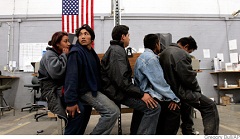
It is already considered a bad experience for people to be detained in immigration detention centers. But providing substandard medical care, a lack of due process and geographical remoteness of facilities has made it even worse.
With the series of reports and allegations the Immigration and Customs Enforcement or ICE have been receiving primarily from the non-profit Detention Watch Network, ICE did an overhaul of the immigration detention system over a period of three years since 2009. The overhaul was supposed to show some improvement on aspects such as medical care, custodial conditions, fiscal prudence, and ICE oversight. Part of the reforms should also include placing detainees in buildings suited for those people facing immigration charges instead of being detained in penal facilities.
ICE made some of these reforms albeit calling these groups of non-profit organizations like the Detention Watch Network unfair for throwing anonymous allegations that they can’t investigate on. In spite of the amount of progress ICE were able to achieve, the Detention Watch Network still feels that they are not doing enough to protect the rights of the detained immigrants. What is stopping these reforms from being successful, according to the non-profit group, is the culture and treatment of the agency towards those who are facing immigration charges compared to the ones who are imprisoned because of some criminal charges. Take note that some of those detained have absolutely no criminal arrests or convictions at all, but are detained due to a “pending” immigration case that they could still win. Some of the charges are simply for an overstay, but relief from deportation may be imminent.
Listed as part of the 10 worst immigration detention centers according to the article are as follows:
- BakerCountyJailinFlorida
- PolkCountyDetention Facility inTexas
- EtowahCountyJailinAlabama
- HoustonProcessing Center inTexas
- HudsonCountyJailinNew Jersey
- IrwinCountyDetention Facility inGeorgia
- PinalCountyJailinArizona
- Tri-CountyDetentionCenterinIllinois
- Theo LacyDetentionCenterinCalifornia
- StewartDetentionCenterinGeorgia
If you have any questions, please fill out the free consultation form below, and we will respond as soon as possible privately.
<a href=”https://plus.google.com/107743308565341841259/posts?rel=author”>Google</a>
{ 0 comments }
CASE: H-1B Visa Petition
PETITIONER: Hospital / Medical Research Center
BENEFICIARY: Strategic Planning Analyst
ISSUES: Cap-Exempt, Research Organization
Our client is a large hospital and medical research center located in Columbus, OH. They contacted our office in the middle of June to seek legal assistance from our office for their foreign employee. The beneficiary obtained her MBA degree in the United States. The proffered position for the Beneficiary is a strategic planning analyst. We showed that this is a “specialty occupation” because the minimum requirement for this position is a Bachelor’s Degree in Business related curriculum or its equivalent.
Prior to our client contacting us, the numerical cap of H-1B visas for fiscal year 2013 was reached. Our client was very disappointed and thought they would have to wait until April 1, 2013. We told our client that we can argue that they are qualified for cap-exempt petitions and emphasize that they are a non-profit research organization as defined in 8 C.F.R. 214.2(h)(19)(iii)(C). Cases have gone both ways for hospitals, but we thought that if the research aspect of their work is highlighted, that chances of approval are high.
INA Section 214(g)(5) says “the numerical limitations contained in paragraph (1)(A) shall not apply to any non-immigrant alien issued a visa or otherwise provided status under section 101(a)(15)(H)(i)(b) who –
(B) is employed (or has received an offer of employment) at a nonprofit research organization or a governmental research organization.”
According to the June 6, 2006 Michael Aytes’ Memo (Published by USCIS) on the Guidance Regarding Eligibility for Exemption from the H-1B Cap Based on Section 103 of the American Competitiveness in the Twenty-First Century Act of 2000 (AC21) (Public Law 106-313), it outlines the fee and cap exemption for nonprofit research organization as defined in 8 C.F.R. 214.2(h)(19)(iii)(C). Under 8 C.F.R. 214.2(h)(19)(iii)(C), a non-profit research organization is “an organization that is primarily engaged in basic research and/or applied research. Basic research is also research that advances scientific knowledge, but does not have specific immediate commercial objectives although it may be in fields of present or potential commercial interest. It may include research and investigation in the sciences, social sciences, or humanities. Applied research is research to gain knowledge or understanding to determine the means by which a specific, recognized need may be met. Applied research includes investigations oriented to discovering new scientific knowledge that has specific commercial objectives with respect to products, processes, or services. It may include research and investigation in the sciences, social sciences, or humanities.”
Our office argued that the Petitioner was primarily engaged in applied research, and was thus qualified as a non-profit research organization as defined in 8 C.F.R. 214.2(h)(19)(iii)(C).
Once retained, our office filed the H-1B visa petition with various supporting documents on June 28, 2012 via premium processing. There were no Requests for Evidence during the processing of the H-1B. Eventually, our client’s H-1B application was approved on July 13, 2012. She can now work for her employer for three years on an H-1B status starting October 1, 2012. She will continue to work there on an OPT in the meantime.
FREE CONSULTATIONS
If you have any questions, please fill out the free consultation form below, and we will respond as soon as possible privately.
For other H-1B Success Stories, please click here.
For other Success Stories, please click here.
Also feel free to contact our office anytime for free consultations.
{ 0 comments }
CASE: N-400 (Citizenship / Naturalization)
APPLICANT: South Korean
LOCATION: Cleveland, OH
Our client contacted us to seek legal assistance for his naturalization matters. He came to the United States from South Korea and obtained his green card in 1999. However, he was concerned for his naturalization due to his failure to register for Selective Service during the required time period. He retained our office to assist in his citizenship application.
After we were retained, our office contacted the Selective Service office and requested a status letter for our client. We explained that our client became a green card holder when he was a minor and no one informed him of the Selective Service registration requirements. Thus, his failure to register was not knowing and willful. The Selective Service issued a status letter for our client, thereby allowing him to apply for naturalization.
The N-400 application was filed on May 1, 2012 with all required supporting documents. We included a brief explaining that our client’s failure to register for Selective Service was not willful. Although the Military Selective Service Act provides for civil penalties for failure to register, Section 12 of the Military Service Act also provides some relief from the adverse civil effects of failure to register:
(g) A person may not be denied a right, privilege, or benefit under Federal law by reason of failure to present himself for and submit to registration under section 3 if:
(1) The requirement for the person to so register has terminated or become inapplicable to the person; and
(2) The person shows by a preponderance of the evidence that the failure of the person to register was not a knowing and willful failure to register.
Our client’s registration requirement has become inapplicable due to his age. Moreover, he has never been informed by anyone during 11 years of his residence in the U.S. with regard to the selective service system registration requirement. Therefore, our client clearly did not knowingly and willfully fail to register during the requested period of time.
Our office prepared him before the interview, and our client was scheduled to appear before the Cleveland USCIS office on July 13, 2012. Our attorney Sung Hee yu accompanied him as well. Our client answered all questions correctly and passed him citizenship interview. Eventually, his N-400 was approved. His oath taking will be scheduled soon in which he will be a naturalized Citizen.
FREE CONSULTATIONS
If you have any questions, please fill out the free consultation form below, and we will respond as soon as possible privately.
For other naturalization success stories, please click here.
For other success stories, please click here.
Also feel free to contact our office anytime for free consultations.
{ 0 comments }
CASE: Marriage-Based Adjustment of Status
CLIENT: Swedish
LOCATION: Cleveland, OH
Our client came to the United States in June 2009 with an F-1 Student visa from Sweden. He married a U.S. Citizen in March 2012 and retained our office on March 27, 2012 for his adjustment of status application. Our firm prepared and filed the I-130 Petition and I-485 Adjustment of Status Application on April 11, 2012. Everything went smoothly and the receipt notices, fingerprint appointment, and work permits all came on time. Prior to the interview, we thoroughly prepared our clients at our office. On June 28, 2012, our client was interviewed at the Cleveland, OH USCIS. On the same day, his green card application was approved.
FREE CONSULTATIONS
If you have any questions, please fill out the free consultation form below, and we will respond as soon as possible privately.
For other marriage-based green card success stories, please click here.
For other success stories, please click here.
{ 0 comments }
CASE: I-90
APPLICANT: Cuban
LOCATION: Cleveland, OH
Our Cuban client has been a green card holder since 1973. However, his card expired in January 2011, and he did not renew it until he contacted our office in January 2012. He retained our office for his green card renewal on January 26, 2012. One day after our retention, our office filed an I-90 extension/renewal application on January 27, 2012. Our client was fingerprinted and a background check was conducted for him. Eventually, his I-90 was approved on June 18, 2012 and his green card was extended for ten years.
FREE CONSULTATIONS
If you have any questions, please fill out the free consultation form below, and we will respond as soon as possible privately.
For other success stories, please click here.
Also feel free to contact our office anytime for free consultations.
{ 0 comments }
CASE: I-130
CLIENT: Mexican
LOCATION: Cleveland, OH
Our client is from Mexico who came to the U.S. without inspection and admission in 1988 with her parents. Since that time, she never left the United States.
In November 1991, our client’s father filed an I-130 (F2A) petition for her mother. This I-130 petition was approved in March 1992. At the time the I-130 Petition was approved, our client was a minor and was a derivative beneficiary. However, our client’s parents divorced in 2007. Furthermore, our client was placed in removal proceeding in December 2009.
Around November 2010, our client contacted our office to represent her at removal proceedings. After we reviewed her previous immigration documents, we determined that she might be eligible to adjust her status under INA 245(i) and the Child Status Protection Act (CSPA). She retained our office on December 1, 2010 and our attorney represented her at her master calendar hearing. Cancellation of Removal relief was requested and we preserved possible adjustment of status relief through INA 245(i) and CSPA.
Section 245(i) of the INA allows certain foreign nationals to become permanent residents of the United States despite entering without inspection (EWI) or overstaying (if beneficiary of petitions filed not by an immediate relative). Immigrants are barred from adjusting their status if they entered the United States without first being inspected and admitted by a Customs and Border Patrol officer and if they have either failed to maintain lawful status or been unlawfully employed in the country, with certain exceptions. Section 245(i) was first added to law in 1994 to allow certain people who otherwise would not be eligible to adjust their status to be able to do so upon payment of a $1,000 fine.
Four years later, on January 14, 1998, Congress phased Section 245(i) out of law. Immigrants and their families who had already begun the process of changing their status under Section 245(i) by January 14, 1998 were grandfathered into the section’s benefits. However, this left thousands of otherwise qualified persons who had not begun the process unable to adjust status in the United States. They could not return to their countries to begin the legal process of obtaining their permanent residency in the United States also without being subject to either a three- or a 10-year bar upon returning to the United States.
On December 21, 2000, Congress extended the qualifying date for Section 245(i) benefits to April 30, 2001. This law allowed immigrants who had labor certifications or visa petitions filed on their behalf between 1998 and April 30, 2001, to qualify for adjustment of status. Those who were beneficiaries of petitions filed prior to January 14, 1998 could still adjust despite an EWI record, and those people do not have to meet the December 2000 physical presence requirement.
Section 3 of CSPA, codified in section 203(h) of the INA, provides that “If the age of the alien is determined to be 21 years of age or older… the alien’s petition shall automatically be converted to the appropriate category and the alien shall retain the original priority date issued upon receipt of the original petition.”
Our client was the derivative beneficiary of her father’s petition for her mother in November, 1991. Our client is now older than 21. According to Section 3 of CSPA, a new I-130 petition by our client’s father on behalf of our client should automatically retain the priority date of the original I-130 petition, which was November 1991, in which our client was a derivative beneficiary. If this new I-130 is approved with a November 1991 priority date, our client would be eligible to adjust under 245(i) since the priority date is current and the petition was filed before January 1998. So it was two petitions that saved her case, one for 245i, and the other for adjustment eligibility, retaining the old priority date under CSPA.
On January 11, 2012, our office filed the I-130 Petition with a cover brief (citing the CSPA provision) and other supporting documents. Her I-130 was approved by the USCIS California Service Center on June 14, 2012 with the old priority date (November 1991). Now, we can work on terminating her proceedings for CIS adjustment of status.
FREE CONSULTATIONS
If you have any questions, please fill out the free consultation form below, and we will respond as soon as possible privately.
For other 245i success stories, please click here.
For other CSPA success stories, please click here.
For other success stories, please click here.
Also feel free to contact our office anytime for free consultations.
{ 0 comments }
Connect With Us


FREE CONSULTATIONS
Approvals by State
- Ohio
- Alabama
- Mississippi
- North Dakota
- Virgin Islands
- Iowa
- Virgin Islands
- Maine
- Idaho
- South Dakota
- Hawaii
- DC
- Minnesota
- North Carolina
- Saipan
- Kansas
- Colorado
- South Carolina
- Montana
- Kentucky
- Wyoming
- Nevada
- Arkansas
- New York
- California
- Texas
- Washington
- Virginia
- Arizona
- Nebraska
- Maryland
- Illinois
- Pennsylvania
- New Jersey
- Georgia
- Connecticut
- Missouri
- Wisconsin
- Indiana
- Louisiana
- Florida
- Tennessee
- Oklahoma
- Michigan
- Massachusetts
- New Mexico
Country Approvals
- Philippines
- Ecuador
- Gabon
- Bulgaria
- Yemen
- Netherlands
- Zambia
- Morocco
- Iraq
- Burkina Faso
- Turkey
- United Kingdom
- Venezuela
- Japan
- Egypt
- Sierra Leone
- Australia
- Lebanon
- Thailand
- Kyrgyzstan
- Saint Lucia
- Angola
- Ireland
- Macedonia
- Hong Kong
- Algeria
- Belgium
- UAE
- Serbia
- China
- South Korea
- India
- Kenya
- Indonesia
- Ghana
- Pakistan
- Nepal
- Britain
- Jamaica
- Canada
- Senegal
- Benin
- Colombia
- Moldova
- Jordan
- Romania
- Malaysia
- Guatemala
- Saudi Arabia
- Cameroon
- Africa
- Mexico
- Ethiopia
- Germany
- Ukraine
- Sweden
- Vietnam
- Costa Rica
- Cambodia
- El Salvador
- Nigeria
- Hungary
- Singapore
- Argentina
- Brazil
- Albania
- Sri Lanka
- Russia
- Zimbabwe
- Bangladesh
- Peru
- Guyana
- Iran
- Italy
- Suriname
- Honduras
- Gambia
- Cote D’Ivoire
- Hubei
- Grenada
- Spain
- Slovakia
- France
- Taiwan
- Tunisia
- Cuba
- Croatia
- Bahamas