
5005 Rockside Road Ste. 600
Cleveland Ohio 44131
(216) 573-3712
FREE CONSULTATIONS






CONTACT US
CLIENTS’ CHOICE AWARD
Success Stories

CASE: H-1B Visa Petition
PETITIONER: Healthcare staffing firm
BENEFICIARY: Pharmacist
ISSUES: Cap-Exempt, Research Organization, Off-Site Employment
Our client is one of the leading healthcare staffing firms in Northeast Ohio, serving the general staffing needs of regional hospitals and clinics.
They contacted our office in late of October to seek legal assistance from our office for their foreign employee.
The beneficiary is a licensed pharmacist who obtained his Doctor of Pharmacy degree in the United States. The proffered position for the Beneficiary is a Pharmacist. We showed that this is a “specialty occupation” because the minimum requirement for this position is a Doctor of Pharmacy Degree with a registered Pharmacist license.
Prior to our client contacting us, the numerical cap of H-1B visas for fiscal year 2013 was already reached. Our client was very disappointed and thought they would have to wait until April 1, 2013. Also, since the Petitioner is a staffing firm, their foreign employee will be placed at different hospitals (off-site employment issue). At that point our client thought it was impossible to file at this point.
We told our client that we can argue that they are qualified for some of the exemption provisions for the H-1B cap. We explained that we can argue the nonprofit exemption, as well as cite some CIS memorandums regarding eligibility for H-1B petitions despite off-site employment. We showed that the main reason for cap-exemption is that the foreign employee will be placed at two hospitals which are non-profit research organizations as defined in 8 C.F.R. 214.2(h)(19)(iii)(C).
Our office argued that this H-1B petition is exempted from the H-1B numerical limitations (cap-exempt) because the Petitioner will employ the beneficiary to perform job duties at non-profit research organizations (two hospitals) as defined in 8 C.F.R. 214(h)(19)(iii)(C) that directly and predominately furthers the normal, primary, or essential purpose, mission, objectives, or function of the qualifying institution (nonprofit research).
We also argued that these two hospitals are clearly qualified as non-profit research organizations as defined in 8 C.F.R. 214(h)(19)(iii)(C). These two organizations are primarily engaged in basic research and/or applied research. Moreover, the beneficiary’s job duties, which will be performed on-site at qualifying non-profit research organizations, will be similar to those performed by actual employees (Pharmacists) of the two hospitals in the furtherance of the qualifying entities’ mission.
Furthermore, we explained that the Petitioner will comply with the statutory and regulatory requirements of the H-1B non-immigrant classification for the placement of the beneficiary at the two hospitals during the period of employment. We mentioned that the beneficiary will be paid higher than the prevailing wage for the pharmacist position by the Petitioner, and Petitioner-Employer will maintain an employer-employee relationship with the beneficiary. The Petitioner has the right to control the work of the beneficiary on a day-to-day basis as well. We explained that the Petitioner has a sole right to hire, pay, and has the ability to fire the beneficiary as well.
Once retained, our office filed the H-1B visa petition with various supporting documents on November 13, 2012 via premium processing. There were no Requests for Evidence during the processing of the H-1B. Eventually, our client’s H-1B application was approved on November 27, 2012. He can now work for his employer for three years on an H-1B status starting November 27, 2012.
FREE CONSULTATIONS
If you have any questions, please fill out the free consultation form below, and we will respond as soon as possible privately.
For other H-1B success stories, please click here.
For other success stories, please click here.
Also feel free to contact our office anytime for free consultations.
<a href=”https://plus.google.com/107743308565341841259/posts?rel=author”>Google</a>
{ 0 comments }
CASE: I-485 approval based on approved I-140 petition (EB-1C Category: Executives and Managers of Multinational Organizations)
EMPLOYER: Multinational Tire Corporation
BENEFICIARY: Korean
LOCATION: Akron, Ohio
Our client is a vice president of a multinational tire corporation in Ohio. He is from Korea, and has worked for its parent company for 24 years in positions of increasing responsibility including that of team manager. He came to the United States in July 2011 with an E-2 visa to work for the current petitioner company (wholly-owned subsidiary of his previous employer). He contacted our firm in December 2011, and discussed with us his chances of getting a green card. Based on our client’s educational and professional background and his current position at the worksite, our office determined that he was clearly eligible for the EB-1C classification for his I-140 petition. Our client eventually retained us for his I-140 and subsequent I-485 adjustment of status application on December 15, 2011.
As our previous success story states, our office prepared and filed the I-140 petition for this client under EB-1C (Executives and Managers of Multinational Organizations) category.
On the application package, we included a detailed job offer letter, employment verification letter from our client’s previous employer (parent company), an organization chart, and a dispatch order. Also, we included evidence regarding the relationship between the Petitioner-Company and its Parent company in South Korea. The evidence included a copy of the certificate of ownership, a copy of the articles of incorporation, a copy of the business registration certificate, a copy of the approval for overseas investment, a copy of the annual report and consolidated financial statements. The I-140 Petition was filed on March 15, 2012. On June 1, 2012, the I-140 was approved with no Requests for Evidence.
Once the I-140 was approved, On August 9, 2012, our office filed an I-485 adjustment of status application for our client and his derivative family members. Everything went smoothly and the receipt notices and fingerprint appointment came on time. On October 19, 2012, the USCIS Nebraska Service Center approved our client’s adjustment of status application. On November 16, 2012, the CIS approved our client’s derivative family members’ adjustment of status applications as well.
FREE CONSULTATIONS
If you have any questions, please fill out the free consultation form below, and we will respond as soon as possible privately.
For other employment based green card success stories, please click here.
For other success stories, please click here.
Also feel free to contact our office anytime for free consultations.
<a href=”https://plus.google.com/107743308565341841259/posts?rel=author”>Google</a>
{ 0 comments }

CASE: Change of Status from F-1 to E-1 Derivative
CLIENT: Korean
LOCATION: Dayton, Ohio
Our client was a F-1 student and had an OPT when she contacted our office. In July of this year, she married an E-1 visa holder who worked in the Dayton Ohio area. Rather than remaining an F-1 visa holder, our client wanted to change her status from F-1 to E-1. E derivatives can apply for a work permit, and maintain it as long as your spouse maintains status.
As a family dependent of an E-1 visa holder, our client can change status from F-1 to E-1 derivative.
Our firm was retained and on September 6, 2012, and we filed our client’s I-539 with all supporting documents to the USCIS in Dallas on September 17, 2012. There were no requests for evidence. On November 8, 2012, the Change of Status was approved. Our client is now on E-1 and is with her husband in Dayton, Ohio. She can now file and will get a work permit.
FREE CONSULTATIONS
If you have any questions, please fill out the free consultation form below, and we will respond as soon as possible privately.
For other visa success stories, please click here.
For other success stories, please click here.
Also feel free to contact our office anytime for free consultations.
<a href=”https://plus.google.com/107743308565341841259/posts?rel=author”>Google</a>
{ 0 comments }

CASE: I-485 / I-140 (National Interest Waiver)
NATIONALITY: Korean
LOCATION: Ohio
Our South Korean client came to the U.S. on a J-1 Visa in August 2008. He was here for a NASA research fellowship, but his J-1 program made him subject to the two-year foreign residency requirement. He retained our office for his J-1 waiver, I-140 National Interest Waiver Classification (NIW) and I-485 Adjustment of Status applications.
We got his J-1 waiver approved on February 6, 2012, details of which are in a previous success story. Afterwards, we started working on his NIW application. Our client is a researcher and scientist in the field of Aerospace Science and Engineering, and is currently working as a research specialist at NASA. Upon review of his credentials and qualifications, our office determined that he was qualified for the National Interest Waiver (NIW) category. The NIW is beneficial because one would not need an employer nor family member to petition for you.
As a primer, NIW applicants must have a master’s or higher degree. The landmark immigration case that discusses the standards for NIWs is Matter of New York State Department of Transportation, 22 I&N Dec. 215 (Comm.1998). This case held that the qualifying applicant must show the following elements in his or her I-140 NIW petition: First, it must be shown that the alien seeks employment in an area of substantial intrinsic merit. Next, it must be shown that the proposed benefit will be national in scope. Finally, the petitioner seeking the waiver must establish that the alien will serve the national interest to a substantially greater degree than would an available U. S. worker having the same minimum qualifications.
Our office prepared a 19-page brief for our client’s NIW filing. We asked our client to obtain 10 or more letters of recommendation. Our office also included his publication records, presentation records, and conference materials. We demonstrated the intrinsic merit of our client’s research in the United States, the national scope of his research, and asserted that our client would serve the national interest to a substantially greater degree than would an available U.S. worker having the same minimum qualifications. His NIW application contained 64 exhibits (Exhibit A to LLL). Our office filed his I-140(NIW) petition with the USCIS on April 6, 2012. On September 7, 2012, the USCIS approved his I-140 petition without any Requests for Evidence.
When we filed our client’s I-140 (NIW) application, we concurrently filed an I-485 adjustment of status application for our client and his wife. Everything went smoothly and the receipt notices and fingerprint appointment came on time. While our client was waiting for the adjudication of his I-140, our client received his work permit and travel permit from the USCIS on June 4, 2012.
Eventually, on November 8, 2012, the USCIS Nebraska Service Center approved our client’s adjustment of status application. Our client’s wife also received the I-485 approval as a derivative applicant of this case. They are now both green card holders.
FREE CONSULTATIONS
If you have any questions, please fill out the free consultation form below, and we will respond as soon as possible privately.
For other National Interest Waiver related success stories, please click here.
For other success stories, please click here.
Also feel free to contact our office anytime for free consultations.
{ 0 comments }

CASE: Marriage-Based Green Card
CLIENT: Korean
LOCATION:Ohio
Our client came to theUnited Statesin 2010 with an F-1 student visa fromSouth Koreato study in theUnited States. He married a U.S. Citizen in December 2011 and retained our office on January 26, 2012 for his petition and adjustment of status application. Our firm prepared and filed the I-130 petition and I-485 adjustment of status application on February 24, 2012. Everything went smoothly and the receipt notices, fingerprint appointment, and work permits all came on time. There were no requests for evidence. Prior to the interview, we thoroughly prepared our clients at our office. On May 15, 2012, our client was interviewed at theCleveland,OhioUSCIS office. Attorney Sung Hee (Glen) Yu from our office accompanied our client as well. On November 5, 2012, his green card application was approved.
FREE CONSULTATIONS
If you have any questions, please fill out the free consultation form below, and we will respond as soon as possible privately.
For other marriage-based green card success stories, please click here.
For other success stories, please click here.
Also feel free to contact our office anytime for free consultations.
{ 0 comments }
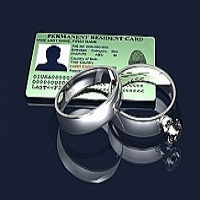 The final step in the marriage-based green card process, the I-130 and I-485 based on marriage to a U.S. Citizen, is the interview. Having represented numerous clients in these cases and also having accompanied clients in these interviews in cities such as:
- Baltimore
- Chicago
- Cleveland
- Columbus
- Cincinnati
- Hartford
- Houston
- Los Angeles
- Newark
- New York
- Seattle
… we thought of compiling a list of questions that may be asked in the future, and to write an informative post about the interview itself.
Please note that these questions are simply guidelines on which topics officers usually focus on, and is not exactly what they ask or a guarantee that these would be asked. They could ask more, and they could ask less. Each case is different.
In terms of how long the interview is, it also depends on the facts of the case and the officer you have. I’ve had some that lasted less than ten minutes, while I’ve also had some that lasted about two and half hours. I’ve had some that were interviewed together, and I’ve had some that were interviewed separately. It depends on several factors – the length of marriage, age difference, etc.
Basic Steps
- Check In: Each office has their own procedure, but typically, you first bring your interview notice to the check-in counter, the officer would ask you to take a seat, and they will call your name. Some offices like Arlington and Chicago have those buzzers (like those you get while waiting for a seat in chain restaurants) that vibrate once your turn is up.
- Oath: The officer administers an oath. “Raise your right hand… do you swear or affirm… truth, whole truth… etc.”
- Identification and Basic Documents: The officer would then ask for identification and basic immigration documents – driver’s licenses, passport for the beneficiary, naturalization certificate or birth certificate for the petitioner, birth certificate for beneficiary, marriage certificate, divorce decrees.
- Forms: The interview itself usually starts with the forms I-130, G-325, and I-485. This is pretty informative. Name, birthday, address, divorce information, entry and visa information, parents’ names, and the yes / no inadmissibility questions on Form I-485 (criminal record, fraud, J-1 waiver, public charge etc.) will be asked.
- Bona Fide Marriage: From there, the officer would then proceed with the relationship itself. The sample questions are below. After the questions are asked, the officer would then ask for any supporting documents you have about your relationship. Joint tax, returns, joint bank statements, joint lease, joint insurance documents, utility bills with both names and a common address, pictures taken in different places with friends or family in it, affidavits, are some examples of documents they typically ask. Note that some offices now require that copies of these be made beforehand, as these documents are to be submitted to the officer.
Sample Bona Fide Marriage Questions
- When did you meet?
- Where did you meet?
- When did you first meet in person?
- Who introduced you to each other?
- How did you meet?
- How long did you talk?
- What happened after?
- How often did you talk to each other over the phone after you initially met?
- How often did you see each other after you met?
Courtship and Dating Questions
- How soon after you met did you start dating?
- How often did you go out?
- How often did you talk on the phone?
- Give us examples of restaurants you went to?
- Give us examples of some movies you watched together?
- Did you ever travel out of town while you were dating?
- Where did you go?
Proposal
- How did you decide on getting married?
- When did he propose?
- Where did he propose?
- Did he give you a ring?
- Where did you buy the ring?
- How did he propose?
Wedding
- Did you get married in Court or in Church or both?
- Which Court did you go to?
- Around what time was the Court wedding?
- How many people where with you in Court?
- What did you do after you got married in Court?
- Did you eat out after you got married in Court?
- Where did you eat?
- Who were with you at the restaurant?
- Which Church did you go to?
- Around what time was the Church wedding?
- How did you get to the Church?
- How many people attended the Church wedding?
- Did you have a reception?
- Where was the reception?
- Around what time was the reception?
- Around how many people were in the reception?
Family
- Have you met your spouse’s parents?
- What are their names parents?
- When did you first meet your spouse’s parents?
- Where did you first meet them?
- How many brothers and sisters does your spouse have?
- Have you met your spouse’s brothers and sisters?
- When did you first meet your spouse’s brothers and sisters?
- Where did you first meet your spouse’s brothers and sisters?
- Does your spouse have any kids?
- What are their names?
- Where do they live?
- Where do they go to school?
- Who takes them to school?
- How do they go to school?
- How old are the kids?
- When was the last time you saw her parents?
- What was the occasion?
- When was the last time you saw her brothers and sisters?
- What was the occasion?
Employment
- Where does your spouse work?
- What does your spouse do?
- What are your spouse’s hours at work?
- What is your spouse’s salary?
- How does your spouse get to work?
- What is your spouse’s position at work?
- Does your spouse drive, take the subway, bus, or walk to work?
- Which bus does your spouse take?
- Which subway does your spouse take?
- Which subway station does your spouse go to for work?
- Which subway station does your spouse get off at?
- How long does it take for your spouse to get to work?
- How many days per week does your spouse work?
- What days are they?
Residence
- Do you live in a house or apartment?
- How may bedrooms in the apartment?
- How many bathrooms in the apartment?
Special Occasions
- What did you do for Christmas, or Thanksgiving, or 4th of July Weekend, Labor Day Weekend, Memorial Day Weekend etc.?
- What did you do for her (or his) birthday)
- Did you give her a gift for her birthday?
- What gift did you give her?
- Did you give her a gift for Christmas?
- What gift did you give her?
Recent Events
- Did you eat together last night?
- What time did you eat?
- What did you eat?
- Did you sleep together last night?
- What time did you sleep?
Other
- Was there any point in your marriage where you did not live together?
- How long a period was this?
- What was the reason for not living together for that period?
- Where did your spouse live during that period?
- What address?
- Does your spouse have tattoos?
- How many tattoos?
- Where are they located?
- Does your spouse have criminal records that you know of?
- What are they?
- When did they occur?
- Where did they occur?
- Did your spouse get hospitalized over the past year?
- When?
- Which hospital did he go to?
As mentioned, the answers to these questions or inconsistencies in your answers can lead to more questions. But typically, as to the areas or topics the officers asks, your meeting, courtship, proposal, wedding, family, employment, and residence are going to be questioned.
If you have an questions for me, please fill out the FREE CONSULTATION form below.
{ 0 comments }

CASE: I-821D Application for Consideration for Deferred Action of Childhood Arrivals / I-765 Employment Authorization DocumentAPPLICANT / BENEFICIARY: Korean Client in Dayton, OH
As our office explained before on our website, the USCIS issued a memorandum in August 2012 regarding deferred action of childhood arrivals cases. According to the USCIS Deferred Action Memorandum issued in August 2012, an individual who meets the following criteria may apply for deferred action:
- Was under the age of 31 as of June 15, 2012;
- Came to the U.S. before reaching his/her 16th birthday;
- Has continuously resided in the U.S. since June 15, 2007, up to the present time;
- Was physically present in the U.S. on June 15, 2012, and at the time of application to the USCIS;
- Entered without inspection before June 15, 2012, or lawful immigration status expired as of June 15, 2012;
- Is currently in school, has graduated or obtained a certificate of completion from high school, has obtained a GED, or is an honorably discharged veteran of the U.S. Coast Guard or the U.S. Armed Forces; and
- Has not been convicted of a felony, a “significant misdemeanor,” three or more other misdemeanors, or does not otherwise pose a threat to national security or public safety;
Our client’s brother contacted our office immediately after he heard of this relief on the news. His younger brother, our client, initially came to the United States in December 2000 with a valid B-2 visitors visa when he was only 8 years old.
As of June 15, 2012, our client was twenty (20) years old. Also, our client was studying at a college in Dayton, Ohio. Our client went to grade school, middle school and graduated from high school in the United States. Also, since his last entry to the United States in December 2000, our client never left the United States.
He was physically present in the United States on June 15, 2012 and has continuously resided here since December, 2000. Our client has never been convicted of a felony, a “significant misdemeanor,” three or more other misdemeanors, and does not otherwise pose a threat to national security or public safety. So, our client was clearly eligible for deferred action.
Our client retained us on August 21, 2012. Once retained, we informed him of all supporting documents we would need. Our client and his family members sent us supporting documents that prove our client’s education history, physical presence in the United States, and his initial entry to the United States. Our office also prepared Form I-821D and I-765, and drafted a detailed cover letter demonstrating why our client should merit this relief.
On August 30, 2012, our office filed his I-821D and I-765 to the USCIS. Our client went to the ASC Appointment (Biometric appointment) at the Cincinnati USCIS office on October 2, 2012. On November 2, 2012, the USCIS approved our client’s I-821D and I-765. It is good for two years, and our client can now work and study in the United States lawfully.
FREE CONSULTATIONS
If you have any questions, please fill out the free consultation form below, and we will respond as soon as possible privately.
For other success stories, please click here.
Also feel free to contact our office anytime for free consultations.
{ 0 comments }
CASE: I-140 / National Interest Waiver
NATIONALITY: Korean
LOCATION: Ohio
Our South Korean client came to the U.S. on a J-1 Visa in August 2008. He was here for a NASA research fellowship, but his J-1 program made him subject to the two-year foreign residence requirement. He retained our office for his J-1 waiver, I-140 National Interest Waiver Classification (NIW) and I-485 Adjustment of Status applications.
We got his J-1 waiver approved on February 6, 2012, details of which are in a previous success story. Afterwards, we started working on his NIW application. Our client is a researcher and scientist in the field of Aerospace Science and Engineering, and is currently working as a research specialist at NASA. Upon review of his credentials and qualifications, our office determined that he was qualified for the National Interest Waiver (NIW) category. The NIW is beneficial because one would not need an employer nor family member to petition for you.
As a primer, NIW applicants must have a master’s or higher degree. The landmark immigration case that discusses the standards for NIWs is Matter of New York State Department of Transportation , 22 I&N Dec. 215 (Comm.1998). This case held that the qualifying applicant must show the following elements in his or her I-140 NIW petition: First, it must be shown that the alien seeks employment in an area of substantial intrinsic merit. Next, it must be shown that the proposed benefit will be national in scope. Finally, the petitioner seeking the waiver must establish that the alien will serve the national interest to a substantially greater degree than would an available U. S. worker having the same minimum qualifications.
Our office prepared a 19-page brief for our client’s NIW filing. We asked our client to obtain 10 or more letters of recommendation. Our office also included his publication records, presentation records, and conference materials. We demonstrated the intrinsic merit of our client’s research in the United States, the national scope of his research, and asserted that our client would serve the national interest to a substantially greater degree than would an available U.S. worker having the same minimum qualifications. His NIW application contained 64 exhibits (Exhibit A to LLL). Our office filed his I-140(NIW) petition to the USCIS on April 6, 2012. On September 7, 2012, the USCIS approved his I-140 petition without any Requests for Evidence.
FREE CONSULTATIONS
If you have any questions, please fill out the free consultation form below, and we will respond as soon as possible privately.
For other National Interest Waiver success stories, please click here.
For other success stories, please click here.
Also feel free to contact our office anytime for free consultations.
{ 0 comments }
CASE: H-1B Visa Petition
PETITIONER: Hospital / Medical Research Center
BENEFICIARY: Strategic Planning Analyst
ISSUES: Cap-Exempt, Research Organization
Our client is a large hospital and medical research center located in Columbus, OH. They contacted our office in the middle of June to seek legal assistance from our office for their foreign employee. The beneficiary obtained her MBA degree in the United States. The proffered position for the Beneficiary is a strategic planning analyst. We showed that this is a “specialty occupation” because the minimum requirement for this position is a Bachelor’s Degree in Business related curriculum or its equivalent.
Prior to our client contacting us, the numerical cap of H-1B visas for fiscal year 2013 was reached. Our client was very disappointed and thought they would have to wait until April 1, 2013. We told our client that we can argue that they are qualified for cap-exempt petitions and emphasize that they are a non-profit research organization as defined in 8 C.F.R. 214.2(h)(19)(iii)(C). Cases have gone both ways for hospitals, but we thought that if the research aspect of their work is highlighted, that chances of approval are high.
INA Section 214(g)(5) says “the numerical limitations contained in paragraph (1)(A) shall not apply to any non-immigrant alien issued a visa or otherwise provided status under section 101(a)(15)(H)(i)(b) who –
(B) is employed (or has received an offer of employment) at a nonprofit research organization or a governmental research organization.”
According to the June 6, 2006 Michael Aytes’ Memo (Published by USCIS) on the Guidance Regarding Eligibility for Exemption from the H-1B Cap Based on Section 103 of the American Competitiveness in the Twenty-First Century Act of 2000 (AC21) (Public Law 106-313), it outlines the fee and cap exemption for nonprofit research organization as defined in 8 C.F.R. 214.2(h)(19)(iii)(C). Under 8 C.F.R. 214.2(h)(19)(iii)(C), a non-profit research organization is “an organization that is primarily engaged in basic research and/or applied research. Basic research is also research that advances scientific knowledge, but does not have specific immediate commercial objectives although it may be in fields of present or potential commercial interest. It may include research and investigation in the sciences, social sciences, or humanities. Applied research is research to gain knowledge or understanding to determine the means by which a specific, recognized need may be met. Applied research includes investigations oriented to discovering new scientific knowledge that has specific commercial objectives with respect to products, processes, or services. It may include research and investigation in the sciences, social sciences, or humanities.”
Our office argued that the Petitioner was primarily engaged in applied research, and was thus qualified as a non-profit research organization as defined in 8 C.F.R. 214.2(h)(19)(iii)(C).
Once retained, our office filed the H-1B visa petition with various supporting documents on June 28, 2012 via premium processing. There were no Requests for Evidence during the processing of the H-1B. Eventually, our client’s H-1B application was approved on July 13, 2012. She can now work for her employer for three years on an H-1B status starting October 1, 2012. She will continue to work there on an OPT in the meantime.
FREE CONSULTATIONS
If you have any questions, please fill out the free consultation form below, and we will respond as soon as possible privately.
For other H-1B Success Stories, please click here.
For other Success Stories, please click here.
Also feel free to contact our office anytime for free consultations.
{ 0 comments }
CASE: N-400 (Citizenship / Naturalization)
APPLICANT: South Korean
LOCATION: Cleveland, OH
Our client contacted us to seek legal assistance for his naturalization matters. He came to the United States from South Korea and obtained his green card in 1999. However, he was concerned for his naturalization due to his failure to register for Selective Service during the required time period. He retained our office to assist in his citizenship application.
After we were retained, our office contacted the Selective Service office and requested a status letter for our client. We explained that our client became a green card holder when he was a minor and no one informed him of the Selective Service registration requirements. Thus, his failure to register was not knowing and willful. The Selective Service issued a status letter for our client, thereby allowing him to apply for naturalization.
The N-400 application was filed on May 1, 2012 with all required supporting documents. We included a brief explaining that our client’s failure to register for Selective Service was not willful. Although the Military Selective Service Act provides for civil penalties for failure to register, Section 12 of the Military Service Act also provides some relief from the adverse civil effects of failure to register:
(g) A person may not be denied a right, privilege, or benefit under Federal law by reason of failure to present himself for and submit to registration under section 3 if:
(1) The requirement for the person to so register has terminated or become inapplicable to the person; and
(2) The person shows by a preponderance of the evidence that the failure of the person to register was not a knowing and willful failure to register.
Our client’s registration requirement has become inapplicable due to his age. Moreover, he has never been informed by anyone during 11 years of his residence in the U.S. with regard to the selective service system registration requirement. Therefore, our client clearly did not knowingly and willfully fail to register during the requested period of time.
Our office prepared him before the interview, and our client was scheduled to appear before the Cleveland USCIS office on July 13, 2012. Our attorney Sung Hee yu accompanied him as well. Our client answered all questions correctly and passed him citizenship interview. Eventually, his N-400 was approved. His oath taking will be scheduled soon in which he will be a naturalized Citizen.
FREE CONSULTATIONS
If you have any questions, please fill out the free consultation form below, and we will respond as soon as possible privately.
For other naturalization success stories, please click here.
For other success stories, please click here.
Also feel free to contact our office anytime for free consultations.
{ 0 comments }
Connect With Us


FREE CONSULTATIONS
Approvals by State
- Ohio
- Alabama
- Mississippi
- North Dakota
- Virgin Islands
- Iowa
- Virgin Islands
- Maine
- Idaho
- South Dakota
- Hawaii
- DC
- Minnesota
- North Carolina
- Saipan
- Kansas
- Colorado
- South Carolina
- Montana
- Kentucky
- Wyoming
- Nevada
- Arkansas
- New York
- California
- Texas
- Washington
- Virginia
- Arizona
- Nebraska
- Maryland
- Illinois
- Pennsylvania
- New Jersey
- Georgia
- Connecticut
- Missouri
- Wisconsin
- Indiana
- Louisiana
- Florida
- Tennessee
- Oklahoma
- Michigan
- Massachusetts
- New Mexico
Country Approvals
- Philippines
- Ecuador
- Gabon
- Bulgaria
- Yemen
- Netherlands
- Zambia
- Morocco
- Iraq
- Burkina Faso
- Turkey
- United Kingdom
- Venezuela
- Japan
- Egypt
- Sierra Leone
- Australia
- Lebanon
- Thailand
- Kyrgyzstan
- Saint Lucia
- Angola
- Ireland
- Macedonia
- Hong Kong
- Algeria
- Belgium
- UAE
- Serbia
- China
- South Korea
- India
- Kenya
- Indonesia
- Ghana
- Pakistan
- Nepal
- Britain
- Jamaica
- Canada
- Senegal
- Benin
- Colombia
- Moldova
- Jordan
- Romania
- Malaysia
- Guatemala
- Saudi Arabia
- Cameroon
- Africa
- Mexico
- Ethiopia
- Germany
- Ukraine
- Sweden
- Vietnam
- Costa Rica
- Cambodia
- El Salvador
- Nigeria
- Hungary
- Singapore
- Argentina
- Brazil
- Albania
- Sri Lanka
- Russia
- Zimbabwe
- Bangladesh
- Peru
- Guyana
- Iran
- Italy
- Suriname
- Honduras
- Gambia
- Cote D’Ivoire
- Hubei
- Grenada
- Spain
- Slovakia
- France
- Taiwan
- Tunisia
- Cuba
- Croatia
- Bahamas