
5005 Rockside Road Ste. 600
Cleveland Ohio 44131
(216) 573-3712
FREE CONSULTATIONS






CONTACT US
CLIENTS’ CHOICE AWARD
Success Stories

CASE: I-140 (EB-2 Category) / Schedule A / Premium Processing
EMPLOYER: Physician’s Office
BENEFICIARY: Hong Kong
LOCATION: Brooklyn, NY
Our client is a family nurse practitioner. His current employer was willing to petition him for a second-preference employment immigrant visa petition (I-140). Since he was a family nurse practitioner, he was eligible for “Schedule A” classification.
The Department of Labor (DOL) maintains a schedule of occupations in its regulations, Schedule A included, for which the individual permanent labor certification procedure is not required. The schedule of pre-certified occupations is referred to as Schedule A, and is included in DOL regulations at 20 CFR 656.10. Based on an occupation’s inclusion on Schedule A, an employer may file an immigrant visa petition (I-140) directly with the (USCIS) without first going to the DOL for a labor certification. Usually, prior to filing I-140 petitions (EB-2 or EB-3 category), the employer must file a Labor Certification to the Department of Labor. However, for Schedule A cases, the employer does not have to go through the labor certification process. The position of Nurse Practitioner is included in Schedule A.
Our client has Bachelor’s and Master’s degrees in nursing and is a certified Nurse Practitioner. Our office was retained on September 21, 2015 and we filed the Prevailing Wage Determination immediately.
We filed the I-140 application on January 13, 2016 via premium processing. We included the job offer letter, the notice of filing, employment letter, and other necessary supporting documents.
In our cover brief, we included the “ability to pay” argument and why nurse practitioners must fall under the Schedule A designation. On January 22, 2016, without any Request for Evidence (RFE), the USCIS Nebraska Service Center approved his EB-2 I-140 petition. Since the priority date for Hong Kong nationals are current for the EB-2 category, he is eligible to file his adjustment of status application now.
{ 0 comments }

CASE: I-130 (Petition for Mother) and I-485 Adjustment of Status
CLIENT: Filipina
LOCATION: New York, NY
Our client retained us to petition her mother for a green card. Our client was born and raised in the Philippines, but was naturalized in the United States. She contacted our office in late May of 2015 and discussed with us the green card process. After consultation, she retained our office on May 29, 2015.
Once retained, our firm prepared and filed the I-130 Petition and I-485 Adjustment of Status Application on July 16, 2015 for her mother. Everything went smoothly and the receipt notices, fingerprint appointment, and a work permit all came on time. Eventually, on November 18, 2015, without an interview, our client’s mother’s adjustment of status application was approved. Now, she is a green card holder.
{ 0 comments }

CASE: Marriage-Based Green Card
CLIENT: Nigerian
LOCATION: New York
Our client came to the United States from Nigeria on an F-1 student visa in December 2009. She married a U.S. Citizen in May 2014 and retained our office on July 25, 2014 for her green card application. Our firm prepared and filed the I-130 Petition and I-485 Adjustment of Status Application on August 7, 2014. Everything went smoothly and the receipt notices, fingerprint appointment, and work permits all came on time. Prior to the interview, we thoroughly prepared our clients via conference calls. On March 19, 2015, our client was interviewed at the Holtsville, New York USCIS office. Eventually, on September 3, 2015, her green card application was approved.
{ 0 comments }
CASE: Marriage-Based Green Card (Same Sex Marriage Case)
CLIENT: Filipina
LOCATION: New York, NY
Our client came to the United States on a B-2 visitor’s visa from the Philippines in August 2013. She had a same-sex partner who is her current spouse.
On June 26, 2013, the U.S. Supreme Court held that restricting U.S. federal interpretation of “marriage” and “spouse” to apply only to heterosexual unions, by Section 3 of the defense of Marriage Act (DOMA), is unconstitutional under the Due Process Clause of the Fifth Amendment. United States v. Windsor, 570 U.S. ___ (2013). After Windsor decision, the USCIS implemented a new policy that the USCIS officer must review immigration via petitions filed on behalf of a same-sex spouse in the same manner as those filed on behalf of an opposite-sex spouse. As long as a same-sex couple is married in a U.S. state that recognizes same-sex marriage, their marriage shall be considered a valid marriage under the immigration law.
After DOMA was struck down, our client and her current LPR spouse, decided to get married. They married in New York, NY on September 10, 2013 where same-sex marriage is recognized. On the same day of their marriage, our client contacted our office and retained us for her I-130 petition and I-485 adjustment of status application. Our firm prepared and filed the I-130 petition and I-485 adjustment of status application, together with all necessary supporting documents, on September 16, 2013. Although the Petitioner was a green card holder, we could file the I-130/I-485 simultaneously at that time because the priority date for the F2A category was current in September 2013. Everything went smoothly and the receipt notices, fingerprint appointment, and work permits all came on time.
Prior to the interview, we thoroughly prepared our clients via conference calls. On December 17, 2013, our client was interviewed at the New York City USCIS office. Attorney Sung Hee (Glen) Yu accompanied them as well. However, the F2A category’s priority date retrogressed before her adjustment of status application was adjudicated. Nevertheless, her priority date became current in June 2015. Eventually, on July 1, 2015, the USCIS approved our client’s green card application.
{ 0 comments }

CASE: I-751
APPLICANT: Bangladeshi
LOCATION: New York
Our client contacted our office in October of 2014 regarding her and her daughter’s I-751 applications.
Our client is from Bangladesh and she married a U.S. citizen in July 2012. Through her marriage, she obtained a 2-year conditional green card in November of 2012. Her minor daughter also got a green card when our client got her green card. Her conditional residency terminated in November 2014.
To comply with immigration requirements, our client and her husband should have filed an I-751 Joint Petition to Remove Conditions before November 2014. She retained our office on October 14, 2014 and our office prepared an I-751 application for our client and her daughter with bona fide marriage evidence.
On October 27, 2014, our office filed an I-751 application to the USCIS with multiple affidavits from her friends and family members, joint bank statements, joint tax records, joint lease, joint bank statements, joint insurance, utility bills, and photos of our client and her husband to demonstrate the bona fideness of their marriage.
There was no RFE issuance or interview request for our client’s I-751 application. As a result, on June 1, 2015, the USCIS approved our client’s and her daughter’s I-751 applications and they received their 10-year green cards.
{ 0 comments }

CASE: H-1B Change of Employer
PETITIONER: Architectural Design Company
BENEFICIARY: Turkish Architect
LOCATION: New York, NY
Our client is an architectural design firm headquartered in New York City. They contacted our office in March 2015 to seek assistance from our office for their foreign employee. The beneficiary is from Turkey and she obtained her Bachelor’s and Master’s degree in architecture. The proffered position for the Beneficiary is an architect which we argued qualifies as a specialty occupation.
The foreign beneficiary in this case already had her H-1B from her previous employer which was in a similar industry. Her H-1B status was not yet expired, and she wanted to extend her H-1B status on a change of employer basis.
After retention, our office promptly filed the H-1B visa petition with various supporting documents on March 24, 2015 via regular processing. Since this petition was based on a change of employer, this petition was exempt from the annual cap of the H-1B. There were no Requests for Evidence during the processing of the H-1B. Eventually, our client’s H-1B Petition was approved on May 25, 2015. Now the Beneficiary can work for her Petitioner-Employer as an H-1B visa holder and she can work there for the next three years.
{ 0 comments }
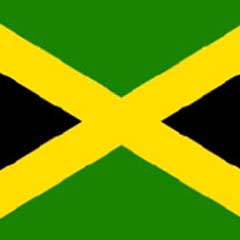
CASE: I-751
APPLICANT: Jamaican
LOCATION: New York, NY
Our client contacted our office in early February of 2014 regarding her I-751 application.
She is from Jamaica and she married a U.S. citizen in July 2011. Through her marriage, she obtained a 2-year conditional green card in April 2012. Our office helped her in the green card process. Her conditional residency terminated in April 2014.
To comply with immigration requirements, our client and her husband had to file an I-751 Joint Petition to Remove Conditions. She retained our office on February 19, 2014 and our office prepared an I-751 application for our client with other supplemental exhibits.
On March 31, 2014, our office filed an I-751 application to the USCIS with multiple affidavits from her friends and family members, joint tax filing records, joint bank statements, utility bills, insurance policies, and photos of our client and her husband to demonstrate the bona fideness of their marriage.
Once the application was filed, the fingerprint notice was issued two weeks later. However, the USCIS issued the Request for Evidence (RFE) to demonstrate the bona fideness of our client’s marriage with her husband. We filed an extensive Response to RFE to the USCIS with more bona fide marital documents on November 25, 2014.
Nonetheless, the USCIS scheduled an interview for our client and her husband. On March 11, 2015, our client and her husband were requested to appear for the interview at the USCIS New York City Office. Prior to the interview, our office prepared them thoroughly via conference calls and also accompanied them at the interview as well. The interview went well, and as a result, on the same day of the interview, the USCIS approved our client’s I-751 application. On April 20, 2015, our client received her 10-year green card which removed the conditions.
{ 0 comments }

Case: I-130/I-485
Applicant/Beneficiary – French
Location: New York, NY
Our client entered the United States in August 2014 from France under the visa waiver program. He came here to visit his U.S. citizen wife for a couple months. As a Visa Waiver Entrant, he was only authorized to remain in the United States for 90 days. Later, our client and his wife changed their mind and decided to file I-130/I-485 application for our client in the United States.
One main issue in his green card application through marriage was the fact that he came to the United States under the visa waiver program. As our office wrote in our previous success story with a similar issue, under the visa waiver program, citizens of certain countries can enter the U.S. for 90 days without a visa with the condition that the visitor waives his or her right to contest removal (other than on the basis of asylum). The “no-contest” provision of the Visa Waiver Program is fundamental; if someone could enter under the VWP and then contest removability; it would defeat the whole purpose of the Program which is to make it easy for certain nationals to come to the United States to visit and then leave without all the red-tape involved in visa issuance.
Another possible issue was immigrant intent. In this case though the beneficiary changed his mind here in the US.
Our office filed the I-130 Petition and I-485 Adjustment of Status Application on September 3, 2014. Our office requested the CIS to exercise favorable discretion in granting adjustment of status and argued that the application was filed before his authorized period of stay expired. Everything went smoothly and the receipt notices, fingerprint appointment, and work permit all came on time. Prior to the interview, we thoroughly prepared our clients through conference calls. On February 18, 2015, our client was interviewed at the New York City, NY USCIS Field Office. Despite the visa waiver issue, on February 20, 2015, the USCIS approved his green card application. Now, our client is a green card holder.
{ 0 comments }

CASE: I-140 (EB-3)
EMPLOYER: Consulting Company
BENEFICIARY: Chinese Financial Analyst
LOCATION: New York, NY
Our client is a financial analyst from China, who is currently working at a consulting company in New York City. The company was willing to do an immigration petition for him, third-preference. Our client has a Bachelor’s degree in Economics.
After talking to our client, our firm concluded that his potential employer can petition him as a Financial Analyst. Based on our client’s educational, professional and working background as a financial analyst, our office determined that he is clearly eligible for EB-3 classification.
Prior to filing PERM labor certification, our firm prepared the prevailing wage request, job order, advertisements, internal job posting, recruitment report, and all other steps which are important pre-PERM filing. Take note that the PERM Labor Certification application could be filed at least 60 days from the job posting date or 30 days from the last ad.
Within a week from our retention, the prevailing wage request was filed. On June 13, 2014, we filed the PERM labor certification application. Eventually, on October 31, 2014, exactly four months from filing, the PERM labor certification was approved.
Once the PERM was certified, we then proceeded with the I-140 petition filing.
Our office submitted the “ability to pay” letter for the I-140 petition application on November 26, 2014 via regular processing. We included the job offer letter, employer’s tax records, and other necessary supporting documents. Later on, we upgraded our client’s I-140 petition filing to “premium processing” by filing an I-907 form. However, on December 31, 2014, the USCIS Texas Service Center issued a Request for Evidence (RFE) for our client’s I-140 petition. According to the RFE, the USCIS requested the Petitioner to prove “ability to pay” for beneficiary’s proposed salary.
In response to that, our office showed the beneficiary’s previous and current pay stubs show that he is “currently being paid” above the proffered wage for his proposed position. According to the William R. Yates May 4, 2004 CIS Memorandum on the “Determination of Ability to Pay under 8 C.F.R. 204.5(g)(2): CIS adjudicators should make a positive ability to pay determination in any of the following circumstances:… (3) Employment of the beneficiary…”, It should be shown that “the record contains credible verifiable evidence that the petitioner not only is employing the beneficiary but also has paid OR is currently paying at least the proffered wage…”
Our client’s recent W2 salary is NOT above the proffered wage, but a calculation of his CURRENT salary if multiplied to a yearly amount DOES. Hence we emphasized the “or is currently paying” clause from the memo. Our office filed the Response to RFE with a brief and supporting evidence to overcome the CIS’ arguments on February 6, 2015.
Eventually, the USCIS approved the I-140 petition on February 12, 2015. Now, with the approved EB-3 I-140 petition, our client can file his adjustment of status application when his priority becomes current.
{ 0 comments }

CASE: Marriage-Based Adjustment of Status
CLIENT: Pakistani
LOCATION: New York, NY
Our Pakistani client came to the United States on a B-2 visitor visa in May 2014. He married his U.S. citizen wife in December 2011 in Pakistan when his spouse was a Lawful Permanent Resident. She became a naturalized U.S. Citizen in June 2014. Once she was naturalized, our client retained our office on June 9, 2014 for his adjustment of status application. Our firm prepared and filed the I-130 Petition and Adjustment of Status Application on June 18, 2014. Everything went smoothly and the receipt notices, fingerprint appointment, and work permits all came on time. Prior to the interview, we thoroughly prepared our clients via conference calls. On November 7, 2014, our client was interviewed at the New York City USCIS. On the same day, his green card application was approved.
{ 0 comments }
Connect With Us


FREE CONSULTATIONS
Approvals by State
- Ohio
- Alabama
- Mississippi
- North Dakota
- Virgin Islands
- Iowa
- Virgin Islands
- Maine
- Idaho
- South Dakota
- Hawaii
- DC
- Minnesota
- North Carolina
- Saipan
- Kansas
- Colorado
- South Carolina
- Montana
- Kentucky
- Wyoming
- Nevada
- Arkansas
- New York
- California
- Texas
- Washington
- Virginia
- Arizona
- Nebraska
- Maryland
- Illinois
- Pennsylvania
- New Jersey
- Georgia
- Connecticut
- Missouri
- Wisconsin
- Indiana
- Louisiana
- Florida
- Tennessee
- Oklahoma
- Michigan
- Massachusetts
- New Mexico
Country Approvals
- Philippines
- Ecuador
- Gabon
- Bulgaria
- Yemen
- Netherlands
- Zambia
- Morocco
- Iraq
- Burkina Faso
- Turkey
- United Kingdom
- Venezuela
- Japan
- Egypt
- Sierra Leone
- Australia
- Lebanon
- Thailand
- Kyrgyzstan
- Saint Lucia
- Angola
- Ireland
- Macedonia
- Hong Kong
- Algeria
- Belgium
- UAE
- Serbia
- China
- South Korea
- India
- Kenya
- Indonesia
- Ghana
- Pakistan
- Nepal
- Britain
- Jamaica
- Canada
- Senegal
- Benin
- Colombia
- Moldova
- Jordan
- Romania
- Malaysia
- Guatemala
- Saudi Arabia
- Cameroon
- Africa
- Mexico
- Ethiopia
- Germany
- Ukraine
- Sweden
- Vietnam
- Costa Rica
- Cambodia
- El Salvador
- Nigeria
- Hungary
- Singapore
- Argentina
- Brazil
- Albania
- Sri Lanka
- Russia
- Zimbabwe
- Bangladesh
- Peru
- Guyana
- Iran
- Italy
- Suriname
- Honduras
- Gambia
- Cote D’Ivoire
- Hubei
- Grenada
- Spain
- Slovakia
- France
- Taiwan
- Tunisia
- Cuba
- Croatia
- Bahamas