
5005 Rockside Road Ste. 600
Cleveland Ohio 44131
(216) 573-3712
FREE CONSULTATIONS






CONTACT US
CLIENTS’ CHOICE AWARD
Success Stories

CASE: Termination of Removal Proceedings Based on Approved I-130 Petition
CLIENT: Filipina
LOCATION: Cleveland, Ohio
Our client is from the Philippines who came to the U.S. on a B-2 Visitor’s Visa in March 2009. She remained in the United States after her authorized stay expired. Because of her overstay, she was placed in removal proceedings in Cleveland, Ohio.
Our client married her U.S. citizen husband in April 2011 in Ohio. Her husband filed an I-130 petition on her behalf after they got married. Eventually, our client’s I-130 petition was approved in June 2012. Unfortunately, after being in Court prior to our retention about 4 to 5 times, she could not get her case terminated.
She contacted our office around September 2012 to seek legal assistance. She retained our office in October 1, 2012.
After our office was retained, we prepared and filed a request to join in a Motion to Terminate proceedings with an attached I-485 application and its supporting documents to the Cleveland Immigration Court. The DHS counsel in Cleveland agreed to terminate our client’s proceedings. Eventually, the Immigration Judge granted the Motion to terminate without prejudice on February 5, 2013. Now, she can file her I-485 adjustment of status application to USCIS to obtain her green card.
FREE CONSULTATIONS
If you have any questions, please fill out the free consultation form below, and we will respond as soon as possible privately.
For other termination success stories, please click here.
For other success stories, please click here.
Also feel free to contact our office anytime for free consultations. <a href=”https://plus.google.com/107743308565341841259?rel=author”>Google</a>
{ 0 comments }

CASE: H-1B Extension
PETITIONER: Nursing Home Facility
BENEFICIARY: MDS Coordinator, Filipina
LOCATION: Illinois
Our client is an MDS Coordinator from the Philippines who currently works at a Nursing Care Facility in the greater Chicago area on a valid H-1B visa. Her H-1B status was about to expire before she retained our office in early June of 2012. Our client sought legal assistance from us for her H-1B 3-year extension.
Once we were retained, our office prepared her H-1B extension application. The Labor Condition Application was filed and approved and eventually our office filed the H-1B extension application on July 18, 2012 to the USCIS California Service Center. There was no Request for Evidence with the filing and the Petitioner did not opt for premium processing. The case was approved on January 11, 2013. The H-1B is good from October 1, 2012 to September 30, 2015.
FREE CONSULTATIONS
If you have any questions, please fill out the free consultation form below, and we will respond as soon as possible privately.
For other H-1B success stories, please click here.
For other success stories, please click here.
Also feel free to contact our office anytime for free consultations.
<a href=”https://plus.google.com/107743308565341841259?rel=author”>Google</a>
<a href=”https://plus.google.com/109631653288081090975″ rel=”publisher”>Google+</a>
{ 0 comments }

CASE: Marriage-Based Adjustment of Status
CLIENT: Filipina
LOCATION: Cleveland, OH
Our client came to the United States in November 2007 with a B-2 visitors visa from the Philippines. She overstayed her visa and remained in the United States.
She fell in love with a US Citizen and got married in September 2012. She then retained our office on October 1, 2012 for her adjustment of status application.
Our firm prepared and filed the I-130 Petition and Adjustment of Status Application on October 19, 2012. Everything went smoothly and the receipt notices, fingerprint appointment, and work permits all came on time. There were no Requests for Evidence.
Prior to the interview, we thoroughly prepared our clients at our office. On January 3, 2013, our client was interviewed at the Cleveland, OH USCIS. Attorney Sung Hee Yu from our office accompanied our clients as well. On the same day, her green card application was approved.
FREE CONSULTATIONS
If you have any questions, please fill out the free consultation form below, and we will respond as soon as possible privately.
For other marriage-based green card success stories, please click here.
For other success stories, please click here.
Also feel free to contact our office anytime for free consultations.
{ 0 comments }

CASE: J-1 Waiver (No Objection Statement)
NATIONALITY: Philippines
LOCATION: New Mexico
Our Filipina client came on a J-1 visa in October 2011. Upon completion of her J-1 program, she remained in the United States and overstayed. She was subject to the two-year foreign residency requirement.
In March 2012, she got married to her U.S. citizen husband and later consulted with our firm for her J-1 visa waiver. She has to do his first before becoming eligible to adjust status.
Upon retention, our office prepared and filed a waiver request based on a No Objection Statement (NOS) from the Philippine Embassy in the United States.
On August 15, 2012, the J-1 Waiver Application (Form DS-3035) was filed to the Department of State. We also sent a request to the New Mexico State Government to get authentication for the necessary documents. Later, these authenticated documents and No Objection Application (for the Philippine Government) were sent to the Philippine Consulate in Los Angeles for further authentication. On November 26, 2012, our office sent our client’s materials to the Waiver Review Committee in Manila, Philippines. The Waiver Review Committee forwarded the materials and favorable recommendation to the Philippine Embassy in D.C. who eventually issued a No Objection Statement to the U.S. Department of State.
On December 6, 2012, the Waiver Review Division issued a favorable recommendation based on the No Objection statement. Eventually, on December 28, 2012, the USCIS issued an I-612 approval notice for the waiver. Now, our client can file for her adjustment of status application along with her U.S. Citizen husband’s I-130 petition.
FREE CONSULTATIONS
If you have any questions, please fill out the free consultation form below, and we will respond as soon as possible privately.
For other J-1 waiver success stories, please click here.
For other success stories, please click here.
Also feel free to contact our office anytime for free consultations.
{ 0 comments }

CASE: I-821D Application for Consideration for Deferred Action of Childhood Arrivals / I-765 Employment Authorization Document
APPLICANT / BENEFICIARY: Filipino Client in Virginia
As our office explained before on our website, the USCIS issued a memorandum in August 2012 regarding deferred action of childhood arrivals cases (DACA). According to the USCIS Deferred Action Memorandum issued in August 2012, an individual who meets the following criteria may apply for deferred action:
- Was under the age of 31 as of June 15, 2012;
- Came to the U.S. before reaching his/her 16th birthday;
- Has continuously resided in the U.S. since June 15, 2007, up to the present time;
- Was physically present in the U.S. on June 15, 2012, and at the time of application to the USCIS;
- Entered without inspection before June 15, 2012, or lawful immigration status expired as of June 15, 2012;
- Is currently in school, has graduated or obtained a certificate of completion from high school, has obtained a GED, or is an honorably discharged veteran of the U.S. Coast Guard or the U.S. Armed Forces; and
- Has not been convicted of a felony, a “significant misdemeanor,” three or more other misdemeanors, or does not otherwise pose a threat to national security or public safety;
Our client initially came to the United States in April 2000 with a valid H-4 visa as a derivative of an H-1B visa holder when he was only 15 years old.
As of June 15, 2012, our client was twenty-eight (28) years old.
Our client also finished high school and college in the United States.
Also, since his last entry to the United States in April 2000, our client never left the United States.
He was physically present in the United States on June 15, 2012 and has continuously resided here since April of 2000.
Our client has never been convicted of a felony, a “significant misdemeanor,” three or more other misdemeanors, and does not otherwise pose a threat to national security or public safety.
Our client retained us on August 28, 2012. We informed him of all supporting documents we would need. Our client and his family members sent us supporting documents that proved our client’s education history, physical presence in the United States, and his initial entry to the United States. Our office also prepared Form I-821D and I-765, and drafted a detailed cover letter demonstrating why our client should merit this relief.
On September, 2012, our office filed his I-821D and I-765 to the USCIS. Our client went to the ASC Appointment (Biometric appointment) at the Alexandria, Virginia USCIS office on October 17, 2012. On December 4, 2012, the USCIS approved our client’s I-821D and I-765, good for two years.
Our client can now work and study in the United States lawfully.
FREE CONSULTATIONS
If you have any questions, please fill out the free consultation form below, and we will respond as soon as possible privately.
For other deportation related success stories, please click here.
For other success stories, please click here.
Also feel free to contact our office anytime for free consultations.
<a href=”https://plus.google.com/107743308565341841259/posts?rel=author”>Google</a>
{ 0 comments }
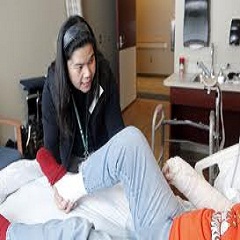
Stuart Anderson wrote a piece in Forbes Magazine which I think resonates with a lot of foreigners in the medical field. As a Filipino myself, I know a lot of Filipino nurses and physical therapists who were disadvantaged by the backlog of Schedule A positions. Thing is that hospitals are still in need of these people.
Stuart wrote that physical therapists are considered one of the fastest occupations in the U.S. today. The need for such professionals is even going to grow more as years come. However, U.S. immigration restrictions involving these foreign-born physical therapists are not going to help address the need. The procedures in licensing and giving foreign-born physical therapists the chance to work in the U.S. is even made more difficult with the move to require a Ph.D. as a minimum requirement for foreign-born PT professionals.
He continued by mentioning that the existing procedure to get an H-1B visa for foreign-born physical therapists involves making sure they pass the Test of English as a Foreign Language (TOEFL) exam (I’m fine with this) and an evaluation from the physical therapy board in the state that the person wishes to work. More often than not, the foreign-born physical therapist is required to take a few more classes or training to be granted the chance to work in the country where the need for such professionals are continuing to rise. Hopefully, the government would consider reducing the wait times for these skilled immigrants and make available the H-1B visa not only for the benefit of these physical therapists but also for the betterment of the citizens of the country.
Source: Forbes.Com
FREE CONSULTATIONS
If you have any questions, please fill out the free consultation form below, and we will respond as soon as possible privately.
<a href=”https://plus.google.com/107743308565341841259/posts?rel=author”>Google</a>
{ 0 comments }

CASE: E-1 Extension (I-129)
NATIONALITY: Filipino
LOCATION: California
Our client and his family members came from the Philippines on an E-1 Treaty Trader Visa in 2006. Since then, our client and his family members have consistently maintained their status.
Our client has invested significant money into his incorporated business, which is located in California. Our client’s position within the company is of the same capacity when the initial E-1 was granted and the business continues to be actively engaged in its services. Our client contacted our office early this year, and retained us to get legal assistance for his E-1 extension.
Upon retention, we prepared the extension application and collected supporting documents for the E-1 extension. We also prepared a brief that explained that our client’s business has continuously grown for last several years with attached supporting documents. We submitted a company support letter, invoices, tax records, purchase orders, photos of business premises, business account bank statements, and bills of lading. We submitted the application to the USCIS on July 12, 2012.
However, on August 14, 2012, the USCIS issued a Request for Evidence (RFE) regarding our client’s extension application.
In response to the RFE, our office submitted an explanatory cover letter with supporting evidence of the application which included a certificate of incorporation, stock ownership certificates, business lease agreement, financial statements, evidence of substantial international trade and evidence that the company is bona fide enterprise.
Eventually, the USCIS approved the I-129 petition and our client’s E-1 extension on November 14, 2012. Our client’s E-1 status is extended until December 2014.
FREE CONSULTATIONS
If you have any questions, please fill out the free consultation form below, and we will respond as soon as possible privately.
For other visa related success stories, please click here.
For other success stories, please click here.
Also feel free to contact our office anytime for free consultations.
<a href=”https://plus.google.com/107743308565341841259/posts?rel=author”>Google</a>
{ 0 comments }

CASE: I-130 and Consular Processing
CLIENT: US Citizen Petitioner; Filipina Beneficiary
LOCATION: Petitioner: Seattle, WA; Beneficiary: Manila, Philippines
Our clients are a U.S. citizen husband and his Filipina wife in Seattle, Washington. This success story pertains to the Filipina’s daughter in the Philippines. They haven’t seen each other in years.
They contacted our office initially for a J-1 waiver and eventual green card in December 2010. As our previous success stories showed, she got a J-1 waiver and green card. (Success Story on Waiver, Success Story on Green Card)
Our client has a daughter from her previous marriage in the Philippines. Thus, after she got her green card, her husband decided to petition for his step-daughter for an immigrant visa.
They contacted our office again in February 2012 and retained our office to help bring his step-daughter to the States. It is important to note that an alien cannot adjust his or her status (get a green card) outside the U.S. by filing an I-130 and I-485 simultaneously. Since the client’s step-daughter was not in the United States, our office filed the I-130 to the USCIS first on March 1, 2012.
After the I-130 was filed, everything went smoothly and the receipt notices came on time. The I-130 Petition was approved by the USCIS on June 25, 2012.
After the I-130 approval, we prepared and filed the immigrant visa packets to the National Visa Center on September 7, 2012, who in turn forwarded the client’s materials to the U.S. Embassy in Manila, Philippines. An interview notice was set for the client’s step-daughter.
On November 9, 2012, the beneficiary went to her interview in Manila. On the same day, the U.S. Embassy in the Philippines approved and issued her immigrant visa.
With the approved Immigrant visa, our client’s step-daughter can come to the United States immediately, and she will eventually get her green card.
FREE CONSULTATIONS
If you have any questions, please fill out the free consultation form below, and we will respond as soon as possible privately.
For other consular processing success stories, please click here.
For other success stories, please click here.
Also feel free to contact our office anytime for free consultations.
<a href=”https://plus.google.com/107743308565341841259/posts?rel=author”>Google</a>
{ 0 comments }

CASE: Change of Status / I-539
NATIONALITY: Filipina
LOCATION: Hawaii
DATE FILED: August 9, 2012
DATE APPROVED: October 5, 2012
Our client came from the Philippines on an H-4 visa (Dependent of H-1B). She was about to turn 20 years old, and wanted to attend a college in the U.S. Her father was still on an H-1B in Cleveland, but the job was not as secure as it was before. If he loses his job, our client will also lose her H4 status.
Her family contacted us. As parents, they wanted the best for their daughter, regardless of what happens to them in the future. Should the family lose their status, they just want to make sure their daughter continues in the States and attend college. They had relatives in Hawaii and they wanted her to stay with them as she goes to college. So they contacted us to get legal assistance for her change of status from H-4 to F-1.
Upon retention, we went into detail with their reasons for requesting a change of status. We made sure all addresses, contact information, and dates on their statements were complete and accurate. We made sure the SEVIS fees were paid and we obtained the I-20 document from our client. We prepared a brief that explained our client’s financial ability to go to school in the U.S.
The application was supported by corroborating evidence as exhibits to the application to avoid a possible Request for Evidence from the CIS. Our firm filed the I-539 Extension Application on August 9, 2012. On October 5, 2012, her change of status application was approved by the USCIS with no Requests for Evidence. Now she can stay in the United States and go to college, regardless of what happens to her parents’ situation.
FREE CONSULTATIONS
If you have any questions, please fill out the free consultation form below, and we will respond as soon as possible privately.
For other F-1 visa success stories, please click here.
For other success stories, please click here.
Also feel free to contact our office anytime for free consultations. <a href=”https://plus.google.com/107743308565341841259/posts?rel=author”>Google</a>
{ 0 comments }
The Ninth Circuit in De Osorio v. Mayorkas held that the plain language of CSPA (Child Status Protection Act) unambiguously grants automatic conversion and priority date retention to aged-out derivative beneficiaries.
Before this case, when these beneficiaries aged out prior to their parents becoming permanent residents, a new I-130 petition filed by their parents for them would have a new priority date, which means they would have to wait several years before they can immigrate or apply for a green card, in some cases over ten years. With this decision, the old priority date of the I-130 filed for their parents, for which they were derivative beneficiaries, would be retained. So that new I-130 that the LPR (lawful permanent resident) parent files for the aged-out son or daughter, could have that old 1985 or so priority date, speeding up the immigrant visa or permanent resident (green card) process by over a decade in some categories.
I have come across probably over a hundred consultations over the past three years in which parents have asked about what could be done for their aged-out children. Being Filipino myself, I’ve heard stories from several Filipino F4 (sibling petition) beneficiaries who waited at least twenty two years for their immigrant visas to be approved, only to realize they cannot bring their children, most of whom were just babies when they were first petitioned. In most cases, the honest answer has been to file an I-130 again and wait in line, and “hope” that a new case comes out.
Well, this new case has come out in De Osorio v. Majorkas. The decision in the class-action lawsuit against the United States Citizenship and Immigration Service is a victory for tens of thousands of people who lost their priority status upon turning 21, as their parents faced long waits due to backlogs in the immigration systems. Filipino immigrants for example who were petitioned by their siblings were never able to bring their children with them because the waiting time for priority dates to be current has been over 21 years for a while. So all their children aged-out by the time immigrant visas become available. You can have a one month old child when your brother petitioned for you, wait 22 years for priority dates to be current, and your child will automatically over-age. So you needed to petition your child and wait over a decade again. But with this new case, if that parent files an I-130 for their 25-year old daughter, the I-130 F4 priority date in the 1980s would be retained, which obviously is now current.
Below is a quoted section from the 9th Circuit in their decision, providing you with their summary and the relevant portion of the case.
“Appellants became lawful permanent residents and immigrated to the United States. However, due to visa quotas and a serious backlog, by the time Appellants received their family-sponsored visas, their children were no longer eligible to accompany them as recipients of derivative visas, which are available only to children under the age of twenty-one. Their children had “aged out” of eligibility.
‘The question before us is whether these children are entitled to relief under the Child Status Protection Act (“CSPA”), 8 U.S.C. § 1153(h). The CSPA provides, among other things, that when certain aged-out aliens apply for visas under a new category for adults, they may retain the filing date of the visa petition for which they were listed as derivative beneficiaries when they were children. This ensures that visas are available quickly, rather than requiring the now-adult aliens to wait many more years in a new visa line.
‘The United States Citizenship and Immigration Services (“USCIS”) denied Appellants’ requests for priority date retention under the CSPA. USCIS relied on the Board of Immigration Appeals’ (“BIA”) decision in Matter of Wang, 25 I. & N. Dec. 28 (BIA 2009) that the CSPA does not apply to all derivative beneficiaries. The district court, deferring to the BIA’s interpretation, granted summary judgment to USCIS in two separate cases. We reverse.
‘We conclude that the plain language of the CSPA unambiguously grants automatic conversion and priority date retention to aged-out derivative beneficiaries. The BIA’s interpretation of the statute conflicts with the plain language of the CSPA, and it is not entitled to deference.”
If you have any questions, please fill out the free consultation form below, and we will respond as soon as possible privately.
{ 0 comments }
Connect With Us


FREE CONSULTATIONS
Approvals by State
- Ohio
- Alabama
- Mississippi
- North Dakota
- Virgin Islands
- Iowa
- Virgin Islands
- Maine
- Idaho
- South Dakota
- Hawaii
- DC
- Minnesota
- North Carolina
- Saipan
- Kansas
- Colorado
- South Carolina
- Montana
- Kentucky
- Wyoming
- Nevada
- Arkansas
- New York
- California
- Texas
- Washington
- Virginia
- Arizona
- Nebraska
- Maryland
- Illinois
- Pennsylvania
- New Jersey
- Georgia
- Connecticut
- Missouri
- Wisconsin
- Indiana
- Louisiana
- Florida
- Tennessee
- Oklahoma
- Michigan
- Massachusetts
- New Mexico
Country Approvals
- Philippines
- Ecuador
- Gabon
- Bulgaria
- Yemen
- Netherlands
- Zambia
- Morocco
- Iraq
- Burkina Faso
- Turkey
- United Kingdom
- Venezuela
- Japan
- Egypt
- Sierra Leone
- Australia
- Lebanon
- Thailand
- Kyrgyzstan
- Saint Lucia
- Angola
- Ireland
- Macedonia
- Hong Kong
- Algeria
- Belgium
- UAE
- Serbia
- China
- South Korea
- India
- Kenya
- Indonesia
- Ghana
- Pakistan
- Nepal
- Britain
- Jamaica
- Canada
- Senegal
- Benin
- Colombia
- Moldova
- Jordan
- Romania
- Malaysia
- Guatemala
- Saudi Arabia
- Cameroon
- Africa
- Mexico
- Ethiopia
- Germany
- Ukraine
- Sweden
- Vietnam
- Costa Rica
- Cambodia
- El Salvador
- Nigeria
- Hungary
- Singapore
- Argentina
- Brazil
- Albania
- Sri Lanka
- Russia
- Zimbabwe
- Bangladesh
- Peru
- Guyana
- Iran
- Italy
- Suriname
- Honduras
- Gambia
- Cote D’Ivoire
- Hubei
- Grenada
- Spain
- Slovakia
- France
- Taiwan
- Tunisia
- Cuba
- Croatia
- Bahamas