
5005 Rockside Road Ste. 600
Cleveland Ohio 44131
(216) 573-3712
FREE CONSULTATIONS






CONTACT US
CLIENTS’ CHOICE AWARD
Success Stories

CASE: Marriage-Based Adjustment of Status
NATIONALITY: Canada
LOCATION: Phoenix, AZ
Our client is from Canada who came to the U.S. on a B-2 Visitor Visa in August 2015. In January 2016, our is married his current U.S. citizen wife. He retained our office for his green card application on February 15, 2016. Our client had a criminal record in Canada – assault causing bodily harm; however, based on Matter of Perez Contreras, our office determined that his conviction record should not be construed as a Crime involving Moral Turpitude (CIMT).
Our firm prepared and filed the I-130 Petition and I-485Adjustment of Status Application on February 22, 2016. We included an explanatory brief regarding our client’s criminal record – that it does not rise to the level of a CIMT conviction. Everything went smoothly and the receipt notices, fingerprint appointment, and work permits all came on time. Prior to the interview, we thoroughly prepared our clients via conference call as well. On September 19, 2016, our client was interviewed at the Phoenix, Arizona office. Eventually, on November 10, 2016, his green card application was approved.
{ 0 comments }

CASE: I-751 / Waiver of the Joint Waiver Requirement
APPLICANT: Indian
LOCATION: Ohio
Our client contacted our office in early September of 2014 regarding her potential I-751 filing. She came to the United States from India and she married a U.S. Citizen (her ex-husband) in July 2013.
Through her marriage, she was able to obtain a 2-year conditional green card in March of 2014. Thus, her conditional residency terminated in March 2016.
Unfortunately, their marriage ended in October 2014. Our client experienced a lot of difficulties during her marriage with her ex-husband. Thus, our client could not file the I-751 application jointly with her ex-husband.
Once retained, we requested a waiver because our client entered into the marriage in good faith, but the marriage was terminated through divorce or annulment before they can file a joint petition. We focused on the supporting documents that she can show and helped her draft an extensive affidavit about their marriage, and why it ended the way it did.
On October 15, 2014, our office filed the I-751 application with various supporting documents (over 26 exhibits and an affidavit over 7 pages) to demonstrate our client’s bona fide marriage with her ex-husband.
In October 2016, the USCIS scheduled an I-751 interview for our client.
Prior to the interview, our office thoroughly prepared our client at our office and informed them of potential issues at the interview.
On October 13, 2016, our client was interviewed for her I-751 application at the USCIS Cleveland, OH Field Office. Attorney JP Sarmiento from our office accompanied our client. The interview was very extensive. Nevertheless, the USCIS approved our client’s I-751 application on November 9, 2016. Now, she has her ten-year green card.
{ 0 comments }

CASE: Marriage-Based Adjustment of Status
NATIONALITY: Antigua and Barbuda
LOCATION: Illinois (residence) / Des Moines, IA (USCIS Interview)
Our client is from Antigua and Barbuda who came to the U.S. on a F-1 Student Visa in August 2013. He is still pursuing his undergraduate program in the U.S. In November 2015, our client is married his current U.S. citizen wife. He retained our office for his green card application on November 30, 2015. Our firm prepared and filed the I-130 Petition and I-485 Adjustment of Status Application on December 3, 2015. Everything went smoothly and the receipt notices, fingerprint appointment, and work permits all came on time. Prior to the interview, we thoroughly prepared our clients via conference call as well. On November 7, 2016, our client was interviewed at the Des Moines, IA USCIS office. The interview went well, and eventually, on November 8, 2016, his green card application was approved.
{ 0 comments }

CASE: Marriage-Based Adjustment of Status
NATIONALITY: Cote D’Ivoire
LOCATION: Atlanta, GA
Our client is from Cote D’Ivoire who came to the U.S. on a J-1 Exchange Visitor’s Visa in August 2013. Her J-1 program was not subject to the INA 212(e) two-year foreign residency requirement. In August 2014, our client married her current U.S. citizen husband. She retained our office for her green card application in 2016. Our firm prepared and filed the I-130 Petition and I-485 Adjustment of Status Application on July 7, 2016. Everything went smoothly and the receipt notices, fingerprint appointment, and work permits all came on time. Prior to the interview, we thoroughly prepared our clients via conference call as well. On September 29, 2016, our client was interviewed at Atlanta Georgia USCIS office. Eventually, on October 24, 2016, her green card application was approved.
{ 0 comments }

CASE: I-601A Hardship Waiver of Inadmissibility
APPLICANT / BENEFICIARY: Honduran
LOCATION: Cleveland, OH
Our client came to the United States from Honduras in 2011 without inspection and admission. He married his U.S. citizen wife in June 2013. With our firm’s legal assistance, his U.S. Citizen wife filed an I-130 petition for him in October 2013. This I-130 petition was approved in April 2014.
However, our client cannot file for adjustment of status application due to his ground of inadmissibility (entry without inspection and admission). He needs a waiver of inadmissibility to become a green card holder.
Under current law, immediate relatives of U.S. citizens who are not eligible to adjust status in the United States must travel abroad and obtain an immigrant visa. Individuals who have accrued more than 180 days of unlawful presence while in the United States must obtain a waiver of inadmissibility to overcome the unlawful presence bars under section 212(a)(9)(B) of the Immigration and Nationality Act before they can return to the United States
In 2013, the USCIS announced of new policy called the provisional unlawful presence waiver. Beginning March 4, 2013, certain immigrant visa applicants who are spouses, children and parents of U.S. citizens (immediate relatives) can apply for provisional unlawful presence waivers before they leave the United States. The provisional unlawful presence waiver process allows individuals, who only need a waiver of inadmissibility for unlawful presence, to apply for a waiver in the United States.
The new process is expected to shorten the time U.S. citizens are separated from their immediate relatives while those family members are obtaining immigrant visas to become lawful permanent residents of the United States.
INA § 212(i) provides for a discretionary waiver of the entry without inspection inadmissibility ground. To qualify for the waiver, the alien must establish that his or her US Citizen spouse would suffer extreme hardship if the alien were denied admission. INA § 212(i)(1). In addition to the equities presented, the USCIS may consider the nature of the inadmissibility ground.
There is a seminal BIA case that deals with this waiver. In Matter of Cervantes, 22 I & N Dec. 560 (BIA 1999), the BIA identified the factors to be considered in determining whether a qualifying relative would suffer extreme hardship if the alien were denied admission. Those factors include: the presence of LPR or USC family ties both within and outside the United States; the conditions in the country to which the qualifying relative would relocate and the extent of the qualifying relative’s ties to that country; the financial impact of departure from the United States; and significant conditions of health, particularly when tied to the unavailability of suitable medical care in the country to which the qualifying relative would relocate.
Our client’s I-601A application had a good chance since our client’s U.S. Citizen wife suffers from a great degree of medical hardship. In the I-601A brief and supporting documents, our office included extensive medical reports of his wife. We argued that if he was removed from the United States, extreme hardship to his wife is clearly foreseeable and evident. His wife has ongoing medical hardships and she would not be able to take care of her own needs and the bulk of their family chores, most importantly taking care of their child. Also, it would be extremely difficult for her to get the same level of therapy and satisfactory access to medical services in Honduras in case she joins our client there.
In our brief, we also argued that our client and his wife have maintained strong family ties in the United States, that his wife will have difficulty in finding the same level of employment in Honduras, and that his U.S. citizen child and his wife will face extreme emotional difficulties if he is removed.
On January 27, 2016, we filed the I-601A waiver application which included the brief in support, his wife’s extensive medical examination records, and other documents that demonstrated hardship to his wife if he is removed from the United States. Eventually, his I-601A waiver was approved on October 25, 2016. Now, he can file packet 3 and 4 here in the United States, and would go to Honduras shortly to get his immigrant visa.
{ 0 comments }

CASE: Marriage Based Adjustment of Status / 245(i)
CLIENT: Korean
LOCATION: Chicago, IL
Our Korean client came to the U.S. without inspection and admission by crossing the U.S./Canada border in March 1999. When she came to the United States, she was only 3 years old. Thereafter, she married her U.S. husband in May 2015. Currently, she resides in Illinois with her husband and daughter.
Our client contacted us around February of 2016 for consultation and sought legal assistance for her case. Initially, our office determined that she is eligible for I-601A provisional waiver. However, after the care review of her case and story, we determined that she is eligible for adjustment of status under INA 245(i). Our client retained us on February 5, 2016.
The basis of her 245(i) eligibility was that her father was a beneficiary of the labor certification which was filed on April 23, 2001. Therefore, she was a beneficiary of a labor certification filed after January 15, 1998 and before April 30, 2001. Moreover, according to the Robert Bach “Accepting Applications for Adjustment of Status Under Section 245(i) of the “Immigration and Nationality Act” memorandum (“Bach Memo June 10, 1999)
“Section 245(i) defines the term “beneficiary” to include a spouse or child ‘eligible to receive a visa under section 203(d) of the Act’ This applies to spouses or children ‘accompanying or following to join’ the principal alien….
The spouse or child of a grandfathered alien is also grandfathered for 245(i) purposes. This means that the spouse or child is grandfathered irrespective of whether the spouse or child adjusts with the principal. The spouse or child also are grandfathered even after losing the status of spouse or child, such as by divorce or by becoming 21 years of age…
Often, a principal alien who has filed a visa petition or labor certification application will have a “child” who reaches the age of 21, and thus no longer meet the statutory definition of child, before the petition or application is approved or the principal alien adjusts status. However, such an “aged-out” beneficiary will remain a beneficiary for the purpose of determining whether he or she may use section 245(i) to adjust status.”
Thus, our client was grandfathered by her father’s Labor Certification, and is eligible for 245(i).
Section 245(i) of the INA allows certain foreign nationals to become permanent residents of the United States despite entering without inspection (EWI) or overstaying (if beneficiary of petitions filed not by an immediate relative). Immigrants are barred from adjusting their status if they entered the United States without first being inspected and admitted by a Customs and Border Patrol officer and if they have either failed to maintain lawful status or been unlawfully employed in the country, with certain exceptions. Section 245(i) was first added to law in 1994 to allow certain people who otherwise would not be eligible to adjust their status to be able to do so upon payment of a $1,000 fine.
Four years later, on January 14, 1998, Congress phased Section 245(i) out of law. Immigrants and their families who had already begun the process of changing their status under Section 245(i) by January 14, 1998 were grandfathered into the section’s benefits. However, this left thousands of otherwise qualified persons who had not begun the process unable to adjust status in the United States. They could not return to their countries to begin the legal process of obtaining their permanent residency in the United States also without being subject to either a three- or a 10-year bar upon returning to the United States.
On December 21, 2000, Congress extended the qualifying date for Section 245(i) benefits to April 30, 2001. This law allowed immigrants who had labor certifications or visa petitions filed on their behalf between 1998 and April 30, 2001, to qualify for adjustment of status. Those who were beneficiaries of petitions filed prior to January 14, 1998 could still adjust despite an EWI record, and those people do not have to meet the December 2000 physical presence requirement.
On April 28, 2016, our office initially filed I-130 petition for our client. While the I-130 petition was pending, our office filed their I-485 adjustment of status applications under the 245(i) category for our client on June 1, 2016. Everything went smoothly and the receipt notices and fingerprint appointment all came on time. We thoroughly prepared our client prior to her interview as well.
On October 31, 2016, our client was interviewed at the Chicago, Illinois USCIS Field Office. Attorney Sung Hee (Glen) Yu, Esq. from our office accompanied our clients as well. The interview went well, and her adjustment of status application was approved on November 1, 2016. After a long wait, our client is finally a green card holder.
{ 0 comments }
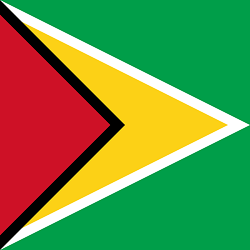
CASE: I-601A Hardship Waiver of Inadmissibility
APPLICANT / BENEFICIARY: Guyanese
LOCATION: Albany, NY
Our client came to the United States from Guyana in 2005 on a C1/D crew visa. He married his U.S. citizen wife in 2007. Thereafter, his U.S. Citizen wife filed an I-130 petition for him in 2008. This I-130 petition was approved on November 23, 2009.
However, our client cannot file for adjustment of status application due to his ground of inadmissibility (entry without inspection and admission as a crewman). He needs a waiver of inadmissibility to become a green card holder.
Under current law, immediate relatives of U.S. citizens who are not eligible to adjust status in the United States must travel abroad and obtain an immigrant visa. Individuals who have accrued more than 180 days of unlawful presence while in the United States must obtain a waiver of inadmissibility to overcome the unlawful presence bars under section 212(a)(9)(B) of the Immigration and Nationality Act before they can return to the United States
In 2013, the USCIS announced of new policy called the provisional unlawful presence waiver. Beginning March 4, 2013, certain immigrant visa applicants who are spouses, children and parents of U.S. citizens (immediate relatives) can apply for provisional unlawful presence waivers before they leave the United States. The provisional unlawful presence waiver process allows individuals, who only need a waiver of inadmissibility for unlawful presence, to apply for a waiver in the United States.
The new process is expected to shorten the time U.S. citizens are separated from their immediate relatives while those family members are obtaining immigrant visas to become lawful permanent residents of the United States.
INA § 212(i) provides for a discretionary waiver of the entry without inspection inadmissibility ground. To qualify for the waiver, the alien must establish that his or her US Citizen spouse would suffer extreme hardship if the alien were denied admission. INA § 212(i)(1). In addition to the equities presented, the USCIS may consider the nature of the inadmissibility ground.
There is a seminal BIA case that deals with this waiver. In Matter of Cervantes, 22 I & N Dec. 560 (BIA 1999), the BIA identified the factors to be considered in determining whether a qualifying relative would suffer extreme hardship if the alien were denied admission. Those factors include: the presence of LPR or USC family ties both within and outside the United States; the conditions in the country to which the qualifying relative would relocate and the extent of the qualifying relative’s ties to that country; the financial impact of departure from the United States; and significant conditions of health, particularly when tied to the unavailability of suitable medical care in the country to which the qualifying relative would relocate.
Our client filed I-601A application before with a different immigration counsel, but it was denied in October 2014. Nevertheless, he had since gather more evidence, financial and medical, to have a stronger re-file case.
Our client’s I-601A application had a good chance since our client’s U.S. Citizen wife suffers from a great degree of hardship. Moreover, their U.S. citizen children suffer from great degree of medical hardships. Although their U.S. citizen children are not considered as “qualifying relatives” for the I-601A, we argued that children’s medical hardship is also hardship to our client’s U.S. citizen wife, by virtue of having to take care of them (children with medical / special needs) is an extreme hardship to her. In the I-601A brief and supporting documents, our office included extensive medical reports of his children. We argued that if he was removed from the United States, extreme hardship to his wife is clearly foreseeable and evident. She would not be able to take care of her own needs and the bulk of their family chores, most importantly taking care of their child. Also, it would be extremely difficult for her and their kids to get the same level of therapy and satisfactory access to medical services in Guyana in case they join our client there.
In our brief, we also argued that our client and his wife have maintained strong family ties in the United States, that his wife will have difficulty in finding the same level of employment in Guyana, and that his U.S. citizen child and his wife will face extreme emotional difficulties if he is removed.
On April 28, 2016, we filed the I-601A waiver application which included the brief in support, his wife’s extensive medical examination records, and other documents that demonstrated hardship to his wife if he is removed from the United States. Eventually, his I-601A waiver was approved on October 13, 2016. Now, he can file packet 3 and 4 here in the United States, and would go to Guyana shortly to get his immigrant visa.
{ 0 comments }
CASE: Marriage-Based Adjustment of Status
NATIONALITY: Indian
LOCATION: Cincinnati, OH
Our client is from India who came to the U.S. on a J-1 Exchange Visitor’s Visa in May 2007. After his J-1 status expired, he remained in the United States. His J-1 program was not subject to the INA 212(e) two year foreign residency requirement. In February 2016, our client married his current U.S. citizen wife. He retained our office on May 25, 2016 for his green card application. Our firm prepared and filed the I-130 Petition and I-485 Adjustment of Status Application on July 5, 2016. Everything went smoothly and the receipt notices, fingerprint appointment, and work permits all came on time. Prior to the interview, we thoroughly prepared our clients at our office as well. On October 24, 2016, our client was interviewed at Cincinnati Ohio USCIS office. Eventually, on October 25, 2016, his green card application was approved.
{ 0 comments }

CASE: I-360 Petition
NATIONALITY: Kenyan
LOCATION: Atlanta, GA
Our client is from Kenya who came to the U.S. on a J-1 Visa in May 2002. After she finished her J-1 program, she remained in the United States. With our office’s assistance, she got her J-1 waiver in February 2015.
In February 2016, she contacted our office to seek legal representation for her I-360 petition. According to her story, our client’s marital life was very deteriorating and she was a spouse of abusive U.S. Citizen. With her story and other evidence, our office determined that she would be eligible for I-360 self-petition as a spouse of abusive U.S. citizen.
Our client experienced domestic violence and spousal abuse during her marriage. Her husband physically and mentally abused our client throughout the years. Thus, we filed and prepared her I-360 petition, which included 15 exhibits and a detailed brief to the USCIS Vermont Service Center on March 17, 2016.
Despite our client’s thoroughly prepared I-360 application, in April 2016, the USCIS Vermont Service Center issued a Request for Evidence (RFE). Specifically, the RFE letter requested our client to submit more documents to prove her good moral character. Our client and our office thoroughly gathered the requested documents, and filed a response to RFE on May 24, 2016.
Finally, on October 18, 2016, the USCIS Vermont Service Center approved our client’s I-360 petition. With the approved I-360, our client can file her I-485 adjustment of status application to the USCIS for her permanent residency.
{ 0 comments }

CASE: I-130 and Consular Processing (Immigrant Visa) – Marriage-Petition
Our client is a U.S. citizen who married his wife in the Philippines in February 2016. After the marriage, he came back to the United States and contacted our office and retained us to bring his wife to the States.
Our office prepared and filed an I-130 petition for his wife to the USCIS on April 22, 2016. After the I-130 petition was filed, everything went smoothly, there were no requests for evidence, and the receipt notice came on time. The I-130 Petition was approved on June 15, 2016.
After the I-130 approval, we filed the immigrant visa packets to the National Visa Center on July 21, 2016, who in turn forwarded our client’s materials to the U.S. Embassy in Manila, Philippines. An interview notice was set for the client at the U.S. Embassy in Manila, and we prepared her for the interview. On October 19, 2016, the interview was conducted. Eventually, after the interview, the U.S. Embassy in Manila, Philippines approved and issued her immigrant visa.
With the approved Immigrant Visa, our client’s wife can come to the United States immediately, and she will get her green card within two months of entry.
{ 0 comments }
Connect With Us


FREE CONSULTATIONS
Approvals by State
- Ohio
- Alabama
- Mississippi
- North Dakota
- Virgin Islands
- Iowa
- Virgin Islands
- Maine
- Idaho
- South Dakota
- Hawaii
- DC
- Minnesota
- North Carolina
- Saipan
- Kansas
- Colorado
- South Carolina
- Montana
- Kentucky
- Wyoming
- Nevada
- Arkansas
- New York
- California
- Texas
- Washington
- Virginia
- Arizona
- Nebraska
- Maryland
- Illinois
- Pennsylvania
- New Jersey
- Georgia
- Connecticut
- Missouri
- Wisconsin
- Indiana
- Louisiana
- Florida
- Tennessee
- Oklahoma
- Michigan
- Massachusetts
- New Mexico
Country Approvals
- Philippines
- Ecuador
- Gabon
- Bulgaria
- Yemen
- Netherlands
- Zambia
- Morocco
- Iraq
- Burkina Faso
- Turkey
- United Kingdom
- Venezuela
- Japan
- Egypt
- Sierra Leone
- Australia
- Lebanon
- Thailand
- Kyrgyzstan
- Saint Lucia
- Angola
- Ireland
- Macedonia
- Hong Kong
- Algeria
- Belgium
- UAE
- Serbia
- China
- South Korea
- India
- Kenya
- Indonesia
- Ghana
- Pakistan
- Nepal
- Britain
- Jamaica
- Canada
- Senegal
- Benin
- Colombia
- Moldova
- Jordan
- Romania
- Malaysia
- Guatemala
- Saudi Arabia
- Cameroon
- Africa
- Mexico
- Ethiopia
- Germany
- Ukraine
- Sweden
- Vietnam
- Costa Rica
- Cambodia
- El Salvador
- Nigeria
- Hungary
- Singapore
- Argentina
- Brazil
- Albania
- Sri Lanka
- Russia
- Zimbabwe
- Bangladesh
- Peru
- Guyana
- Iran
- Italy
- Suriname
- Honduras
- Gambia
- Cote D’Ivoire
- Hubei
- Grenada
- Spain
- Slovakia
- France
- Taiwan
- Tunisia
- Cuba
- Croatia
- Bahamas