
5005 Rockside Road Ste. 600
Cleveland Ohio 44131
(216) 573-3712
FREE CONSULTATIONS






CONTACT US
CLIENTS’ CHOICE AWARD
Success Stories

CASE: Immigrant Visa / I-601A Hardship Waiver of Inadmissibility
APPLICANT / BENEFICIARY: Mexican
LOCATION: Ohio
Our client came to the United States from Mexico in 1999 without inspection and admission. He married his U.S. citizen wife in 2003. With our firm’s legal assistance, his U.S. Citizen wife filed an I-130 petition for him in 2013. This I-130 petition was approved on January 17, 2014.
However, our client cannot file for adjustment of status application due to his ground of inadmissibility (entry without inspection and admission). He needs a waiver of inadmissibility to become a green card holder.
Under current law, immediate relatives of U.S. citizens who are not eligible to adjust status in the United States must travel abroad and obtain an immigrant visa. Individuals who have accrued more than 180 days of unlawful presence while in the United States must obtain a waiver of inadmissibility to overcome the unlawful presence bars under section 212(a)(9)(B) of the Immigration and Nationality Act before they can return to the United States
In 2013, the USCIS announced of new policy called the provisional unlawful presence waiver. Beginning March 4, 2013, certain immigrant visa applicants who are spouses, children and parents of U.S. citizens (immediate relatives) can apply for provisional unlawful presence waivers before they leave the United States. The provisional unlawful presence waiver process allows individuals, who only need a waiver of inadmissibility for unlawful presence, to apply for a waiver in the United States.
The new process is expected to shorten the time U.S. citizens are separated from their immediate relatives while those family members are obtaining immigrant visas to become lawful permanent residents of the United States.
INA § 212(i) provides for a discretionary waiver of the entry without inspection inadmissibility ground. To qualify for the waiver, the alien must establish that his or her US Citizen spouse would suffer extreme hardship if the alien were denied admission. INA § 212(i)(1). In addition to the equities presented, the USCIS may consider the nature of the inadmissibility ground.
There is a seminal BIA case that deals with this waiver. In Matter of Cervantes, 22 I & N Dec. 560 (BIA 1999), the BIA identified the factors to be considered in determining whether a qualifying relative would suffer extreme hardship if the alien were denied admission. Those factors include: the presence of LPR or USC family ties both within and outside the United States; the conditions in the country to which the qualifying relative would relocate and the extent of the qualifying relative’s ties to that country; the financial impact of departure from the United States; and significant conditions of health, particularly when tied to the unavailability of suitable medical care in the country to which the qualifying relative would relocate.
Our client’s I-601A application had a good chance since our client’s U.S. Citizen wife suffers from a great degree of medical hardship. In the I-601A brief and supporting documents, our office included extensive medical reports of his wife. We argued that if he was removed from the United States, extreme hardship to his wife is clearly foreseeable and evident. His wife has ongoing medical hardships and she would not be able to take care of her own needs and the bulk of their family chores, most importantly taking care of their child. Also, it would be extremely difficult for her to get the same level of therapy and satisfactory access to medical services in Mexico in case she joins our client there.
In our brief, we also argued that our client and his wife have maintained strong family ties in the United States, that his wife will have difficulty in finding the same level of employment in Mexico, and that his U.S. citizen child and his wife will face extreme emotional difficulties if he is removed.
On July 13, 2015, we filed the I-601A waiver application which included the brief in support, his wife’s extensive medical examination records, and other documents that demonstrated hardship to his wife if he is removed from the United States. Eventually, his I-601A waiver was approved on November 23, 2015.
Once his I-601A waiver was approved, he retained our office again for his immigrant visa processing. Our office prepared and filed his immigrant visa application on July 27, 2016. Later, the U.S. Consulate in Ciudad Juarez, Mexico informed our office that they scheduled an immigrant visa interview for our client. Our client went back to Mexico to appear at her interview on October 13, 2016. On October 13, 2016, our client appeared at his immigrant visa interview at the Consulate, and the Consulate officer approved his immigrant visa on the same day.
Now, our client can come back to the United States with an approved immigrant visa and he will get his green card in a mail within two months of his entry to the United States.
{ 0 comments }

CASE: Marriage-Based Adjustment of Status
NATIONALITY: Indian
LOCATION: Cleveland, OH
Our client is from India who came to the U.S. on a F-1 Student’s Visa in August 2011. In May 2016, our client married his current U.S. citizen wife. He retained our office on May 20, 2016 for his green card application. Our firm prepared and filed the I-130 Petition and Adjustment of Status Application on July 5, 2016. Everything went smoothly and the receipt notices, fingerprint appointment, and work permits all came on time. Prior to the interview, we thoroughly prepared our clients at our office as well. On October 14, 2016, our client was interviewed at Cleveland Ohio USCIS office. Attorney Sung Hee (Glen) Yu accompanied our clients as well. Eventually, on October 17, 2016, his green card application was approved.
{ 0 comments }
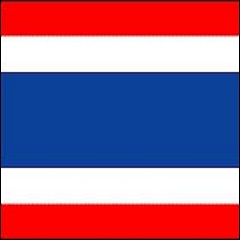
CASE: I-130/I-485 / J-2 Waiver of Two-Year Foreign Residency Requirement / Over 21-year-old dependent child
NATIONALITY: Thai
LOCATION: Dallas Texas
Our client is a citizen of Thailand who came to the U.S. on a J-2 Visa in 1990. He came with his father who came on a J-1 Visa for his research program in the United States. Both were subject to the two-year foreign residency requirement, meaning they had to go back to their home country for two-years before they can apply for permanent residency or some non-immigrant visa such as the H, L, and O visas.
After our client came to the United States, he has remained in the United States beyond the expiration of his authorized stay period. He completed his elementary and secondary schools and finished his bachelor and graduate programs in the United States as well. He did not know of his overstayed status until he became a late teenager.
He turned 21 in 2005. Nonetheless, he did not know of the waiver process, lost his I-94 record and did not have J-2 related documents beside J-2 visa stamp on his old passport. Later, he became a beneficiary of the Deferred Action for Childhood Arrivals (DACA) program and got his work permit.
Our client married his current U.S. citizen wife in October 2012. He would like to get a waiver because he can get a green card based on his U.S. citizen wife’s I-130 petition. However, because of his two-year foreign residency requirement, our client cannot change his status in the United States without the fulfillment of requirement or the waiver.
Although J-2 dependents cannot independently apply for a waiver, in cases where a J-2 child reaches 21, the Waiver Review Division may consider requests for waivers on behalf of the J-2 dependent. The Department of State’s policy allows for that process in instances where the J-2 dependent obtains a divorce form the J-1 principal, the J-1 principal dies, or in cases where the J-2 dependent turns 21, which is our client’s case. In fact, our client turned 21 in 2005.
Our firm was retained to do his J-2 waiver and replacement of his I-94. We first filed I-102 application to USCIS on June 12, 2015 in order to obtain his I-94 record replacement. The USCIS issued his replace I-94 on September 21, 2015. Thereafter, on September 25, 2015, the J-2 Waiver application (Form DS-3035 and supporting documents) was filed to the Department of State. We also sent a request to the DOS to be an interested government agency and recommend this waiver based on the fact that our client reached the age of 21 and was not a dependent of a J-1 visa holder anymore. Eventually, on October 14, 2015 the DOS recommended to the United States Citizenship and Immigration Service (USCIS) that our client be granted a waiver. On October 25, 2015, the USCIS issued an I-612 approval notice for our client’s waiver request.
Once his J-1 waiver was approved, our client retained our office again for his adjustment of status application. Our firm prepared and filed the I-130 Petition and Adjustment of Status Application on November 23, 2015. Everything went smoothly and the receipt notices, fingerprint appointment, and work permits all came on time. Prior to the interview, we thoroughly prepared our clients through conference calls. On October 14, 2016, our client was interviewed at the Irving, Texas USCIS office. The interview went well, and eventually, on the same day of the interview, his green card application was approved.
{ 0 comments }

CASE: I-130 and Consular Processing (Immigrant Visa) – Marriage-Petition
Our client is a U.S. citizen who married his wife in Johannesburg, South Africa in 2015. After the marriage, he came back to the United States and contacted our office and retained us to bring his wife and step-children to the States.
Our office prepared and filed three I-130 petitions for his wife and step-children to the USCIS on December 7, 2015. After the I-130 petitions were filed, everything went smoothly, there were no requests for evidence, and the receipt notices came on time. The I-130 Petitions were approved on April 20, 2016.
After the I-130 approval, we filed the immigrant visa packets to the National Visa Center on June 16, 2016, who in turn forwarded our clients’ materials to the U.S. Consulate at Johannesburg, South Africa. An interview notice was set for the client at the US Consulate in Johannesburg, and we prepared them for the interview. On October 11, 2016, the interview was conducted. Eventually, after the interview, the U.S. Consulate in Johannesburg, South Africa approved and issued their immigrant visas.
With the approved Immigrant visas, our client’s wife and step-children can come to the United States immediately, and they will get their green cards within two months of entry.
{ 0 comments }

CASE: I-751
APPLICANT: Kenyan
LOCATION: Cleveland, OH
Our client contacted our office in January of this year regarding his I-751 application.
He is from Kenya and obtained his conditional residency based on being the minor son of his mother. In October 2005, while he was in Kenya, his mother married her U.S. citizen husband and got her conditional permanent residency through the marriage. Her U.S. citizen husband filed the I-130 petition for our client and as a result, our client got his immigrant visa in December 2006. Later, his mother got divorced to her U.S. citizen husband, but she removed the condition on her permanent residency. However, she did not file the I-751 petition for our client because she did not know that our client also should apply.
Without the proper guidance of any immigration counsel, our client’s mother filed I-130 petition again for our client and our client filed his green card. Obviously, because of the wrong procedures that they took, our client was placed in removal proceedings. Nevertheless, the Immigration Judge administratively closed his proceedings and advised him to file I-751. she married a U.S. citizen in July 2007. Through her marriage, she obtained a 2-year conditional green card in March of 2008. Her conditional residency terminated in March 2010.
The USCIS still allows the I-751 applicant to file his or her I-751 application as long as there is a good cause for the late filing. After the administrative closure of his case, our client then retained our office for the I-751 filing. Once retained, our office prepared an I-751 application for our client with his mother’s divorce decree, naturalization certificate, and his letter to explain his late filing.
On February 16, 2016, our office filed an I-751 application to the USCIS with an affidavit of applicant to explain his late filing and other supporting documents.
Eventually, on October 4, 2016, the USCIS approved our client’s I-751 application without any RFE or interview. Now, he has her ten-year green card.
{ 0 comments }
CASE: Marriage-Based Adjustment of Status
NATIONALITY: Mexican
LOCATION: Dallas, TX
Our client is from Mexico who came to the U.S. on a B-2 Visitor’s Visa in May 2015. In July 2015, our client married his current U.S. citizen wife. He retained our office in July 2015 for his green card application. Our firm prepared and filed the I-130 Petition and I-485 Adjustment of Status Application on August 25, 2015. Everything went smoothly and the receipt notices, fingerprint appointment, and work permits all came on time. Prior to the interview, we thoroughly prepared our clients via conference calls as well. On September 6, 2016, our client was interviewed at Irving Texas USCIS office. Eventually, on September 28, 2016, his green card application was approved.
{ 0 comments }

CASE: Immigrant Visa / I-601A Provisional Unlawful Presence Hardship Waiver of Inadmissibility
APPLICANT / BENEFICIARY: Chinese
LOCATION: Cleveland, Ohio / Guangzhou, China (Visa Interview)
Our client came to the United States from China in August 2001 without inspection and admission. She married her U.S. citizen husband in 2007. They have two U.S. citizen children together. Her U.S. Citizen husband filed an I-130 petition for her on August 1, 2012. This I-130 petition was approved on March 29, 2013.
Our client cannot file for adjustment of status application due to her ground of inadmissibility. She needs a waiver of inadmissibility to become a green card holder. Moreover, our client was placed in removal proceedings, but with our office’s assistance, her removal proceedings were administratively closed in April 2015 to file a provisional waiver application.
Under current law, immediate relatives of U.S. citizens who are not eligible to adjust status in the United States must travel abroad and obtain an immigrant visa. Individuals who have accrued more than 180 days of unlawful presence while in the United States must obtain a waiver of inadmissibility to overcome the unlawful presence bars under section 212(a)(9)(B) of the Immigration and Nationality Act before they can return to the United States.
In 2013, the USCIS announced of new policy called the provisional unlawful presence waiver. Beginning March 4, 2013, certain immigrant visa applicants who are spouses, children and parents of U.S. citizens (immediate relatives) can apply for provisional unlawful presence waivers before they leave the United States. The provisional unlawful presence waiver process allows individuals, who only need a waiver of inadmissibility for unlawful presence, to apply for a waiver in the United States.
The new process is expected to shorten the time U.S. citizens are separated from their immediate relatives while those family members are obtaining immigrant visas to become lawful permanent residents of the United States.
INA § 212(i) provides for a discretionary waiver of the entry without inspection inadmissibility ground. To qualify for the waiver, the alien must establish that his or her US Citizen spouse would suffer extreme hardship if the alien were denied admission. INA § 212(i)(1). In addition to the equities presented, the USCIS may consider the nature of the inadmissibility ground.
There is a seminal BIA case that deals with this waiver. In Matter of Cervantes, 22 I & N Dec. 560 (BIA 1999), the BIA identified the factors to be considered in determining whether a qualifying relative would suffer extreme hardship if the alien were denied admission. Those factors include: the presence of LPR or USC family ties both within and outside the United States; the conditions in the country to which the qualifying relative would relocate and the extent of the qualifying relative’s ties to that country; the financial impact of departure from the United States; and significant conditions of health, particularly when tied to the unavailability of suitable medical care in the country to which the qualifying relative would relocate.
Our client’s I-601A application had a good chance since our client’s U.S. Citizen husband and son suffer from a great degree of medical hardship. In the I-601A brief and supporting documents, our office included extensive medical reports of her husband and her son. We argued that if she was removed from the United States, extreme hardship to her husband is clearly foreseeable and evident. Her husband has ongoing medical hardships and he would not be able to take care of his own needs and the bulk of their family chores, most importantly taking care of their children. Also, it would be extremely difficult for him to get the same level of therapy and satisfactory access to medical services in China in case he joins our client there.
In our brief, we also argued that our client and her husband have maintained strong family ties in the United States, that her husband will have difficulty in finding the same level of employment in China, that our client has good employment in the United States, and that his U.S. citizen child and her husband will face extreme financial and emotional difficulties if she is removed.
On October 15, 2015, we filed the I-601A waiver application which included the brief in support, her husband and son’s extensive medical examination records, and other documents that demonstrated hardship to her husband if she is removed from the United States. Eventually, without any RFE, her I-601A waiver was approved on February 2, 2016.
Once her I-601A waiver was approved, she retained our office again for her immigrant visa processing. First, our office filed the Motion to Re-Calendar / Terminate Removal Proceedings to the Cleveland Immigration Court to do our client immigrant visa processing work. The Motion was filed on February 16, 2016. The Immigration Court granted our Motion on March 14, 2106.
Thereafter, our office prepared and filed her immigrant visa application on July 25, 2016. Later, the U.S. Embassy in Guangzhou, China informed our office that they scheduled an immigrant visa interview for our client. Our client went back to China to appear at her interview on September 8, 2016. On September 8, 2016, our client appeared at her immigrant visa interview at the Consulate, and the Consulate officer approved her immigrant visa on the same day.
Now, our client can come back to the United States with an approved immigrant visa and she will get her green card in a mail within two months of her entry to the United States.
{ 0 comments }

CASE: Immigrant Visa / I-140 (EB-3 Category) / Schedule A / Old Priority Date Retention
EMPLOYER: Nursing / Rehabilitation Center
BENEFICIARY: Filipina Registered Nurse in the Philippines
LOCATION: Houston, TX
Our client’s beneficiary is a registered nurse from the Philippines licensed in the state of Texas. Currently, she is working at a hospital in the Philippines as a nurse. Her prospective employer was willing to petition her for a third-preference employment immigrant visa petition (I-140). Our client also has an approved EB-3 I-140 petition with a priority date of March 2009.
Since she is a registered nurse, she is eligible for “Schedule A” classification. The Department of Labor (DOL) maintains a schedule of occupations in its regulations, Schedule A included, for which the individual permanent labor certification procedure is not required. The schedule of pre-certified occupations is referred to as Schedule A, and is included in DOL regulations at 20 CFR 656.10. Based on an occupation’s inclusion on Schedule A, an employer may file an immigrant visa petition (I-140) directly with the (USCIS) without first going to the DOL for a labor certification. Usually, prior to filing I-140 petitions (EB-2 or EB-3 category), the employer must file a Labor Certification to the Department of Labor. However, for Schedule A cases, the employer does not have to go through the labor certification process. The position of Professional Nurses is included in Schedule A.
Also, under 8 CFR 204.5(e):
“Retention of section 203(b)(1), (2), or (3) priority date. A petition approved on behalf of an alien under sections 203(b)(1), (2), or (3) of the Act accords the alien the priority date of the approved petition for any subsequently filed petition for any classification under sections 203(b)(1), (2), or (3) of the Act for which the alien may qualify. In the event that the alien is the beneficiary of multiple petitions under sections 203(b)(1), (2), or (3) of the Act, the alien shall be entitled to the earliest priority date. A petition revoked under sections 204(e) or 205 of the Act will not confer a priority date, nor will any priority date be established as a result of a denied petition. A priority date is not transferable to another alien.”
As mentioned above, our client’s approved I-140 petition was not denied, was actually approved, and was never revoked at any point. Thus, by virtue of 8 CFR 204.5(e), this succeeding I-140 Petition by our client’s prospective employer for our client is entitled to the previous priority date.
Our client has a nursing degree and has several years of related experience. Our firm told her that her potential employer can petition her as a Registered Nurse under the schedule A category. More importantly, since the priority date of her previous I-140 was current, she can eventually apply for her immigrant visa via consular processing. Our office was retained on October 3, 2014 and we started on her Prevailing Wage Request.
We filed the I-140 application on December 9, 2014 via premium processing. We included the job offer letter, the notice of filing, his previous I-140 approval notice, and other necessary supporting documents. Eventually, on December 22, 2014, the I-140 was approved and it retained our client’s old priority date.
Once her I-140 was approved, our client retained our office again for her immigrant visa processing. Once we were retained, our office filed the immigrant visa packets to the National Visa Center on February 23, 2016, who in turn forwarded the client’s materials to the U.S. Embassy in Manila, Philippines. An interview notice was set for the client at the U.S. Embassy in Philippines. On August 23, 2016, our client appeared at the U.S. Embassy in Manila, Philippines. The interview went well, and the Embassy approved and issued her immigrant visa.
With the approved Immigrant Visa, our client can come to the United States immediately, and she will get her green card within two months of entry.
{ 0 comments }
Case: I-130/I-485, BIA Appeal
Location: Pittsburgh, PA
Our client entered the United States in May 2012 from China with a B-2 visitor visa. Later, he married his U.S. citizen wife in September 2012. He retained our office on September 12, 2012 for his and his sons’ (petitioner’s two step-sons) adjustment of status applications.
Our office prepared and filed the I-130 Petition and I-485 Adjustment of Status Applications on October 9, 2012. Everything went smoothly and the receipt notices, fingerprint appointment, and work permits all came on time. Prior to the interview, our attorney thoroughly prepared our client via conference calls for their USCIS adjustment of status interview.
On December 19, 2012, our client, his two sons, and his U.S. citizen wife appeared at the Pittsburgh, PA USCIS office for their adjustment interview. The interview was extensive, and the officer was suspicious regarding the bona fideness of our client’s marriage.
On January 14, 2014, the USCIS issued a Notice of Intent to Deny (NOID). The NOID claimed that there was substantial and probative evidence that the marital union between the Petitioner and Beneficiary is not bona fide. Moreover, the NOID points out that the submitted documentation of Petitioner and Beneficiary does not establish a bona fide nature of their marriage.
In response to the USCIS’s NOID, our office helped our clients draft an extensive affidavit. Multiple supporting documents and an affidavit from our client were all included as well as letters from their friends and neighbors, joint utility bills, joint insurance, and several pictures of our client and his wife in several occasions with different people. Several legal authorities were cited based on particular issues discussed, and on February 10, 2014, we filed the Response to NOID prior to the 30-day deadline.
However, the USCIS denied our client’s adjustment of status cases in April 2014. Our clients were frustrated. Their marriage was bona fide. Nevertheless, they decided to re-file their adjustment of status applications. Our office filed the applications again on May 13, 2014.
The USCIS scheduled another interview for our clients. On October 29, 2014, our client, his two sons, and his U.S. citizen wife appeared at the Pittsburgh, PA USCIS office for their adjustment interview again. Attorney Sung Hee (Glen) Yu from our office accompanied our clients as well. The USCIS claimed that the relationship between our client and his U.S. citizen wife is not bona fide and was suspicious regarding the purpose of this marriage. The NOID was issued again after the interview, and despite our extensive response, the USCIS denied our clients’ cases again.
After two denials, our client decided to file the appeal to the Board of Immigration Appeals (BIA). Our office was retained again, and we filed the appeal to the BIA on March 24, 2015. In our appeal brief, we extensively argued that our client’s marriage to his wife was not entered for immigration purpose. We included several documentations to show that they have maintained their marital life well since the inception of their marriage.
Moreover, our office also filed the I-130/I-485 applications once again on January 8, 2016 before we filed the BIA appeal.
On April 12, 2016, the BIA sustained our appeal and approved the I-130 petition for our client. The BIA disagreed with the USCIS that “the evidence of the record reflects that the Petitioner did not establish that the marriage on which the visa petition is based is genuine. Rather, on the whole, the record contains sufficient evidence of a joint life, and, in general, discrepancies and inconsistencies were satisfactorily explained.”
Eventually, on August 25, 2016, the USCIS approved our client’s I-485 adjustment of status application without the additional interview. The USCIS also approved our client’s two sons’ adjustment of status applications. Now they are green card holders.
{ 0 comments }

CASE: I-601A Hardship Waiver of Inadmissibility
APPLICANT / BENEFICIARY: Guatemalan
LOCATION: Cleveland, OH
Our client came to the United States from Guatemala in 2003 without inspection and admission. He married his U.S. citizen wife in 2007. With our firm’s legal assistance, his U.S. Citizen wife filed an I-130 petition for him in 2013. This I-130 petition was approved on July 1, 2014.
However, our client cannot file for adjustment of status application due to his ground of inadmissibility (entry without inspection and admission). He needed a waiver of inadmissibility to become a green card holder.
Under current law, immediate relatives of U.S. citizens who are not eligible to adjust status in the United States must travel abroad and obtain an immigrant visa. Individuals who have accrued more than 180 days of unlawful presence while in the United States must obtain a waiver of inadmissibility to overcome the unlawful presence bars under section 212(a)(9)(B) of the Immigration and Nationality Act before they can return to the United States
In 2013, the USCIS announced of new policy called the provisional unlawful presence waiver. Beginning March 4, 2013, certain immigrant visa applicants who are spouses, children and parents of U.S. citizens (immediate relatives) can apply for provisional unlawful presence waivers before they leave the United States. The provisional unlawful presence waiver process allows individuals, who only need a waiver of inadmissibility for unlawful presence, to apply for a waiver in the United States.
The new process is expected to shorten the time U.S. citizens are separated from their immediate relatives while those family members are obtaining immigrant visas to become lawful permanent residents of the United States.
INA § 212(i) provides for a discretionary waiver of the entry without inspection inadmissibility ground. To qualify for the waiver, the alien must establish that his or her US Citizen spouse would suffer extreme hardship if the alien were denied admission. INA § 212(i)(1). In addition to the equities presented, the USCIS may consider the nature of the inadmissibility ground.
There is a seminal BIA case that deals with this waiver. In Matter of Cervantes, 22 I & N Dec. 560 (BIA 1999), the BIA identified the factors to be considered in determining whether a qualifying relative would suffer extreme hardship if the alien were denied admission. Those factors include: the presence of LPR or USC family ties both within and outside the United States; the conditions in the country to which the qualifying relative would relocate and the extent of the qualifying relative’s ties to that country; the financial impact of departure from the United States; and significant conditions of health, particularly when tied to the unavailability of suitable medical care in the country to which the qualifying relative would relocate.
Our client’s I-601A application had a good chance since our client’s U.S. Citizen wife suffers from a great degree of hardship. Moreover, their U.S. citizen children suffer from great degree of medical hardships. Although their U.S. citizen children are not considered as “qualifying relatives” for the I-601A, we argued that children’s medical hardship is also hardship to our client’s U.S. citizen wife, by virtue of having to take care of them (children with medical / special needs) is an extreme hardship to her. In the I-601A brief and supporting documents, our office included extensive medical reports of his children. We argued that if he was removed from the United States, extreme hardship to his wife is clearly foreseeable and evident. She would not be able to take care of her own needs and the bulk of their family chores, most importantly taking care of their child. Also, it would be extremely difficult for her and their kids to get the same level of therapy and satisfactory access to medical services in Guatemala in case they join our client there.
In our brief, we also argued that our client and his wife have maintained strong family ties in the United States, that his wife will have difficulty in finding the same level of employment in Guatemala, and that his U.S. citizen child and his wife will face extreme emotional difficulties if he is removed.
On March 11, 2016, we filed the I-601A waiver application which included the brief in support, his wife’s extensive medical examination records, and other documents that demonstrated hardship to his wife if he is removed from the United States. Eventually, his I-601A waiver was approved on September 6, 2016. Now, he can file packet 3 and 4 here in the United States, and would go to Guatemala shortly to get his immigrant visa.
{ 0 comments }
Connect With Us


FREE CONSULTATIONS
Approvals by State
- Ohio
- Alabama
- Mississippi
- North Dakota
- Virgin Islands
- Iowa
- Virgin Islands
- Maine
- Idaho
- South Dakota
- Hawaii
- DC
- Minnesota
- North Carolina
- Saipan
- Kansas
- Colorado
- South Carolina
- Montana
- Kentucky
- Wyoming
- Nevada
- Arkansas
- New York
- California
- Texas
- Washington
- Virginia
- Arizona
- Nebraska
- Maryland
- Illinois
- Pennsylvania
- New Jersey
- Georgia
- Connecticut
- Missouri
- Wisconsin
- Indiana
- Louisiana
- Florida
- Tennessee
- Oklahoma
- Michigan
- Massachusetts
- New Mexico
Country Approvals
- Philippines
- Ecuador
- Gabon
- Bulgaria
- Yemen
- Netherlands
- Zambia
- Morocco
- Iraq
- Burkina Faso
- Turkey
- United Kingdom
- Venezuela
- Japan
- Egypt
- Sierra Leone
- Australia
- Lebanon
- Thailand
- Kyrgyzstan
- Saint Lucia
- Angola
- Ireland
- Macedonia
- Hong Kong
- Algeria
- Belgium
- UAE
- Serbia
- China
- South Korea
- India
- Kenya
- Indonesia
- Ghana
- Pakistan
- Nepal
- Britain
- Jamaica
- Canada
- Senegal
- Benin
- Colombia
- Moldova
- Jordan
- Romania
- Malaysia
- Guatemala
- Saudi Arabia
- Cameroon
- Africa
- Mexico
- Ethiopia
- Germany
- Ukraine
- Sweden
- Vietnam
- Costa Rica
- Cambodia
- El Salvador
- Nigeria
- Hungary
- Singapore
- Argentina
- Brazil
- Albania
- Sri Lanka
- Russia
- Zimbabwe
- Bangladesh
- Peru
- Guyana
- Iran
- Italy
- Suriname
- Honduras
- Gambia
- Cote D’Ivoire
- Hubei
- Grenada
- Spain
- Slovakia
- France
- Taiwan
- Tunisia
- Cuba
- Croatia
- Bahamas