
5005 Rockside Road Ste. 600
Cleveland Ohio 44131
(216) 573-3712
FREE CONSULTATIONS






CONTACT US
CLIENTS’ CHOICE AWARD
Success Stories

CASE: Marriage-Based Adjustment of Status
NATIONALITY: Chinese
LOCATION: Columbus, OH
Our client is from China who has worked in the United States under an H-1B status. In September 2018, our client married her current U.S. citizen husband. She retained our office on October 5, 2018 for her green card application. Our firm prepared and filed the I-130 Petition and I-485 Adjustment of Status Application on October 19, 2018. Everything went smoothly and the receipt notices, fingerprint appointment, and work permits all came on time. Prior to the interview, we thoroughly prepared our clients via conference call. On January 23, 2019, our client was interviewed at the Columbus Ohio USCIS office. Eventually, on January 24, 2019, her green card application was approved.
{ 0 comments }

CASE: I-485 / National Interest Waiver
CLIENT: Mexican
LOCATION: Raleigh, NC
Our client contacted us in April 2016 about the possibility of doing a National Interest Waiver self-petition. He is a researcher from Mexico and he is an exceptional researcher and scientist in the field of plant developmental biology research.
Our client’s significant contributions have placed him at the pinnacle of his field. His research has contributed to the advancing of our understanding of the mechanisms that control plant growth and development, and how plants respond to geminivirus infection, thus enabling the development of new plant breeding technologies for food production improvement. Because of his innovative experimental research, our client’s research works were highly evaluated by the reviewers of various journals and by colleagues and experts in the field.
Upon review of his credentials and qualifications, our office determined that he was definitely qualified for the National Interest Waiver (NIW) category. Being qualified for NIW is beneficial since you would not need an employer nor family member to petition for you for green card purposes. You’d be eligible for a self-petition and unless you are from China or India, in which case you’d still have to wait for priority dates to be current, you would be eligible to apply for adjustment of status (green card) immediately without any lag in priority dates.
As a primer, NIW applicants must have a master’s or higher degree. While we prepared his case, the AAO set the new standards for NIW cases in Matter of Dhanasar, 26 I&N Dec. 884 (AAO 2016). Under the new standard, the petitioner must demonstrate that the foreign national’s proposed endeavor has both substantial merit and national importance. Next, it must be shown that he or she is well positioned to advance the proposed endeavor. Finally, the petitioner seeking the waiver needs to demonstrate that, on balance, it would be beneficial to the United States to waive the job offer and labor certification requirements. Id.
Our office prepared a 20-page brief for our client’s NIW filing. Our client also obtained 6 letters of recommendation from his colleagues and internationally-recognized researchers. Our office also included his publication records, presentation records, and conference materials in the NIW application. We demonstrated that our client is one of the few elite researchers who have made significant and substantial contributions to his field of endeavor, that he is well positioned to advance the proposed endeavor, and it would be beneficial to the United States to waive the requirements of a job offer and thus of a labor certification for our client.
Our office filed his I-140(NIW) petition to the USCIS Texas Service Center on December 20, 2017. Eventually, on April 13, 2018, the USCIS approved his I-140 petition without any Requests for Evidence.
Once his I-140 petition was approved, he retained our office again and determined to file an adjustment of status application for him and his wife. On July 19, 2018, our office filed an I-485 adjustment of status application for our client. Everything went smoothly and the receipt notices and fingerprint appointment came on time.
Prior to the interview, we thoroughly prepared our client via conference calls. On January 19, 2019, our client was interviewed at Durham North Carolina USCIS office. Eventually, his I-485 application was approved by the USCIS on January 22, 2019.
{ 0 comments }

CASE: N-400 (Citizenship / Naturalization)
APPLICANT: Filipina
LOCATION: Wisconsin
Our client contacted us in December 2017 to seek legal representation for her naturalization and citizenship N-400 application. She came to the United States from the Philippines and she obtained her green card in April 2014 through her current marriage to her US Citizen Spouse.
Once retained, her N-400 application was filed on December 20, 2017 with all supporting documents. Prior to her citizenship interview, our office prepared her via conference calls. On January 7, 2019, our client appeared at the Milwaukee, Wisconsin USCIS office for her naturalization interview. Our client answered all questions correctly and passed her naturalization and citizenship interview. Eventually, her application was approved on January 17, 2019. Her oath taking is scheduled in which she will become a naturalized U.S. Citizen.
{ 0 comments }

CASE: I-485 / National Interest Waiver
CLIENT: Korean
LOCATION: Ann Arbor, MI
Our client contacted us in April 2017 about the possibility of doing a National Interest Waiver self-petition. He is a researcher from South Korea and he is an exceptional researcher and scientist in the field of Material Science and Next-Generation Battery Research.
Our client’s significant contributions have placed him at the pinnacle of his field. He has performed fundamental research and device engineering of next generation battery materials, including inorganic solid-state electrolytes, inorganic-organic hybrid electrolytes with self-healing polymers, and electrode structure design using techniques such as sputtering, electrospinning, and various synthesis chemistries Because of his innovative experimental research, our client’s research works were highly evaluated by the reviewers of various journals and by colleagues and experts in the field.
Upon review of his credentials and qualifications, our office determined that he was definitely qualified for the National Interest Waiver (NIW) category. Being qualified for NIW is beneficial since you would not need an employer nor family member to petition for you for green card purposes. You’d be eligible for a self-petition and unless you are from China or India, in which case you’d still have to wait for priority dates to be current, you would be eligible to apply for adjustment of status (green card) immediately without any lag in priority dates.
As a primer, NIW applicants must have a master’s or higher degree. While we prepared his case, the AAO set the new standards for NIW cases in Matter of Dhanasar, 26 I&N Dec. 884 (AAO 2016). Under the new standard, the petitioner must demonstrate that the foreign national’s proposed endeavor has both substantial merit and national importance. Next, it must be shown that he or she is well positioned to advance the proposed endeavor. Finally, the petitioner seeking the waiver needs to demonstrate that, on balance, it would be beneficial to the United States to waive the job offer and labor certification requirements. Id.
Our office prepared a 21-page brief for our client’s NIW filing. Our client also obtained 6 letters of recommendation from his colleagues and internationally-recognized researchers. Our office also included his publication records, presentation records, and conference materials in the NIW application. We demonstrated that our client is one of the few elite researchers who have made significant and substantial contributions to his field of endeavor, that he is well positioned to advance the proposed endeavor, and it would be beneficial to the United States to waive the requirements of a job offer and thus of a labor certification for our client. His NIW application contained 23 exhibits (Exhibit A to W).
Our office filed his I-140(NIW) petition to the USCIS Nebraska Service Center on March 19, 2018. Eventually, on August 17, 2018, the USCIS approved his I-140 petition without any Requests for Evidence.
When we filed his I-140, he concurrently filed his I-485 adjustment of status application. Everything went smoothly and the receipt notices and fingerprint appointment came on time.
Prior to the interview, we thoroughly prepared our client via conference calls. On January 8, 2019, our client was interviewed at Detroit, Michigan USCIS office. The interview went well, and on the same day of the interview, his green card application was approved.
{ 0 comments }

CASE: I-485 (EB-2)
APPLICANT: Zimbabwean Director of Global Integration & Project Manager
LOCATION: Kansas
Our client has a current employer that was willing to petition his for a second-preference petition (I-140). Our client has a Ph.D. degree in chemistry and has worked for his current employer since April 2017. Based on our client’s educational and working background, our office determined that he is clearly eligible for EB-2 classification for his I-140 petition. Our client eventually retained us on June 1, 2017.
Prior to filing PERM, our firm prepared the prevailing wage request, job order, advertisements, internal job posting, recruitment report, and all other steps which are important pre-PERM filing. Take note that the PERM application could be filed at least 60 days from the job posting date or 30 days from the last ad. Within a week from our retention, the prevailing wage request was filed. After we obtained the PW determination, our office filed the job order on August 30, 2017. On November 30, 2017, we promptly filed PERM. Eventually, on April 16, 2018, the PERM Labor Certification was approved – an EB2 position for the Zimbabwean beneficiary.
We then proceeded with the I-140 Petition filing. We submitted the “ability to pay” letter for the I-140 petition application. We included the job offer letter, employer’s tax records, and other necessary supporting documents.
The I-140 Petition was filed on May 11, 2018 via premium processing service. However, the USCIS Texas Service Center issued Request for Evidence (RFE) for the submission of the document which can demonstrate Beneficiary’s knowledge on certain software. Our client obtained the employment verification letter from his previous employer that attested our client’s use and knowledge of the software. We filed the Response to RFE to USCIS on May 29, 2018. Eventually, on June 8, 2018, the I-140 EB2 Petition for our Zimbabwean client was approved.
Once his I-140 petition was approved, he retained our office again and determined to file an adjustment of status application for him. On July 10, 2018, our office filed an I-485 adjustment of status application for our client. Everything went smoothly and the receipt notices and fingerprint appointment came on time.
Prior to the interview, we thoroughly prepared our client via conference calls as well. On January 9, 2019, our client was interviewed at Wichita Kansas USCIS office. Attorney Sung Hee (Glen) Yu from our office also accompanied our client as well. Eventually, his I-485 application was approved by the USCIS on January 14, 2019.
{ 0 comments }
CASE: Marriage-Based Adjustment of Status
NATIONALITY: Filipino
LOCATION: Cleveland, OH
Our Filipino client came to the US on a B-2 visitor’s visa. In February 2018, our client married his current U.S. citizen wife. He retained our office in September 2018 for his green card application. Our firm prepared and filed the I-130 Petition and I-485 Adjustment of Status Application on October 3, 2018. Everything went smoothly and the receipt notices, fingerprint appointment, and work permits all came on time. Prior to the interview, we thoroughly prepared our clients at our office. On December 21, 2018, our client was interviewed at the Cleveland Ohio USCIS office. Attorney Sung Hee (Glen) Yu from our office accompanied our clients as well. Eventually, on January 10, 2019, his green card application was approved.
{ 0 comments }
CASE: J-1 Waiver of Two-Year Foreign Residency Requirement, No Objection Statement
NATIONALITY: Korean
LOCATION: Boston, MA
Our client is from South Korea who came to the U.S. on a J-1 Visa in June 2015. Later, he changed his status from J-1 to H-1B and filed his adjustment of status application based on an I-140 NIW self-petition. Both of his J-1 visa page and DS-2019 clearly state that his J-1 program is not subject to the INA 212(e), two-year foreign residency requirement. However, in order to make sure that he is not subject to the 2 year foreign residency requirement, he filed advisory opinion in June 2018. Nevertheless, the Department of State found that his J-1 program was subject to the two-year foreign residency requirement.
After the advisory opinion, our client contacted our office and retained us on October 24, 2018 for his J-1 waiver case. After retention, Attorney Sung Hee (Glen) Yu from our office contacted the Korean Consulate in New York to pursue the waiver for our client. The Consulate requested six different documents including a statement of reason for the waiver, the applicant’s resume, a J-1 visa waiver confirmation application, and a letter of reason for obtaining J-1 waiver. Most of those documents needed to be written in Korean, so Attorney Yu, a Korean himself, assisted our client in completing those documents.
On October 25, 2018, the J-1 Waiver (Form DS-3035) Application was filed to the Department of State. We also sent a request to the Korean Embassy to issue a No Objection Statement and recommend this waiver based on the fact that our client is eligible to adjust in the United States if he obtains the waiver.
The Korean Consulate General in New York forwarded our client’s documents to the Korean Embassy in DC. After that, the Korean Embassy issued a No Objection Statement for our client, and sent this letter to the State Department’s Waiver Review Division. On December 20, 2018, the Waiver Review Division issued a favorable recommendation based on the No Objection statement. Eventually, the USCIS issued an I-612 approval notice on January 7, 2019.
{ 0 comments }
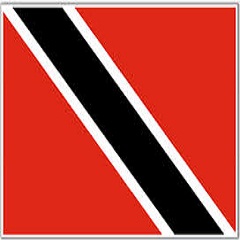
CASE: Marriage-Based Adjustment of Status
NATIONALITY: Tobagonian
LOCATION: Baltimore, MD
Our client is from Trinidad and Tobago. He has worked in the United States under an H-1B status. In November 2017, our client married his current U.S. citizen wife. He retained our office in January 2018 for his green card application. Our firm prepared and filed the I-130 Petition and I-485 Adjustment of Status Application on May 3, 2018. Everything went smoothly and the receipt notices, fingerprint appointment, and work permits all came on time. Prior to the interview, we thoroughly prepared our clients via conference call. On November 29, 2018, our client was interviewed at the Baltimore Maryland USCIS office. Eventually, on January 9, 2019, his green card application was approved.
{ 0 comments }
CASE: EB-3 I-140
EMPLOYER: Accounting Company in Akron, OH
BENEFICIARY: Chinese Associate Accountant
Our client is from China. His current employer was willing to do an immigration petition for him, third-preference. Our client has a Bachelor’s degree in Accounting. After talking to our client, our firm concluded that his employer can petition him as an Associate Accountant. Based on our client’s education and work background, our office determined that he is eligible for EB-3 classification.
Prior to filing PERM, our firm prepared the prevailing wage request, job order, advertisements, internal job posting, recruitment report, and all other steps which are important pre-PERM filing. Take note that PERM could be filed at least 60 days from the job posting date or 30 days from the last ad. On February 27, 2018, the prevailing wage request was filed. After we obtained Prevailing Wage determination, our office filed the job order on June 7, 2018. On September 13, 2018, we promptly filed PERM. Eventually, on November 8, 2018, the PERM Labor Certification was approved – an EB3 position for the Chinese beneficiary.
We then proceeded with the I-140 Petition filing. We submitted the “ability to pay” letter for the I-140 petition application. We included the job offer letter, employer’s tax records, and other necessary supporting documents.
The I-140 Petition was filed on January 3, 2019 via premium processing service. Eventually, on January 11, 2019, the I-140 EB3 Petition for our Chinese client was approved without any Request for Evidence (RFE). He can file an I-485 adjustment of status application for his green card once his priority dates become current.
{ 0 comments }
CASE: I-751
APPLICANT: Filipina
LOCATION: New Mexico
Our client contacted our office in July of 2017 regarding her I-751 application.
She is from the Philippines and she married a U.S. citizen in June 2015. Through her marriage, she obtained a 2-year conditional green card in November of 2015. Her conditional residency terminated in November 2017.
To comply with immigration requirements, our client and her husband had to file an I-751 Joint Petition to Remove Conditions. She retained our office, and our office prepared an I-751 application for our client with other supplemental exhibits.
On August 3, 2017, our office filed an I-751 application to the USCIS with multiple affidavits from her friends and family members, joint bank statements, joint taxes, utility bills, insurance policies, and photos of our client and her husband to demonstrate the bona fideness of their marriage.
Once the application was filed, the fingerprint notice was issued two weeks later. However, the USCIS issued the Request for Evidence (RFE) to demonstrate the bona fideness of our client’s marriage with her husband. We filed an extensive Response to RFE to the USCIS with more bona fide marital documents on December 5, 2018.
As a result, on December 28, 2018, the USCIS approved our client’s I-751 application and our client received her 10-year green card which removed the conditions.
{ 0 comments }
Connect With Us


FREE CONSULTATIONS
Approvals by State
- Ohio
- Alabama
- Mississippi
- North Dakota
- Virgin Islands
- Iowa
- Virgin Islands
- Maine
- Idaho
- South Dakota
- Hawaii
- DC
- Minnesota
- North Carolina
- Saipan
- Kansas
- Colorado
- South Carolina
- Montana
- Kentucky
- Wyoming
- Nevada
- Arkansas
- New York
- California
- Texas
- Washington
- Virginia
- Arizona
- Nebraska
- Maryland
- Illinois
- Pennsylvania
- New Jersey
- Georgia
- Connecticut
- Missouri
- Wisconsin
- Indiana
- Louisiana
- Florida
- Tennessee
- Oklahoma
- Michigan
- Massachusetts
- New Mexico
Country Approvals
- Philippines
- Ecuador
- Gabon
- Bulgaria
- Yemen
- Netherlands
- Zambia
- Morocco
- Iraq
- Burkina Faso
- Turkey
- United Kingdom
- Venezuela
- Japan
- Egypt
- Sierra Leone
- Australia
- Lebanon
- Thailand
- Kyrgyzstan
- Saint Lucia
- Angola
- Ireland
- Macedonia
- Hong Kong
- Algeria
- Belgium
- UAE
- Serbia
- China
- South Korea
- India
- Kenya
- Indonesia
- Ghana
- Pakistan
- Nepal
- Britain
- Jamaica
- Canada
- Senegal
- Benin
- Colombia
- Moldova
- Jordan
- Romania
- Malaysia
- Guatemala
- Saudi Arabia
- Cameroon
- Africa
- Mexico
- Ethiopia
- Germany
- Ukraine
- Sweden
- Vietnam
- Costa Rica
- Cambodia
- El Salvador
- Nigeria
- Hungary
- Singapore
- Argentina
- Brazil
- Albania
- Sri Lanka
- Russia
- Zimbabwe
- Bangladesh
- Peru
- Guyana
- Iran
- Italy
- Suriname
- Honduras
- Gambia
- Cote D’Ivoire
- Hubei
- Grenada
- Spain
- Slovakia
- France
- Taiwan
- Tunisia
- Cuba
- Croatia
- Bahamas