
5005 Rockside Road Ste. 600
Cleveland Ohio 44131
(216) 573-3712
FREE CONSULTATIONS






CONTACT US
CLIENTS’ CHOICE AWARD
Success Stories

CASE: J-2 Waiver of Two-Year Foreign Residency Requirement / Over 21-year-old dependent child
NATIONALITY: Chinese
LOCATION: Long Island City, NY
Our client was a citizen of China who came to the U.S. on a J-2 Visa in April 2007. He came with his father who came on a J-1 Visa for his research program in the United States. Both were subject to the two-year foreign residency requirement, meaning they had to go back to their home country for two years before they can apply for permanent residency or some non-immigrant visa such as the H, L, and O visas.
He turned 21 in August 2014. This year, he wanted to change his status to H-4 based on his spouse’s H-1B status. However, because of his two-year foreign residency requirement, our client cannot change his status in the United States without fulfilling the 2-year requirement or getting a waiver application approved.
Although J-2 dependents cannot independently apply for a waiver, in cases where a J-2 child reaches 21, the Waiver Review Division may consider requests for waivers on behalf of the J-2 dependent. The Department of State’s policy allows for that process in instances where the J-2 dependent obtains a divorce form the J-1 principal, the J-1 principal dies, or in cases where the J-2 dependent turns 21, which is our client’s case. In fact, our client turned 21 in August 2014.
Our firm was retained to do her J-2 waiver. On March 9, 2020, the J-2 Waiver application (Form DS-3035 and supporting documents) was filed to the Department of State. We also sent a request to the DOS to be an interested government agency and recommend this waiver based on the fact that our client reached the age of 21 and was not a dependent of a J-1 visa holder anymore. Eventually, on June 29, 2020, the DOS recommended to the United States Citizenship and Immigration Service (USCIS) that our client be granted a waiver. On July 29, 2020, the USCIS issued an I-612 approval notice for our client’s waiver request.
{ 0 comments }

CASE: Change of Status from F-2 to F-1
CLIENT: Nepalese
LOCATION: Kent, OH
Our client came from Nepal on a valid F-2 visa. Later, she decided to study further in the United States and got admitted to a college. She retained our office for her I-539 Change of Status application from F-2 to F-1.
After retention, we helped our client obtain supporting documents for the Change of Status. We filed the I-539 Change of Status application along with supporting documents to the USCIS on January 6, 2020. In the application, we fully explained her financial ability to pursue her studies in the U.S., and reasons for her studies.
On May 26, 2020, the USCIS issued a Request for Evidence (RFE) asking for a new I-20 record. Our office filed the Response to RFE on June 2, 2020. Eventually, on July 27, 2020, the Change of Status was approved. Our client is now on F-1 and can start her program.
{ 0 comments }

CASE: J-1 Waiver of Two-Year Foreign Residency Requirement, No Objection Statement
NATIONALITY: Nigerian
LOCATION: Houston, TX
Our client is from Nigeria who came to the U.S. on a J-1 Visa in June 2018 to pursue his graduate studies. After he finished his J-1 program, he changed his status from J-1 to F-1 and he has remained in the United States. Our client plans to file an I-140 NIW petition and I-485 adjustment of status application. However, he will not be able to adjust his status unless he gets a waiver of the 2-year foreign residency requirement. When he came to the United States in 2018, his J-1 program made him subject to the 2-year foreign residency program.
He retained our office on January 31, 2020. Thereafter, our office prepared the waiver request through a No Objection Statement (NOS) from the Nigerian Embassy in the United States. Every country’s Embassy maintains different procedures with the J-1 No Objection Statement waiver.
On February 4, 2020, the J-1 Waiver (Form DS-3035) Application was filed to the Department of State. We also sent a request to the Nigerian Embassy to issue a No Objection Statement and recommend this waiver based on the fact that our client is eligible to adjust based on his I-140 NIW petition.
Eventually, the Nigerian Embassy issued a No Objection Statement for our client, and sent this letter to the State Department’s Waiver Review Division. On June 15, 2020, the Waiver Review Division issued a favorable recommendation based on the No Objection statement. On July 16, 2020, the USCIS issued an I-612 approval notice for the waiver of our client’s two-year foreign residency requirement.
{ 0 comments }

CASE: J-1 Waiver of Two-Year Foreign Residency Requirement, No Objection Statement
NATIONALITY: Turkish
LOCATION: Norfolk, VA
Our client is from Turkey who came to the U.S. on a J-1 Visa in August 2016 as an exchange student. In October 2019, she married her U.S. citizen spouse. She wished to apply for a waiver of the two year foreign residency requirement so that she can file her adjustment of status application along with her husband’s I-130 petition.
She retained our office on January 13, 2020. Thereafter, our office promptly prepared the waiver request through a No Objection Statement (NOS) from the Turkish Embassy in the United States. Every country’s Embassy maintains different procedures and policies with regard to the J-1 No Objection Statement waiver.
On February 5, 2020, the J-1 Waiver (Form DS-3035) Application was filed to the Department of State. We also sent a request to the Turkish Embassy to issue a No Objection Statement and recommend this waiver based on the fact that our client wants to adjust her status based on her marriage to her U.S. citizen spouse.
Eventually, the Turkish Embassy issued a No Objection Statement for our client. They then sent this letter to the State Department’s Waiver Review Division. On June 15, 2020, the Waiver Review Division issued a favorable recommendation based on the No Objection statement. On July 13, 2020, the USCIS issued an I-612 approval notice for the waiver of our client’s two-year foreign residency requirement.
{ 0 comments }

CASE: J-1 Waiver of the Two-Year Foreign Residency Requirement, Persecution
NATIONALITY: Pakistani
LOCATION: Pittsburgh, PA
Our client came to the U.S. on a J-1 Visa in January 2015 from Pakistan. She came to the U.S. for her undergraduate program, and her J-1 visa made her subject to the two-year foreign residency requirement. Our client would like to be eligible for adjustment of status or other visas in the future. However, due to the two-year foreign residency requirement, she had to obtain a waiver first.
Our client believed she could pursue her J-1 waiver under the persecution category since she will be persecuted based on her culturally forbidden marriage.
A person can file a J-1 waiver under the persecution basis if the person believes that he or she will be persecuted based on his/her race, religion, or political opinion if he or she returns to his or her home country, he/she may apply for a persecution waiver. The Waiver Review Division will proceed with the waiver recommendation under this basis only if USCIS makes a finding of persecution.
Our client believed that she would be persecuted if she goes back to Pakistan based on her marriage. After she retained our firm, we prepared and filed a waiver request through the persecution basis. On June 18, 2019, the J-1 Waiver (Form DS-3035) Application was filed to the Department of State. Thereafter, our office prepared an affidavit for our client, an extensive brief in support for our client’s J-1 waiver application, and other supporting documents to show that she will be persecuted in Pakistan if she goes back. On October 8, 2019, our office filed the I-612 application to the USCIS.
On January 15, 2020, the USCIS issued a Request for Evidence (RFE) and requested our client to submit more evidence to support her persecution claim. Our office prepared an extensive Response to the RFE and submitted it on March 13, 2020. Eventually, the Department of State recommended the waiver for our client on May 5, 2020. Subsequently, the USCIS approved her I-612 waiver on July 14, 2020.
{ 0 comments }
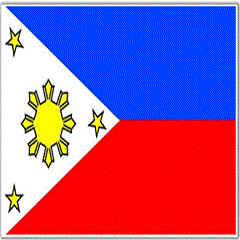
CASE: J-2 Waiver of Two-Year Foreign Residency Requirement / Over 21-year-old dependent child
NATIONALITY: Filipina
LOCATION: Oakley, CA
Our client was a citizen of the Philippines who came to the U.S. on a J-2 Visa in July 2018. She came with her mother who came on a J-1 Visa for her employment in the United States. Both were subject to the two-year foreign residency requirement, meaning they had to go back to their home country for two-years before they can apply for permanent residency or some non-immigrant visa such as the H, L, and O visas.
She turned 21 in July 2019. She wanted to file her I-485 adjustment of status application with her U.S. citizen spouse’s I-130 petition. However, because of her two-year foreign residency requirement, our client cannot adjust her status in the United States without fulfilling the 2-year foreign residency requirement or obtaining a waiver.
Although J-2 dependents cannot independently apply for a waiver, in cases where a J-2 child reaches 21, the Waiver Review Division may consider requests for waivers on behalf of the J-2 dependent. The Department of State’s policy allows for that process in instances where the J-2 dependent obtains a divorce form the J-1 principal, the J-1 principal dies, or in cases where the J-2 dependent turns 21, which is our client’s case. In fact, our client turned 21 in July 2019.
Our firm was retained to do her J-2 waiver, and on January 14, 2020, the J-2 Waiver application (Form DS-3035 and supporting documents) was filed to the Department of State. We also sent a request to the DOS to be an interested government agency and recommend this waiver based on the fact that our client reached the age of 21 and was not a dependent of the J-1 visa holder anymore. Eventually, on June 1, 2020, the DOS recommended to the United States Citizenship and Immigration Service (USCIS) that our client be granted a waiver. On July 15, 2020, the USCIS issued an I-612 approval notice for our client’s waiver request.
{ 0 comments }
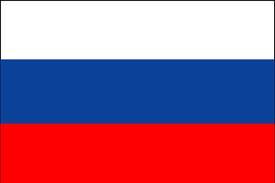
CASE: J-2 Waiver of Two-Year Foreign Residency Requirement / Over 21-year-old dependent child
NATIONALITY: Russian
LOCATION: Bar Harbor, ME
Our client was a citizen of Russia who came to the U.S. on a J-2 Visa in November 1998. She eventually became a Canadian citizen. She came with her mother who came on a J-1 Visa for her research program in the United States. Both were subject to the two-year foreign residency requirement, meaning they had to go back to their home country for two-years before they can apply for permanent residency or some non-immigrant visa such as the H, L, and O visas.
After our client came to the United States, she attended a school and then moved to Canada after her mother’s research program ended. Our client came back to the United States in 2019 on a TN visa.
She turned 21 in November 2016. This year, her employer wanted to file an H-1B petition for her. However, because of her two-year foreign residency requirement, our client cannot change her status in the United States without fulfilling the 2-year foreign residency requirement, or obtaining a waiver..
Although J-2 dependents cannot independently apply for a waiver, in cases where a J-2 child reaches 21, the Waiver Review Division may consider requests for waivers on behalf of the J-2 dependent. The Department of State’s policy allows for that process in instances where the J-2 dependent obtains a divorce form the J-1 principal, the J-1 principal dies, or in cases where the J-2 dependent turns 21, which is our client’s case. In fact, our client turned 21 in November 2016.
Our firm was retained to do her J-2 waiver, and on December 20, 2019, the J-2 Waiver application (Form DS-3035 and supporting documents) was filed to the Department of State. We also sent a request to the DOS to be an interested government agency and recommend this waiver based on the fact that our client reached the age of 21 and was not a dependent of a J-1 visa holder anymore. Eventually, on June 1, 2020, the DOS recommended to the United States Citizenship and Immigration Service (USCIS) that our client be granted a waiver. On June 23, 2020, the USCIS issued an I-612 approval notice for our client’s waiver request.
{ 0 comments }
CASE: I-130 / I-485
NATIONALITY: Philippines
LOCATION: Salinas, CA
Our client came from the Philippines on a J-1 in September 2013 to work as a teacher. Based on her visa and DS-2019, she was subject to the two-year foreign residency requirement. Later, she got married to her U.S. citizen husband and consulted with our firm for her J-1 visa waiver prior to applying for adjustment of status. If someone is subject to the two-year foreign residency requirement, he or she cannot get a green card in the United States until he or she fulfills the requirement or obtains a waiver.
Upon retention, our office prepared a waiver request through a No Objection Statement (NOS) from the Philippine Embassy in the United States through the EVP in the Philippines.
On June 8, 2018, the J-1 Waiver Application (Form DS-3035) was filed to the Department of State. We then prepared the documents for the NOS request to the EVP. On July 27, 2018, our office sent our NOS application to the Waiver Review Committee in Manila, Philippines. Then, the Waiver Review Committee granted the No Objection Statement and forwarded the materials and favorable recommendation to the Philippine Embassy in D.C. who eventually issued the official No Objection Statement to the Department of State.
On September 13, 2018, the Waiver Review Division issued a favorable recommendation based on the No Objection statement. Eventually, on October 11, 2018, the USCIS issued an I-612 approval notice for the waiver.
Once her J-1 waiver was approved, our client retained our office again for her adjustment of status application. Our firm prepared and filed the I-130 Petition and I-485 Adjustment of Status Application on February 1, 2019. Everything went smoothly and the receipt notices, fingerprint appointment, and work permits all came on time. Prior to the interview, we thoroughly prepared our clients through conference calls. On January 15, 2020, our client was interviewed at the Santa Clara, CA USCIS office.
However, on May 1, 2020, the USCIS issued a Request for Evidence (RFE) and requested our client to submit a certified disposition of court and police documents record regarding her previous misdemeanor criminal record. Our office filed the Response to RFE to the USCIS on May 26, 2020. Eventually, on June 9, 2020, the USCIS approved our client’s I-485 adjustment of status application. Now, she is a green card holder.
{ 0 comments }
CASE: J-1 Waiver (No Objection Statement)
NATIONALITY: Philippines
LOCATION: Fayetteville, NC
Our client came from the Philippines on a J-1 in August 2015 to work as a teacher. Based on his DS-2019, he was subject to the two-year foreign residency requirement.
In September 2018, he got married to his U.S. citizen spouse and later on consulted with our firm for his J-1 visa waiver prior to applying for adjustment of status. If someone is subject to the two-year foreign residency requirement, he or she cannot get a green card in the United States until he or she fulfills the requirement or obtains a waiver.
Upon retention, our office prepared a waiver request through a No Objection Statement (NOS) from the Philippine Embassy in the United States and eventually the EVP in the Philippines.
On November 27, 2019, the J-1 Waiver Application (Form DS-3035) was filed to the Department of State. On January 9, 2020, our office sent our client’s materials to the Waiver Review Committee in Manila, Philippines. Then, the Waiver Review Committee forwarded the materials and favorable recommendation to the Philippine Embassy in D.C. who eventually issued a No Objection Statement.
On April 28, 2020, the Waiver Review Division issued a favorable recommendation based on the No Objection statement. Eventually, on May 18, 2020, the USCIS issued an I-612 approval notice for the waiver. Now, our client can file for his adjustment status application along with his U.S. Citizen spouse’s I-130 petition for him.
{ 0 comments }
CASE: J-1 Waiver (No Objection Statement)
NATIONALITY: Philippines
LOCATION: Sacramento, CA
Our client came from the Philippines on a J-1 in August 2017 to work as a teacher. Based on her DS-2019, she was subject to the two-year foreign residency requirement.
In July 2019, she got married to her U.S. citizen husband and later on consulted with our firm for her J-1 visa waiver prior to applying for adjustment of status. If someone is subject to the two-year foreign residency requirement, he or she cannot get a green card in the United States until he or she fulfills the two-year requirement or obtains a waiver.
On October 16, 2019, the J-1 Waiver Application (Form DS-3035) was filed to the Department of State. On November 26, 2019, our office sent our client’s NOS request to the EVP Waiver Review Committee in Manila, Philippines. The Waiver Review Committee approved of the request and forwarded the materials and favorable recommendation to the Philippine Embassy in D.C. who eventually issued a No Objection Statement.
On May 5, 2020, the Waiver Review Division issued a favorable recommendation based on the No Objection statement. Eventually, on May 18, 2020, the USCIS issued an I-612 approval notice for the waiver. Now, our client can file for her adjustment status application along with her U.S. Citizen husband’s I-130 petition for her.
{ 0 comments }
Connect With Us


FREE CONSULTATIONS
Approvals by State
- Ohio
- Alabama
- Mississippi
- North Dakota
- Virgin Islands
- Iowa
- Virgin Islands
- Maine
- Idaho
- South Dakota
- Hawaii
- DC
- Minnesota
- North Carolina
- Saipan
- Kansas
- Colorado
- South Carolina
- Montana
- Kentucky
- Wyoming
- Nevada
- Arkansas
- New York
- California
- Texas
- Washington
- Virginia
- Arizona
- Nebraska
- Maryland
- Illinois
- Pennsylvania
- New Jersey
- Georgia
- Connecticut
- Missouri
- Wisconsin
- Indiana
- Louisiana
- Florida
- Tennessee
- Oklahoma
- Michigan
- Massachusetts
- New Mexico
Country Approvals
- Philippines
- Ecuador
- Gabon
- Bulgaria
- Yemen
- Netherlands
- Zambia
- Morocco
- Iraq
- Burkina Faso
- Turkey
- United Kingdom
- Venezuela
- Japan
- Egypt
- Sierra Leone
- Australia
- Lebanon
- Thailand
- Kyrgyzstan
- Saint Lucia
- Angola
- Ireland
- Macedonia
- Hong Kong
- Algeria
- Belgium
- UAE
- Serbia
- China
- South Korea
- India
- Kenya
- Indonesia
- Ghana
- Pakistan
- Nepal
- Britain
- Jamaica
- Canada
- Senegal
- Benin
- Colombia
- Moldova
- Jordan
- Romania
- Malaysia
- Guatemala
- Saudi Arabia
- Cameroon
- Africa
- Mexico
- Ethiopia
- Germany
- Ukraine
- Sweden
- Vietnam
- Costa Rica
- Cambodia
- El Salvador
- Nigeria
- Hungary
- Singapore
- Argentina
- Brazil
- Albania
- Sri Lanka
- Russia
- Zimbabwe
- Bangladesh
- Peru
- Guyana
- Iran
- Italy
- Suriname
- Honduras
- Gambia
- Cote D’Ivoire
- Hubei
- Grenada
- Spain
- Slovakia
- France
- Taiwan
- Tunisia
- Cuba
- Croatia
- Bahamas